
Main Courses
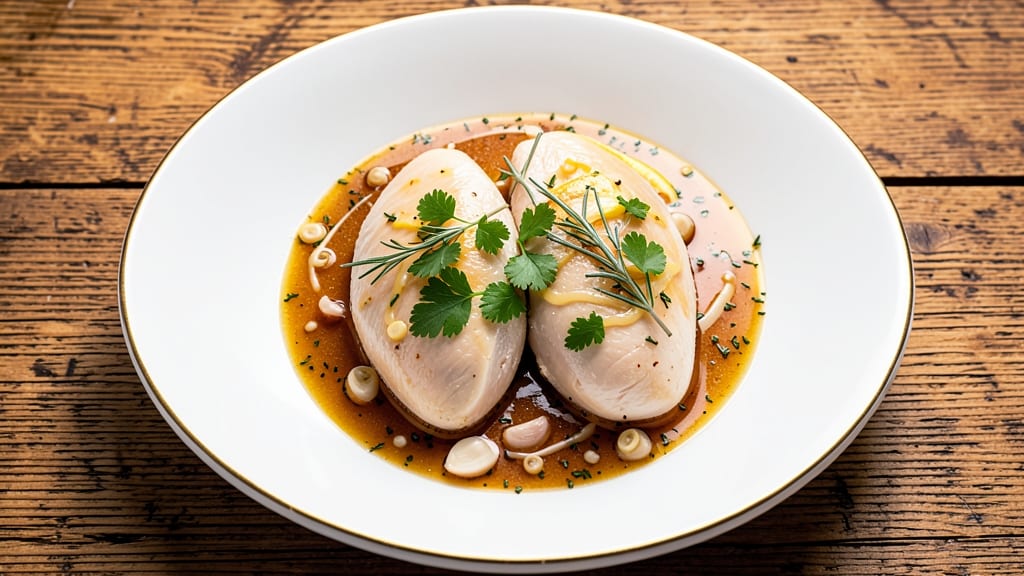
Mastering Gordon Ramsay’s poached chicken recipe transforms simple ingredients into restaurant-quality perfection. The secret lies in a crystal-clear broth and precise basting technique that guarantees juicy, tender meat every time. I’ve adapted this method for home cooks, ensuring you achieve the same flawless results without professional equipment.
This recipe relies on three key elements: a well-seasoned poaching liquid, consistent temperature control, and the herbed butter baste that Ramsay swears by. Unlike traditional poaching methods, this approach keeps the meat moist while developing a delicate crust.
The process is simpler than it sounds—just 30 minutes of hands-off cooking followed by a quick finish with herbed butter.
What you’ll end up with is chicken so tender it falls apart at the touch, infused with aromatic herbs and a golden sheen from the basting. The broth reduces to a silky consistency, perfect for drizzling over the finished dish.
This is the kind of technique that elevates a weeknight dinner into something special—without the fuss.
Serve with roasted vegetables or a fresh salad to highlight the chicken’s natural flavors. The method scales beautifully, whether you’re cooking for two or hosting a dinner party. Let’s get started on mastering this classic technique.
Ingredients for gordon ramsay poached chicken
Restaurant-quality poaching relies on precise ingredients and technique—no shortcuts here.
| Ingredient | Amount | Notes |
|---|---|---|
| Boneless, Skinless Chicken Breast 🍗 | 1 ½ lb | Evenly sized cutlets, pounded thin |
| Unsalted Butter 🧈 | ½ cup | Cold, cubed for basting |
| Fresh Parsley Leaves 🌿 | ¼ cup | Finely chopped, stems removed |
| Fresh Tarragon Leaves 🌿 | ¼ cup | Finely chopped, stems removed |
| Garlic Cloves 🧄 | 4 cloves | Thinly sliced, peeled |
| Shallots 🧅 | 2 whole | Thinly sliced, peeled |
| White Wine 🍷 | 1 cup | Dry, full-bodied variety |
| Chicken Stock 🍲 | 2 cups | Homemade or high-quality store-bought |
| Diamond Crystal Kosher Salt 🧂 | 1 ½ tsp | For seasoning broth |
| Black Peppercorns 🌶️ | ½ tsp | Freshly cracked |
| Fresh Lemon Zest 🍋 | 1 tsp | From organic lemon |
| Extra-Virgin Olive Oil 🫒 | 1 tbsp | For drizzling after poaching |
| Fresh Thyme Sprigs 🌿 | 2 whole | For aromatic infusion |
The chicken breasts are the foundation, so select evenly sized cutlets—this ensures uniform cooking. Pound them to an even thickness (about 1/4-inch) for consistent doneness. For the best results, source your chicken from Whole Foods Market or a trusted butcher, where the meat is typically fresher and more tender. The herbs—parsley and tarragon—should be bright green and vibrant, indicating peak freshness. If you can't find fresh tarragon, dried tarragon at one-third the amount works in a pinch, though the flavor won't be as refined. The white wine should be a dry variety like Sauvignon Blanc or Pinot Grigio, as sweeter wines can alter the broth's balance. For the chicken stock, homemade is ideal, but high-quality brands like Pacific Foods or Kettle & Fire are reliable alternatives.
No white wine? Substitute dry vermouth or additional chicken stock, though the flavor profile will shift slightly. Fresh herbs unavailable? Dried herbs at one-third the amount can be used, but infuse them in the broth for 10 minutes to release their oils. The shallots add depth—if you prefer a milder flavor, substitute green onions or extra garlic. For the butter baste, European-style unsalted butter like Plugrá or Kerrygold melts more cleanly and adds a richer flavor. If you're short on time, pre-chop the herbs and store them in the fridge for up to 3 days. The lemon zest can be zested ahead and refrigerated in an airtight container for up to a week, making it a convenient addition to the basting butter.
The poaching liquid can be stored in the fridge for up to 3 days, though it's best used fresh for optimal flavor. The herbs in the broth will lose potency after 24 hours, so plan to use the liquid promptly. The basting butter should be prepared fresh before serving, as it relies on the herbs' aromatic oils. If you're prepping ahead, store the cubed butter and herbs separately in the fridge and combine them just before basting. The poached chicken holds well in the fridge for 3-4 days, though it's best enjoyed within 2 days for peak tenderness. To reheat, gently warm in a skillet over low heat with a splash of broth or water to maintain moisture.
Why You'll Love This Recipe
- No-Fuss Poaching: I swear, this takes less effort than boiling water for pasta. Just butter, garlic, and herbs—no fancy gadgets, no flipping, no stress. The chicken cooks itself while you prep the sides.
- Butter-Garlic Magic: That rich, golden butter bath with minced garlic and fresh tarragon? It turns plain chicken into something restaurant-worthy. The parsley finish adds a bright pop—like a hug for your taste buds.
- Weeknight to Dinner Party: Same recipe, different vibes. Serve it sliced over crusty bread for a quick lunch or shredded in a salad for a fancy dinner. (Yes, even on a Tuesday night.)
- Leftovers That Don’t Suck: Poached chicken stays tender for days—perfect for wraps, grain bowls, or reheated with a splash of broth. Honestly, it’s my secret weapon for lazy afternoons.
Step-by-step instructions for poached chicken with herbed butter baste
Mastering this technique guarantees tender, juicy chicken with flawless texture every time.
Prepare the Herbed Butter and Poaching Liquids
In a small bowl, combine the 0.5 cup unsalted butter, 0.25 cup fresh parsley leaves, 0.25 cup fresh tarragon leaves, 4 cloves garlic cloves, 2 whole shallots, 1.5 tsp diamond crystal kosher salt, 0.5 tsp black peppercorns, and 1 tsp fresh lemon zest. Mince the shallots and garlic finely for even distribution. This herbed butter will create an aromatic crust during poaching.
In a separate saucepan, heat the 1 cup white wine and 2 cups chicken stock over medium-high heat until it reaches a gentle simmer. Add the 2 whole fresh thyme sprigs and let steep for 5 minutes to infuse the liquid with aroma. The broth should be fully integrated—no visible herbs remaining. This aromatic base is critical for preventing blandness in poached chicken.
Pound and Poach the Chicken
Place the 1.5 lb boneless, skinless chicken breast between two sheets of plastic wrap and pound evenly to ¼-inch thickness using a meat mallet. This ensures even cooking and prevents dryness. Season both sides generously with additional diamond crystal kosher salt and black peppercorns—this step is non-negotiable for flavor development.
Gently lower the chicken into the simmering broth, ensuring it doesn't touch the sides of the pan. The liquid should return to a gentle simmer immediately—if it stops bubbling, increase heat slightly. Poach for 12-15 minutes, until the chicken reaches an internal temperature of 155°F and the center is opaque. Overcooking here will yield dry results, so monitor closely.
Baste with Herbed Butter for Crispy Finish
Using a slotted spoon, carefully transfer the chicken to a plate. Strain the poaching liquid through a fine-mesh sieve into a clean saucepan, discarding the thyme sprigs. Return the strained liquid to medium heat and reduce until slightly thickened—this creates a glossy sauce base.
Increase heat to medium-high and add the prepared herbed butter. Stir constantly for 2-3 minutes until the butter melts completely and the sauce emulsifies into a silky consistency. The sauce should coat the back of a spoon smoothly. Immediately return the chicken to the sauce, spooning the herbed butter mixture generously over the top. Let it baste for 1-2 minutes—this creates the signature crispy exterior while keeping the interior juicy.
Rest and Serve for Maximum Juiciness
Transfer the chicken to a cutting board and tent loosely with aluminum foil. Let it rest for 5-10 minutes before slicing. This resting period allows the juices to redistribute throughout the meat, ensuring every bite remains moist. The chicken should yield to gentle pressure with a fork—if it feels firm, extend the rest time slightly.
Drizzle the remaining herbed butter sauce over the top and finish with a touch of 1 tbsp extra-virgin olive oil for extra shine. Serve immediately with the reduced poaching sauce spooned alongside. The result is chicken that's impossibly tender with a delicate crispness—exactly what Ramsay-style poaching delivers.
Pro Tips For Making Gordon Ramsay Poached Chicken
- Use a Thermometer: Poaching chicken breast feels like a guessing game without one—165°F (74°C) at the thickest part is non-negotiable. I learned this the hard way after serving dry, overcooked breasts that tasted like cardboard. A cheap instant-read thermometer solves that forever.
- Mince Garlic Fine: Ramsay’s recipe relies on that bright, aromatic punch from tarragon and garlic. If you’re chopping garlic into visible chunks, you’re missing the point—mince it so fine it’s almost a paste. Same goes for parsley: stack leaves, roll tightly, and slice thin for even distribution.
- Don’t Crowd the Pan: Overlapping chicken breasts in the poaching liquid turns them into soggy, unevenly cooked messes. Leave at least ½ inch of space between them—this ensures they cook through evenly and stay tender. Trust me, your future self will notice the difference.
- Finish with Cold Butter: The butter in this recipe isn’t just for flavor—it’s for shine and richness. After poaching, remove the chicken and swirl in a tablespoon of cold unsalted butter (yes, cold) until it melts into the liquid. The fat emulsifies instantly, giving the sauce a silky finish without breaking a sweat.
Storing and reheating your gordon ramsay poached chicken
Refrigerator Storage
Poached chicken stays at its peak for 3-4 days when stored properly in the fridge. Let it cool completely before transferring to an airtight container—I use glass Pyrex with snap-on lids to preserve moisture.
Place the chicken in a single layer, then pour the reduced poaching sauce over it. This keeps the meat hydrated and flavors integrated. Store at 40°F or below for maximum freshness. 💡
Freezer Preservation
For longer storage, freeze the chicken for up to 3 months without texture loss. Wrap each piece individually in plastic wrap, then place in a freezer bag with the sauce. Label with the date to track freshness.
When ready to use, thaw overnight in the fridge—never at room temperature. The sauce may separate slightly, but reheating will restore its silky consistency. ❄️
Reheating Perfection
For stovetop reheating, place the chicken in a skillet over low heat with 2 tbsp of the reserved poaching sauce. Cover and heat for 5-7 minutes, stirring occasionally.
The gentle heat prevents drying while reactivating the herbed butter's aroma. Add a splash of water if the sauce thickens too much. 🔥
Microwave Method
For quick reheating, cover the chicken and sauce with a damp paper towel and microwave on 50% power for 1-2 minutes. Stir, then continue in 30-second intervals until reaching 165°F. The paper towel prevents splattering while keeping the chicken moist. This method works best for single servings.
Sauce Refresh
If the reduced sauce appears dry after storage, revive it by adding 1 tbsp water or chicken stock and heating gently. The herbed butter can be remelted separately if needed.
For extra richness, stir in 1 tbsp cold butter—this restores the sauce's velvety texture. The key is patience: let it simmer for 1-2 minutes before serving. ✨
Serving After Storage
After reheating, let the chicken rest for 2-3 minutes before serving to redistribute juices. Garnish with fresh parsley leaves and a drizzle of extra-virgin olive oil to brighten the presentation.
The herbed butter baste should still be visible, adding that signature crisp-tender contrast. Serve with lemon wedges for a final acid note that cuts through the richness. 💛
Nutrition facts
Frequently asked questions
Can I use bone-in chicken for this poaching method?
Bone-in chicken works but requires 15-20 minutes longer to cook through. The bones add flavor to the broth, but monitor the internal temperature carefully—it should reach 165°F in the thickest part of the meat. For even cooking, choose evenly sized pieces and reduce poaching time by 2-3 minutes per quarter-inch of thickness.
What if I don't have white wine? Can I substitute something else?
Use dry vermouth or additional chicken stock (up to 1/4 cup extra) for depth. For a non-alcoholic option, try apple cider vinegar (1 tbsp) or lemon juice (2 tbsp) to brighten the broth. The key is balancing acidity—adjust to taste.
Why does my poached chicken turn out dry?
Overcooking is the #1 culprit! Poach until the internal temp hits 155°F (not 165°F)—chicken continues cooking while resting. Also, avoid crowded pans (chicken should float freely) and never skip the 5-10 minute rest. For extra insurance, baste with the herbed butter immediately after removing from the broth.
Can I make this recipe ahead of time?
Yes! Prepare the herbed butter and poaching liquid up to 2 days ahead, storing separately in the fridge. Cook the chicken fresh day-of, then store as directed (3-4 days refrigerated). The sauce can be reduced ahead and reheated gently. For parties, poach the chicken 1 day early, refrigerate in the broth, then finish with fresh herbed butter before serving.
What's the best way to serve this poached chicken?
Pair it with light, fresh sides like a citrus salad or roasted asparagus to complement the herbed butter's richness. For a restaurant-style plate, drizzle with the reduced sauce and garnish with microgreens or edible flowers. The delicate texture works beautifully in gourmet sandwiches or grain bowls with quinoa and roasted vegetables.