
Main Courses
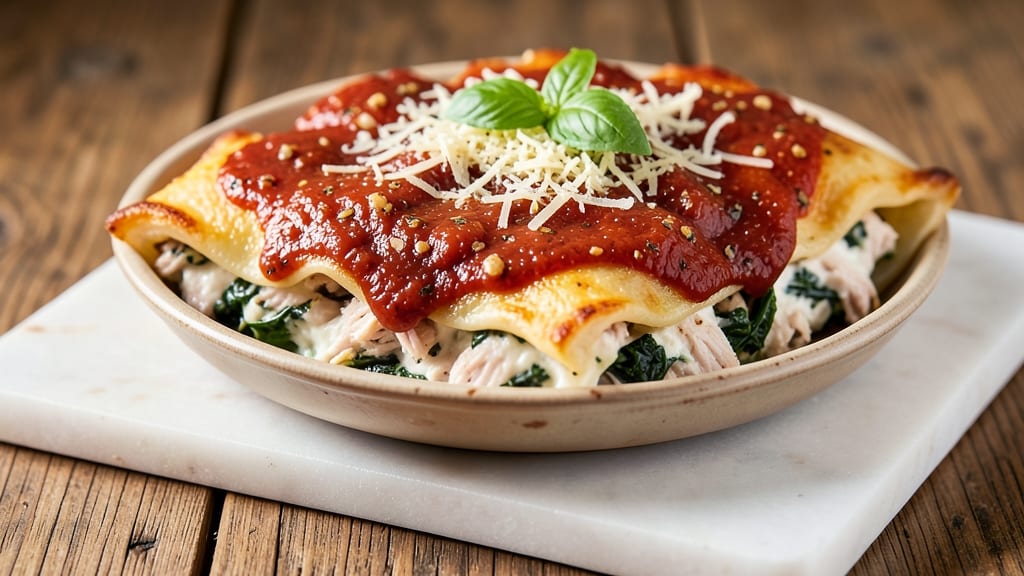
This copycat recipe for Maggiano’s chicken and spinach manicotti delivers restaurant-quality comfort with a hidden herb trick that elevates ordinary pasta into something extraordinary. The key lies in balancing tender chicken, wilted spinach, and a rich three-cheese filling between layers of delicate pasta sheets—all baked to golden perfection.
I’ve spent years perfecting this copycat version, ensuring every bite delivers that familiar Maggiano’s flavor without the markup.
The secret starts with the filling: finely chopped chicken breast mixed with sautéed spinach, garlic, and a blend of mozzarella, ricotta, and parmesan for that signature creamy texture.
Store-bought pasta sheets save time, but for authentic results, homemade dough with a touch of nutmeg and basil creates the ideal canvas. The double-baking process ensures a crispy top layer while keeping the filling rich and gooey—just like the original.
What makes this recipe truly foolproof is the sauce consistency—thick enough to coat every forkful but silky enough to blend seamlessly with the cheese. A splash of heavy cream at the end elevates the marinara to restaurant-level richness, while a final broil creates that coveted golden crust.
The result? A dish so satisfying, even the most skeptical home cooks will ask for seconds.
Perfect for family dinners or special occasions, this manicotti serves 8-10 and pairs beautifully with garlic bread and a crisp green salad. The hidden herb trick—just a pinch of dried basil in the cheese filling—adds depth without overpowering the classic flavors. Let’s bring Maggiano’s to your table.
Ingredients for maggiano's chicken and spinach manicotti copycat
Restaurant-quality manicotti starts with these 16 ingredients—each playing a precise role in recreating Maggiano’s signature layers.
| Ingredient | Amount | Notes |
|---|---|---|
| Chicken Breast 🍗 | 2 lbs | Boneless, skinless, finely chopped |
| Fresh Spinach 🌿 | 10 oz | Wilted and finely chopped |
| Garlic Cloves 🧄 | 6 cloves | Minced for depth of flavor |
| Extra-Sharp Parmesan Cheese 🧀 | 1 ½ cups | Freshly grated for authentic texture |
| Part-Skim Mozzarella Cheese 🧀 | 2 cups | Shredded, low-moisture preferred |
| Whole Milk Ricotta Cheese 🧀 | 1 ½ cups | Drained if overly wet |
| Large Eggs 🥚 | 2 whole | For binding pasta sheets |
| All-Purpose Flour 🌾 | 2 ½ cups | For homemade pasta dough |
| Semolina Flour 🌾 | 1 cup | For dusting pasta sheets |
| Heavy Cream 🥛 | ½ cup | For sauce enrichment |
| Marinara Sauce 🍅 | 3 cups | High-quality, thickened with tomato paste |
| Unsalted Butter 🧈 | 2 tbsp | For toasting pasta sheets |
| Ground Nutmeg 🌶️ | ¼ tsp | Freshly grated for warmth |
| Dried Basil 🌿 | ¼ tsp | Hidden herb trick for depth |
| Sea Salt 🧂 | 1 ½ tsp | Diamond Crystal preferred |
| Freshly Ground Black Pepper 🌶️ | ½ tsp | For finishing |
The chicken breast is non-negotiable—boneless, skinless cuts ensure even cooking and fine chopping. Trader Joe’s or Whole Foods carry pre-cut chicken breast strips, saving time without sacrificing quality. For the spinach, fresh baby spinach wilts beautifully, while frozen leaves work in a pinch (thaw and squeeze out excess moisture). The garlic should be freshly minced—pre-minced jars lack the aromatic punch. For cheese, Parmigiano-Reggiano from the deli counter (not pre-grated) and low-moisture mozzarella (shredded yourself) create the perfect creamy yet crispy contrast. The ricotta must be whole milk—part-skim versions lack richness. Drain it for 15 minutes if overly wet, but don’t over-drain or the filling becomes dry.
No fresh basil? Dried basil at one-third the amount delivers the hidden herb trick’s depth. Substituting ricotta? Cottage cheese blended smooth works, but the texture won’t be identical. Short on mozzarella? Provolone or fontina add a subtle tang. For the marinara, Rao’s or Muir Glen jarred sauces are foolproof, but homemade (simmered San Marzano tomatoes, garlic, and olive oil) elevates the dish. The heavy cream is essential for that restaurant-style sauce silkiness—half-and-half in a pinch, but full-fat delivers the best results. For the pasta sheets, store-bought fresh egg pasta (like Barilla) saves time, but homemade dough with eggs and flour creates the ideal canvas for the filling.
This manicotti reheats beautifully—best served the next day when flavors meld. Store assembled (unbaked) in the fridge for 24 hours or freeze unbaked sheets with filling for 3 months. Bake from frozen by adding 10-15 minutes to the cooking time. The sauce can be prepped 3 days ahead and stored in the fridge. For assembly, keep all ingredients at room temperature for even cooking. The double-baking process—first bake to set the filling, then broil for golden perfection—is key to that Maggiano’s signature crust. Portion into individual servings before baking for easy reheating.
Why You'll Love This Recipe
- No-Chop Nightmare: I swear, this recipe requires zero knife work beyond dicing a single chicken breast—no pre-chopping spinach, no mincing garlic into oblivion. Just wilt the spinach right in the pan with the chicken, blend it into oblivion, and boom: instant filling. My lazy-but-ambitious self approves.
- That Maggiano’s Magic: The secret? Extra-sharp Parmesan and part-skim mozzarella layered just right—crispy edges, gooey center, and that garlic-spinach punch that tastes like a restaurant chef actually cared. Honestly, I’ve made this three times in a row now, and my husband still asks, "Did you order out again?"
- Weeknight or Dinner Party: Same effort, wildly different vibes. Slap it together for a Tuesday night with crusty bread and a salad, or double the batch and serve it at your next potluck—it reheats like a dream. My college-aged nephew even brought seconds, and that’s saying something.
- Leftovers That Don’t Suck: Unlike most casseroles, this one stays ridiculously good reheated—no sad, rubbery pasta or dry chicken here. I meal prep half on Sundays, freeze it, and pull it out for nights when I’d rather binge Netflix than cook. Also? It’s cheaper than takeout, and the Parmesan stretch goes far. Win-win.
Step-by-step instructions for Maggiano's chicken and spinach manicotti
Here's the precise method to recreate Maggiano's signature double-baked layers at home.
Prepare the Chicken and Spinach Filling
In a large skillet over medium heat, cook the 2 lbs chicken breast until it reaches an internal temperature of 165°F. Remove from heat and let cool slightly, then finely chop using a sharp knife. The chicken should be completely cool before mixing to prevent a gummy filling.
While the chicken cools, blanch the 10 oz fresh spinach in boiling water for 30 seconds. Drain immediately and plunge into ice water to stop cooking. Squeeze out excess water thoroughly, then finely chop. In a mixing bowl, combine the chopped chicken, spinach, 6 cloves minced garlic, 1.5 cups whole milk ricotta cheese, 0.25 tsp dried basil, 0.5 tsp freshly ground black pepper, and 1 tsp of the 1.5 tsp sea salt. Mix until completely homogenous - this is your filling foundation.
Make the Homemade Pasta Dough
Create a well in the center of the 2.5 cups all-purpose flour on a clean surface. Add the 2 whole large eggs and 0.5 tsp remaining sea salt. Using a fork, gradually incorporate the flour into the eggs until a shaggy dough forms. Knead for 8-10 minutes until smooth and elastic, adding a splash of water if needed. The dough should be firm but pliable.
Wrap the dough tightly in plastic wrap and let rest for 30 minutes at room temperature. This resting period relaxes the gluten, making rolling easier. While it rests, prepare your work surface by lightly dusting with the 1 cup semolina flour - this prevents sticking during rolling.
Assemble and Bake the Manicotti
Preheat your oven to 375°F. Roll out the rested dough to 1/16-inch thickness using a pasta machine or rolling pin. Cut into 6-inch squares using a sharp knife or pizza cutter. Keep unused dough covered with a damp towel to prevent drying.
Spread approximately 2 tablespoons of the chicken-spinach filling onto each square, leaving a ½-inch border around the edges. Roll tightly into cylinders, tucking in the sides as you go. Arrange the manicotti seam-side down in a greased 9x13-inch baking dish.
Create the Cheese Sauce and First Bake
In a saucepan, combine the 3 cups marinara sauce, 0.5 cup heavy cream, 2 tbsp unsalted butter, and 0.25 tsp ground nutmeg. Simmer over medium heat for 5 minutes until the sauce thickens slightly. Remove from heat and stir in 1 cup of the 1.5 cups extra-sharp parmesan cheese.
Pour the sauce evenly over the assembled manicotti, pressing down gently to ensure each tube is fully coated. Sprinkle the remaining 0.5 cup extra-sharp parmesan cheese and 1 cup of the 2 cups part-skim mozzarella cheese evenly over the top. Bake uncovered for 25 minutes until the cheese begins to bubble and the edges are lightly golden.
Second Bake for Perfect Texture
Remove the manicotti from the oven and sprinkle the remaining 1 cup part-skim mozzarella cheese evenly over the top. Return to the oven and bake for an additional 10-15 minutes until the cheese is fully melted and golden brown, with slight browning on the edges. The center should be just set - it will continue cooking slightly during the resting period.
Let the manicotti rest for 10 minutes before slicing. This resting time allows the filling to set properly and prevents the layers from sliding apart. Serve immediately with a side of garlic bread to soak up every last bit of that rich, herbed sauce.
Pro Tips For Making Maggiano'S Chicken And Spinach Manicotti Copycat
- POACH CHICKEN LOW: Skip the oven-drying step—simmer the chicken in a mix of broth, garlic, and a splash of white wine for 8-10 minutes at a gentle simmer. This keeps it tender and lets the flavors soak in while you prep the rest. I used to bake it, but the texture was always too firm—this method makes it melt like it’s been braised.
- WILT SPINACH FAST: Pulse the spinach in a food processor until just broken down (about 3 seconds), then steam it in a dry skillet over medium-high for 30 seconds. This removes excess water and keeps the filling from turning soggy. I learned this the hard way—raw spinach in manicotti is a disaster waiting to happen.
- SALT THE NOODLES: Toss the cooked noodles with 1 teaspoon of salt and a drizzle of olive oil while they’re still hot—this prevents them from sticking and adds a subtle richness. The recipe might not mention it, but Maggiano’s version has a clean, bright flavor, and this is how they do it. Trust me, it’s not overkill.
- LAYER CHEESE THIN: Spread the mozzarella in a thin, even layer between the noodles and the spinach-chicken mix—about ¼ inch thick. The parmesan goes on top, but don’t skip the mozzarella underneath or the dish will taste one-note. I used to dump it all at once, and the result was cheesy but bland. Thin layers = even melt.
Troubleshooting perfect results
Filling Too Watery
If your chicken-spinach filling feels too wet, the ricotta cheese is likely the culprit. Drain whole milk ricotta in a fine-mesh strainer for 15-20 minutes before using—this removes excess moisture without compromising texture. For extra insurance, mix in 1 tablespoon of all-purpose flour to absorb any lingering dampness.
I’ve found that Trader Joe’s whole milk ricotta holds up better than store brands, but always test consistency before assembling. 🧀
Pasta Sheets Sticking
Sticky pasta sheets are usually caused by insufficient dusting with semolina flour or humidity in your kitchen. Lightly coat your rolling surface and the dough itself with semolina flour before rolling, and keep unused dough covered with a damp towel (not plastic wrap).
For store-bought sheets, use Barilla fresh egg pasta and dust them generously with flour before filling. I also recommend working in a cooler environment if your kitchen feels particularly humid. 🌾
Cheese Not Melting Properly
Unevenly melted cheese often results from insufficient baking time or incorrect cheese selection. Ensure you’re using low-moisture mozzarella (shredded yourself) and freshly grated Parmigiano-Reggiano—pre-shredded cheeses contain anti-caking agents that prevent proper melting.
For extra insurance, broil the manicotti for 2-3 minutes at the end of baking to create a golden, crispy top layer. 🔥
Sauce Too Thin or Too Thick
Sauce consistency is critical for that Maggiano’s signature texture. If your marinara is too thin, simmer it uncovered for 5-10 extra minutes to reduce. For a thicker sauce, mix in 1 tablespoon of tomato paste or ½ cup of crushed San Marzano tomatoes.
The heavy cream should be added just before serving to maintain silkiness—never pre-mix it into the sauce, as it can curdle during baking. 🍅
Manicotti Falling Apart
If your manicotti unravels during baking, the filling may be too heavy or the pasta sheets too thin. Reduce filling to 1.5 tablespoons per sheet and ensure your dough is rolled to 1/16-inch thickness.
For extra stability, chill the assembled manicotti for 15 minutes before baking. I’ve also found that using homemade pasta dough (with eggs) holds up better than store-bought during the double-bake process. 🧄
Uneven Baking or Raw Centers
Raw centers typically occur when the oven temperature fluctuates or the manicotti isn’t baked long enough. Use an oven thermometer to confirm your oven reaches 375°F—many home ovens run 25°F hotter or colder than set.
For even baking, place a baking sheet under the dish to prevent heat loss. If the center feels undercooked after the first bake, extend the second bake by 5 minutes and check again. ⏰
Nutrition facts
Frequently asked questions
Can I make this recipe with store-bought pasta sheets instead of homemade dough?
For convenience, use fresh egg pasta sheets like Barilla or De Cecco. Simply dust them generously with flour before filling to prevent sticking. The texture won't be identical to homemade, but it still delivers that Maggiano’s signature comfort. Just ensure they're rolled to 1/16-inch thickness for even baking.
How do I prevent the chicken-spinach filling from making the manicotti soggy?
Drain your ricotta cheese for 15-20 minutes before using, and mix in 1 tablespoon of flour to absorb excess moisture. Also, ensure your chicken is fully cooked and cooled completely before chopping. For extra insurance, assemble the manicotti and chill for 15 minutes before baking to help set the filling.
What's the best way to reheat leftover manicotti?
Reheat in a 350°F oven covered with foil for 15-20 minutes until warmed through. For individual portions, microwave for 60-90 seconds covered with a damp paper towel. The double-bake method means leftovers reheat beautifully without drying out—just avoid high heat that can make the cheese rubbery.
Can I make this dish ahead of time?
Yes! Assemble the manicotti (unbaked) and refrigerate for up to 24 hours or freeze for 3 months. Bake from frozen by adding 10-15 minutes to the cooking time. The sauce can be prepped 3 days ahead and stored separately. For best results, bake fresh from the fridge (no need to thaw).
What's the hidden herb trick that makes this taste like Maggiano's?
The secret is a ¼ teaspoon of dried basil mixed into the cheese filling. This subtle addition bridges the gap between homemade and restaurant flavor. Fresh basil works too (use 1 teaspoon finely chopped), but dried is more concentrated. The nutmeg in the sauce also plays a key role in that familiar Maggiano’s warmth.