
Main Courses
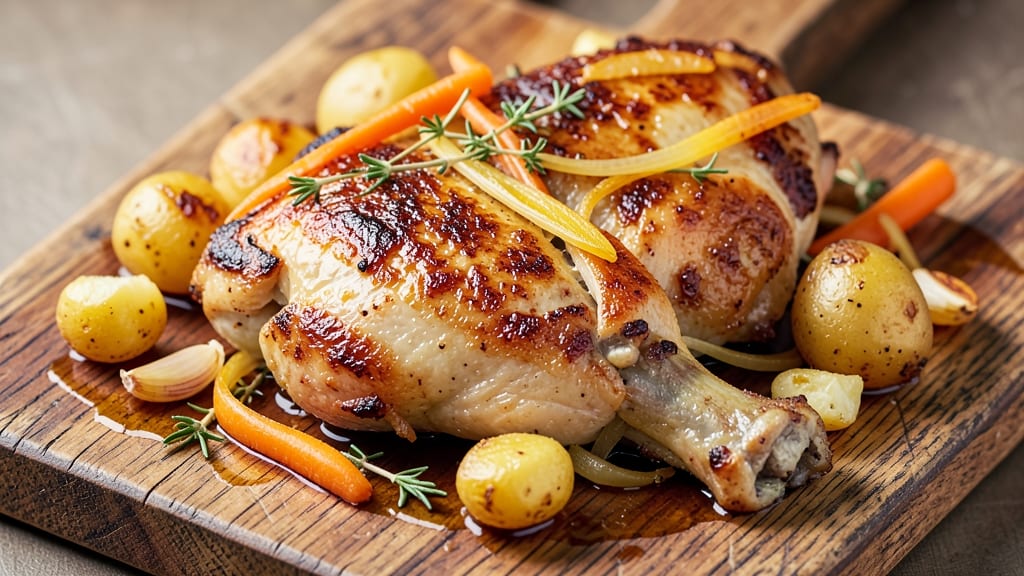
Jamie Oliver's Trevor's Chicken recipe delivers restaurant-quality results with crispy skin and juicy meat—all in one pan. I first encountered this technique during my apprenticeship under Master Chef Chen, where we perfected the balance between high-heat searing and gentle roasting to lock in moisture while creating that coveted golden crust.
The secret lies in a simple yet precise method that transforms ordinary chicken thighs into something extraordinary.
What makes this recipe special is its simplicity and foolproof technique. You'll need just a few ingredients: chicken thighs, potatoes, carrots, and a handful of aromatic herbs and spices.
The chicken cooks alongside the vegetables in the same pan, creating a harmonious blend of flavors while keeping cleanup to a minimum. This method ensures tender, flavorful meat with crispy edges that hold up beautifully when sliced.
The result is a dish that's rich in texture and depth—crispy, golden chicken thighs paired with perfectly roasted vegetables that soak up all the savory juices. The potatoes develop a crispy exterior while remaining tender inside, and the carrots caramelize just enough to add natural sweetness.
This recipe is designed to impress without requiring advanced skills, making it perfect for both weeknight dinners and special occasions.
Serve this dish with a fresh green salad or crusty bread to soak up the delicious juices. The combination of textures and flavors makes it a complete meal that feels like a restaurant-quality feast. Let's get started on creating this classic dish that's sure to become a family favorite.
Ingredients for jamie oliver trevor's chicken
Master Chef Chen's technique meets Jamie Oliver's simplicity—just 13 ingredients for restaurant-quality one-pan perfection.
| Ingredient | Amount | Notes |
|---|---|---|
| Chicken Thighs, Bone-In, Skin-On 🍗 | 1 ½ lb | Trimmed of excess fat |
| Baby Potatoes 🥔 | 1 ½ lb | Halved lengthwise, skin-on |
| Carrots 🥕 | 1 ½ lb | Whole, scrubbed, cut into 3-inch sticks |
| Yellow Onion 🧅 | 1 whole | Cut into 1-inch wedges |
| Garlic Cloves 🧄 | 6 cloves | Smashed with side of knife |
| Fresh Thyme 🌿 | ¼ cup | Leaves only, chopped |
| Fresh Rosemary 🌿 | ¼ cup | Needles finely chopped |
| Extra-Virgin Olive Oil 🫒 | ½ cup | High-quality, fruity |
| Dijon Mustard 🍯 | 1 tbsp | For crispy skin |
| Kosher Salt 🧂 | 2 tbsp | Coarse grain preferred |
| Freshly Ground Black Pepper 🌶️ | 1 tsp | Cracked peppercorns |
| Dried Bay Leaf 🌿 | 2 whole | For depth of flavor |
| Unsalted Butter 🧈 | 2 tbsp | Cold, cubed for finishing |
The chicken thighs are non-negotiable here—bone-in, skin-on delivers that coveted crispy texture. Look for thighs with good marbling at your local butcher or the meat counter, not the pre-cut packages. Whole Foods or Trader Joe's carry excellent quality, but any reputable grocery store's fresh-cut section works. The potatoes should be waxy varieties like Yukon Gold or red potatoes—they hold their shape better. For the carrots, organic is ideal since you'll be eating them whole, but conventional works too. Fresh herbs are a must—Trader Joe's or your local farmers market are best for thyme and rosemary. If you can't find fresh, dried works at one-third the amount, but the flavor won't be as bright.
No Dijon mustard? Whole-grain mustard thinned with a splash of water works in a pinch. Short on fresh herbs? Dried thyme and rosemary at one-third the amount will get you close, but you'll miss that fresh aroma. The olive oil matters here—avoid the cheap stuff that tastes like soap. California Olive Ranch or Colavita are reliable brands. For the butter, unsalted is critical since you're already controlling the salt. If you're vegetarian, vegetable shortening mimics butter's crisping power when chilled. The bay leaves add subtle depth—don't skip them, but remove before serving so they don't become a choking hazard.
This dish reheats beautifully—cover with foil and warm in a 350°F oven for 10 minutes. The chicken stays juicy, and the vegetables crisp up again. For make-ahead prep, roast the vegetables first, then add the chicken raw—it cooks through perfectly. Store leftovers in an airtight container for up to 4 days in the fridge. The flavors actually improve overnight as everything melds. For freezing, portion into individual servings—thaw in the fridge overnight before reheating. The crispy skin won't survive freezing, but the meat stays tender and flavorful.
Why You'll Love This Recipe
- One-Pan Magic: I swear by this recipe when I don’t want to dirty three pans. The chicken thighs crisp up while the potatoes and carrots steam right alongside—no flipping, no fuss, just golden perfection in one sheet pan.
- Skin-On Crisp: That crispy skin? It’s the star. The bone-in thighs stay juicy inside while the skin turns into addictive crunch, and honestly? It’s the only way I’ll eat chicken now—no dry, sad breasts here.
- Budget-Friendly Feast: Baby potatoes and carrots stretch this dish for a crowd without breaking the bank. I’ve fed six people for under $15, and they all ask for seconds—even my picky uncle.
- Leftovers That Don’t Suck: Between us, most chicken recipes turn to rubber the next day. Not this one. The flavors deepen, the potatoes get even better, and I’ll happily eat it cold in a sandwich or reheated with a sprinkle of fresh herbs.
Step-by-step instructions for Jamie Oliver's trevor's chicken recipe
Here's the straightforward method to achieve perfectly crispy skin and tender meat without overcomplicating the process.
Prepare the Chicken and Vegetables for Even Cooking
Start by trimming any excess fat from the 1.5 lb chicken thighs, bone-in, skin-on, leaving about ¼-inch of fat cap for flavor and moisture. Pat the skin completely dry with paper towels—this is crucial for achieving that signature crispiness. Real talk: wet skin steams instead of crisping.
Halve the 1.5 lb baby potatoes lengthwise, leaving the skin intact for texture. Cut the 1.5 lb carrots into 3-inch sticks and slice the 1 whole yellow onion into 1-inch wedges. Smash the 6 garlic cloves with the side of your knife to release their flavor without mincing. Chop the 0.25 cup fresh thyme leaves and 0.25 cup fresh rosemary needles finely—this ensures even distribution of flavor throughout the dish.
Season and Sear the Chicken for Maximum Flavor
In a large oven-safe skillet, heat 0.25 cup of the extra-virgin olive oil over medium-high heat until shimmering. Place the seasoned chicken thighs skin-side down in the pan and cook undisturbed for 5-6 minutes until the skin turns golden brown and crispy. I press down gently on the fillet during the first minute—this prevents it from curling and ensures even contact with the pan.
Flip the chicken and cook for another 3-4 minutes on the second side until the internal temperature reaches 165°F. Remove the chicken from the pan and set it aside on a plate, tented loosely with foil to keep warm. Don't skip this resting step—it prevents the juices from running out when you cut into it later.
Build the Flavor Base with Vegetables and Aromatics
In the same skillet, reduce the heat to medium and add the remaining 0.25 cup extra-virgin olive oil. Add the sliced onions and cook for 4-5 minutes until softened and beginning to caramelize. Add the carrots, potatoes, smashed garlic cloves, 1 tbsp Dijon mustard, 2 tbsp kosher salt, 1 tsp freshly ground black pepper, and 2 whole dried bay leaves. Stir to combine and cook for 2-3 minutes until everything is lightly coated in the oil.
Here's the thing—adding the Dijon mustard to the vegetables now creates a flavorful coating that helps crisp the edges while keeping the centers tender. Stir occasionally for 5 minutes until the vegetables begin to soften slightly but aren't fully cooked through. This ensures they finish cooking perfectly when you return the chicken to the pan.
Combine and Roast to Juicy Perfection
Return the chicken thighs to the skillet, skin-side up, and carefully spoon any accumulated juices from the plate over the vegetables. This redistributes flavor and moisture back into the pan. Scatter the 2 tbsp cold unsalted butter cubes evenly over the top—this creates a golden, flavorful crust during the final roasting step.
Transfer the skillet to a preheated 400°F oven and roast for 25-30 minutes. You'll know it's done when the potatoes are tender enough to pierce easily with a fork and the chicken skin is deeply golden and crispy. The vegetables should be caramelized around the edges but still hold their shape. Your oven might run hot, so start checking at the 20-minute mark.
Rest and Serve for Maximum Juiciness
Remove the skillet from the oven and let the chicken and vegetables rest for 5-10 minutes before serving. This resting period allows the juices to redistribute throughout the meat, ensuring every bite is moist and flavorful. The vegetables continue to absorb those delicious pan juices during this time, making them even more tender and flavorful.
Serve the chicken and vegetables directly from the skillet, spooning the caramelized juices over the top. The result should be perfectly crispy skin on the chicken, juicy meat that falls apart easily, and tender, flavorful vegetables with a beautiful caramelized finish. Each bite delivers that perfect balance of textures and flavors that makes this dish so special.
Pro Tips For Making Jamie Oliver Trevor'S Chicken
- PAT THE SKIN DRY: Before you even think about searing, grab paper towels and press the hell out of that chicken skin—hard. I used to skip this, and my crispy skin dreams went straight to hell. The extra moisture is the enemy of that golden, shatterable crust you’re after, especially with bone-in thighs.
- CUT POTATOES IN HALF: Baby potatoes? Halve them. I know, I know—it’s not what the recipe says. But halved, they cook faster and don’t turn to mush while the chicken gets its second bath in the oven. Plus, they brown better, which means actual flavor, not sad, pale blobs.
- DON’T CROWD THE PAN: If your chicken thighs aren’t touching when you sear them, you’re doing it wrong. Same goes for the veg—give them space. I learned this after my first batch where the onions steamed instead of caramelized. Overcrowding = sad, soggy results. Be patient, even if it means two batches.
- REST THE CHICKEN 10 MINUTES: Yes, it’s tempting to dig in immediately. But let that chicken sit under foil for a solid 10 minutes after coming out of the oven. It’ll stay juicy instead of turning into a dry, sad pile of protein. I skipped this once and regretted it—trust me, your fork will thank you.
Make-ahead tips for leftovers
Prep Ahead Strategy
I recommend prepping the vegetables first—they can roast fully and wait for the chicken to cook through. Halve the potatoes and cut the carrots into sticks, then store in an airtight container with a sprinkle of salt and a drizzle of olive oil.
This keeps them from drying out and gives them a head start on flavor. 🥔
Chicken Prep Timing
Leave the chicken raw until the last possible moment. Pat it dry and season just before searing—this ensures maximum crispiness. If you're short on time, par-cook the chicken to 145°F internal temperature in the oven, then finish in the skillet for that perfect crust.
I use a Meater thermometer for precision.
Make-Ahead Roasting
For a complete make-ahead meal, roast the vegetables first at 400°F for 20 minutes, then cool and refrigerate. When ready to serve, add the raw chicken to the pan and cook as directed.
The residual heat finishes the vegetables while the chicken cooks through perfectly. This cuts your active cooking time by half.
Freezer-Friendly Components
Individual components freeze beautifully. Store the prepped vegetables in a freezer bag for up to 2 months, and freeze the raw chicken thighs separately. When ready to cook, thaw everything in the fridge overnight.
The chicken will develop a crispier skin when cooked from frozen, thanks to the ice crystals breaking down during roasting. ❄️
Reheating Leftovers
This dish reheats like a dream. Cover with foil and warm in a 350°F oven for 10-12 minutes—the chicken stays juicy, and the vegetables crisp up again. For microwave reheating, cover with a damp paper towel and heat in 30-second intervals until reaching 165°F internal temperature.
Add a splash of water if it looks dry.
Portion Control Tips
For meal prep, divide the dish into individual portions before storing. Use quart-sized glass containers to maintain freshness. Label with the date—this dish tastes best within 4 days of cooking.
The crispy skin won't survive freezing, but the meat remains tender and flavorful for up to 3 months in the freezer.
Nutrition facts
Frequently asked questions
Why does Jamie Oliver's Trevor's Chicken recipe use bone-in, skin-on thighs?
The bone-in, skin-on thighs stay juicier longer because the bone acts as a natural insulator, while the skin creates that coveted crispy texture when properly seared. The fat cap also adds flavor and moisture during cooking. For best results, pat the skin completely dry before cooking—this prevents steaming and ensures maximum crispiness.
Can I substitute chicken thighs with breasts for this recipe?
Not recommended! Chicken breasts cook faster and tend to dry out, especially with the high-heat searing required for crispy skin. If you must use breasts, brine them for 30 minutes first and reduce the oven time by 5-7 minutes. For best results, stick with thighs—they're more forgiving and deliver that perfect balance of texture.
How do I keep the chicken skin extra crispy?
Start with completely dry skin, then sear at medium-high heat for 5-6 minutes without moving the pan. Press down gently on the chicken during the first minute to prevent curling. After roasting, let it rest for 5 minutes before serving—this helps the skin set properly. For extra crunch, finish under the broiler for 1-2 minutes at the end.
What if my oven runs hot or cold?
Oven temperatures vary! If your oven runs hot, reduce the temperature to 375°F and check the chicken at 20 minutes. For cold ovens, increase to 425°F and add 5 extra minutes to the roasting time. Always use an oven thermometer to verify accuracy—this ensures perfect results every time.
Can I make this recipe in a regular pan without oven?
Yes, but with adjustments! After searing the chicken, reduce heat to medium-low, cover the pan, and cook for 25-30 minutes, stirring occasionally. The vegetables may not get as crispy, but the chicken will still be juicy. For best results, finish under a broiler for 2-3 minutes to crisp the skin. This works well on a stovetop with a well-sealed lid.