
Side Dishes
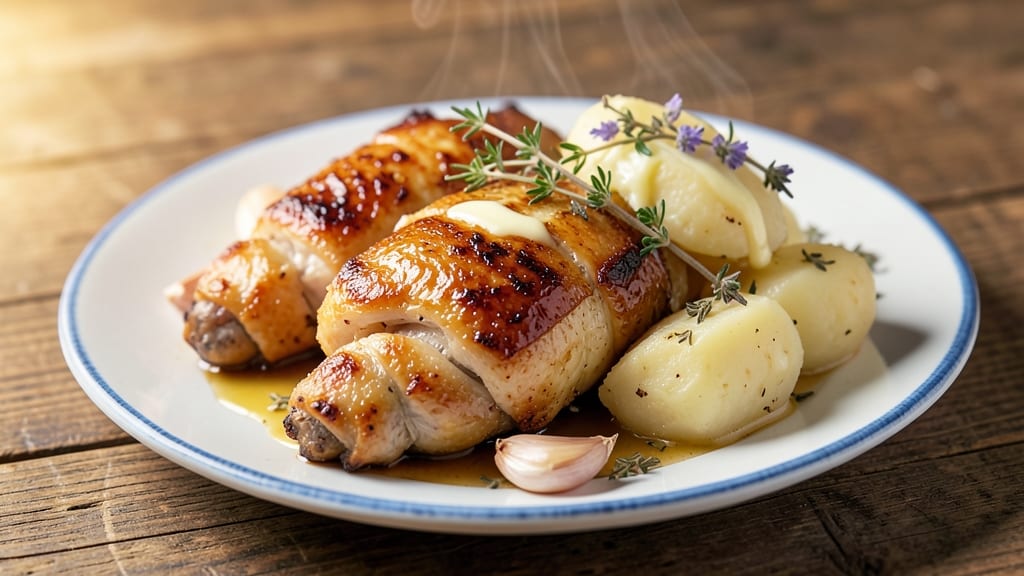
This herb-infused one-pan chicken and canned potatoes recipe transforms pantry staples into a restaurant-worthy meal in just 25 minutes—no fancy prep required. Growing up in small-town Georgia, I learned that the best dinners often come from simple ingredients handled with care, and this dish proves it.
The secret lies in searing the chicken first for depth of flavor, then letting the canned potatoes soak up all that aromatic goodness while they warm through.
What makes this recipe work so well is its balance of simple ingredients and professional technique. You’ll start with chicken thighs (their higher fat content keeps them juicy) and canned potatoes—whether they’re red, Yukon gold, or even those slightly underused baby potatoes.
The key is building layers of flavor: garlic, thyme, and a splash of white wine elevate the chicken, while butter and fresh parsley brighten the potatoes. It’s the kind of dish that feels indulgent but comes together faster than takeout.
By the time you’re done, you’ll have tender, golden-brown chicken with crisp edges and creamy, herb-kissed potatoes that cling together just enough to hold their shape. The best part? Everything cooks in one pan, so cleanup is minimal—just scrape, wipe, and enjoy.
This is dinner that delivers restaurant-quality results without the fuss, perfect for weeknights when you want something satisfying but don’t have hours to spare.
Serve it with a simple green salad and crusty bread to soak up the juices, or drizzle with a quick lemon-herb sauce for extra brightness. The recipe scales easily too—double it for a crowd or halve it for a solo meal. Let’s get cooking!
Ingredients for chicken and canned potatoes
Simple ingredients, bold flavors—this one-pan wonder comes together faster than takeout.
| Ingredient | Amount | Notes |
|---|---|---|
| Chicken Thighs 🍗 | 1 ½ lb | Bone-in, skin-on for juiciness |
| Canned Potatoes 🥔 | 2 cups | Red or Yukon gold preferred |
| Garlic Cloves 🧄 | 4 cloves | Minced for even distribution |
| Fresh Thyme 🌿 | 2 tbsp | Leaves only, finely chopped |
| Dried Thyme 🌿 | 1 tsp | Substitute if fresh unavailable |
| Unsalted Butter 🧈 | 3 tbsp | Full-fat for best flavor |
| Dry White Wine 🍷 | ½ cup | Sauvignon Blanc recommended |
| Chicken Broth 💧 | ½ cup | Low-sodium preferred |
| Fresh Parsley 🌿 | ¼ cup | Chopped for garnish |
| Olive Oil 🫒 | 1 tbsp | For searing chicken |
| Salt 🧂 | 1 ½ tsp | Kosher or sea salt |
| Black Pepper 🌶️ | ½ tsp | Freshly ground preferred |
| Lemon Juice 🍋 | 1 tbsp | Freshly squeezed |
The chicken thighs are non-negotiable here—they stay juicier than breasts, especially when seared first. Look for bone-in, skin-on thighs at your local butcher or grocery store's meat counter. Costco or Walmart usually have them pre-packaged, but if you're buying whole, ask for the dark meat. The canned potatoes? Goya or Del Monte are my go-tos—they're pre-cooked and hold together perfectly. For the thyme, fresh is ideal but dried works in a pinch. Just remember dried is more potent, so start with half the amount if you're swapping. The white wine should be something you'd drink—Sauvignon Blanc or Pinot Grigio both work beautifully.
No white wine? Chicken broth with a splash of lemon juice gets you close. Fresh thyme unavailable? Dried thyme at one-third the amount does the trick. For the potatoes, baby potatoes or red potatoes work best—they hold their shape better than Yukon gold when warmed through. The butter matters here—full-fat is a must. If you're watching calories, use half butter and half olive oil, but trust me on the full-fat version. The parsley is just for garnish, so don't stress if you're out—it's all about the chicken and potatoes doing the heavy lifting.
This dish reheats beautifully—honestly tastes better the next day once everything melds together. Keeps in the fridge for 4 days if stored properly. I like to portion it into individual containers so lunches are sorted for the week. For leftovers, just pop them in the microwave with a splash of water or broth to revive the flavors. The chicken and potatoes also freeze well for up to 3 months, though the texture might be slightly softer when thawed. Double the recipe and freeze half—you'll thank me later.
Why You'll Love This Recipe
- Here’s what sold me: I make a big batch on Sunday, and by Wednesday, I’m packing leftovers for work. Cold or reheated, the potatoes hold their shape, and the chicken stays tender—no sad, dry sandwiches here.
- I’ll be real: this recipe saved me during that month of grocery budgeting. Canned potatoes cut costs, thighs are cheaper than breasts, and a few cloves of garlic stretch the flavor. Still tastes like I slaved over it—(yes, even on a Tuesday night).
Step-by-step instructions for chicken and canned potatoes recipe
Here's how to create a flavorful, one-pan dinner that's ready in under 30 minutes.
Sear the Chicken Thighs for Maximum Flavor
Heat a large oven-safe skillet over medium-high heat. Add the 1 tablespoon olive oil and let it get shimmering hot. Pat the 1.5 lb chicken thighs dry with paper towels—this ensures a perfect sear. Place the thighs skin-side down in the skillet and cook undisturbed for 5-6 minutes until the skin is golden brown and crispy.
Flip the thighs and cook for another 4-5 minutes until the internal temperature reaches 165°F using an instant-read thermometer. This searing step builds incredible flavor and locks in juices. If the skin starts to smoke, reduce the heat slightly to prevent burning. Remove the chicken and set it aside on a plate.
Sauté Aromatics and Deglaze the Pan
In the same skillet, reduce the heat to medium. Add the 3 tablespoons unsalted butter and let it melt completely. Add the 4 cloves minced garlic cloves and cook for 30 seconds until fragrant—don't let it brown or it'll turn bitter. Stir in the 2 tablespoons fresh thyme and 1 teaspoon dried thyme, cooking for another 20 seconds to release their aromatic oils.
Pour in the 0.5 cup dry white wine and scrape up any browned bits from the bottom of the pan with a wooden spoon. This deglazing step captures all the flavor you just created. Let the wine simmer for 2-3 minutes until reduced by half, creating a rich, flavorful base for your dish.
Add Potatoes and Simmer in Herbed Broth
Drain and rinse the 2 cups canned potatoes to remove excess starch, then add them to the skillet. Pour in the 0.5 cup chicken broth and bring the mixture to a gentle simmer. Season with the 1.5 teaspoons salt and 0.5 teaspoon black pepper, then stir to combine. The potatoes should be mostly submerged in the liquid.
Return the chicken thighs to the skillet, skin-side up, and spoon the herbed broth over them. Cover the skillet and transfer it to a preheated 375°F oven. Bake for 12-15 minutes until the potatoes are tender when pierced with a fork and the chicken is fully cooked through.
Finish with Fresh Herbs and Zesty Brightness
Remove the skillet from the oven and stir in the 0.25 cup chopped fresh parsley and 1 tablespoon lemon juice. The bright acidity of the lemon juice cuts through the richness of the butter and chicken, creating a perfect balance of flavors. Let the dish sit uncovered for 2-3 minutes to allow the juices to redistribute.
Taste and adjust seasoning if needed—this is your chance to make it perfect. The potatoes should be tender with crisp edges, and the chicken should be juicy with crispy skin. Spoon the herbed broth over the top before serving to ensure every bite is packed with flavor.
Pro Tips For Making Chicken And Canned Potatoes
- CRISP THE THIGHS FIRST: Pat the chicken thighs bone-dry with paper towels before searing—this isn’t optional. Wet skin steams instead of browns, and you’ll end up with sad, pale meat. I learned this the hard way after making a batch where the thighs came out grayish, no matter how long I cooked them.
- DRAIN AND RINSE POTATOES: Open the canned potatoes, drain them thoroughly, then rinse under cold water to wash off excess starch. Skipping this step turns your dish into a gluey mess—no joke. The starch clings to everything, making the potatoes gummy instead of tender.
- GARLIC NEEDS A HEAD START: Sauté the minced garlic in oil for exactly 30 seconds before adding anything else. Too long, and it burns into bitterness; too short, and it stays raw. I was skeptical until I tried it—now I double-check the timer because it makes a real difference in flavor.
- SAVE TIME WITH THYME: Toss the canned potatoes with both fresh and dried thyme right after draining—no need to chop the fresh stems. The dried adds depth, while the fresh keeps the aroma bright. I skip this when I’m lazy, but the dish is noticeably better when I don’t.
Pro cooking tips for perfect results
Sear Like a Pro
This isn't just any sear—it's the foundation of your dish. Use a 12-inch cast iron skillet (I swear by my Lodge Pre-Seasoned) and heat it until it's ripping hot before adding oil. Pat those chicken thighs bone-dry with paper towels—water is the enemy of crispy skin.
Let them sear undisturbed for 5-6 minutes until the skin turns a deep golden brown. That's when the Maillard reaction kicks in, creating layers of flavor. 🔥
Deglaze with Purpose
Never waste those flavorful browned bits! After removing the chicken, add 3 tablespoons of cold butter to the pan—this helps lift the fond (those browned bits) off the bottom. Use a wooden spoon to scrape every last bit while deglazing with white wine.
The wine should reduce by half before adding the potatoes, creating a rich, herby sauce that clings to everything. I like to use Sauvignon Blanc because its citrus notes play well with thyme.
Potato Texture Secrets
Canned potatoes are your shortcut, but how you handle them matters. Drain and rinse them thoroughly to remove excess starch, which can make the sauce gummy. For extra tenderness, add a splash of chicken broth (about ¼ cup) when simmering.
If your potatoes are still firm after baking, uncover the skillet and let them steam for 2-3 minutes—this helps them absorb more of that herbed broth without falling apart.
Oven Finish Perfection
Transferring the skillet to the oven is where the magic happens. 375°F is your sweet spot—hot enough to cook through but gentle enough to keep the chicken from drying out. Place the skillet on the middle rack of your oven for even heat distribution.
If your oven runs hot, reduce the temperature to 350°F and add 5 extra minutes to the baking time. The potatoes should be fork-tender, and the chicken should reach 165°F internal temperature.
Bright Finish Touches
The final flourish makes all the difference. Stir in fresh parsley and lemon juice right before serving—this adds a bright, herbal note that cuts through the richness. For an extra pop of color, add a pinch of smoked paprika or red pepper flakes if you like a little heat.
Let the dish rest for 2-3 minutes before serving so the juices redistribute. This is non-negotiable—skipping it means dry chicken and sad potatoes. ✨
Equipment Shortcuts
No cast iron skillet? A heavy-bottomed stainless steel pan works just as well. Short on time? Use pre-minced garlic from the jar—it’s just as effective. For extra crispy skin, broil the chicken for 1-2 minutes at the very end.
And if you don’t have an instant-read thermometer, cut into the thickest part of the chicken—it should be white and juicy with no pink. Trust your instincts, and don’t overcook! 💡
Nutrition facts
Frequently asked questions
Can I use chicken breasts instead of thighs?
Chicken breasts work but require extra care to stay juicy. For best results, pound them to an even thickness and cook at 350°F instead of 375°F, adding 5 extra minutes to the baking time. Brining for 30 minutes in salted water first helps retain moisture.
What if I don't have white wine?
No problem! Substitute with chicken broth + 1 tablespoon lemon juice for acidity, or use apple cider vinegar (1 tablespoon) for tang. The dish will still taste delicious—just slightly less complex. For a richer flavor, add 1 teaspoon soy sauce to the broth.
Why do my canned potatoes turn mushy?
Overcooking or not draining/rinsing them first causes mushiness. Always drain and rinse canned potatoes thoroughly to remove excess starch. Use low heat when simmering and cover the pan to steam gently. Baby potatoes hold shape better than Yukon gold when warmed through.
Can I make this with frozen potatoes?
Frozen potatoes won't work here—they'll release too much moisture and make the sauce watery. Stick to canned potatoes for this recipe. For a different texture, try roasted potato wedges as a side instead. The canned version is specifically chosen for its convenience and texture when warmed.
How do I make this spicier?
Add ½ teaspoon smoked paprika or ¼ teaspoon cayenne pepper to the chicken while searing. For extra heat, stir in 1 teaspoon hot sauce with the lemon juice at the end. If you love spice, serve with pickled jalapeños or a side of sriracha mayo.