
Main Courses
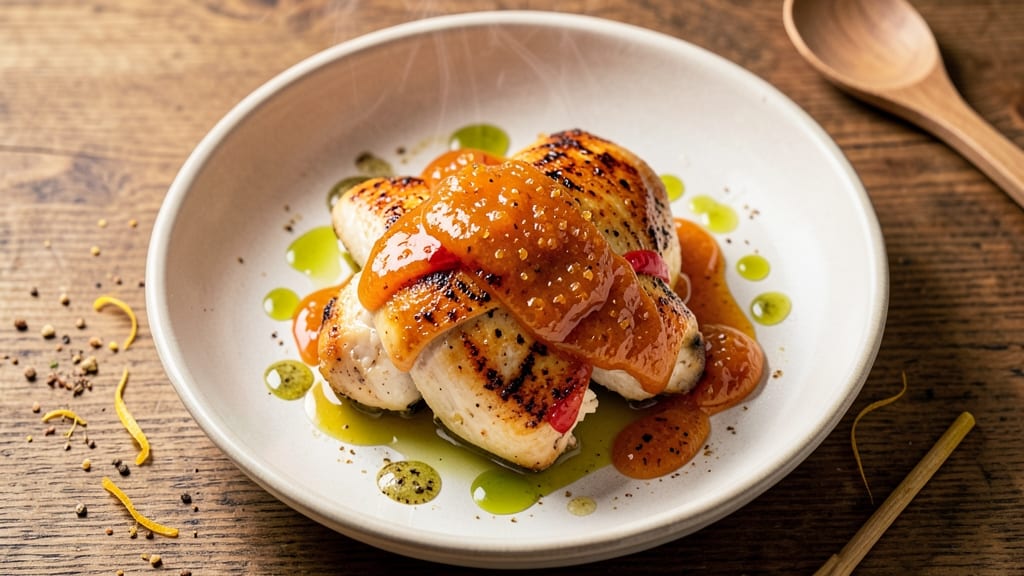
This baked chicken with orange marmalade recipe transforms ordinary roasted chicken into something extraordinary—juicy, tender meat kissed by caramelized orange glaze that balances sweet and savory in every bite.
The secret lies in the marmalade's ability to glaze beautifully while infusing the chicken with citrus brightness, a technique I perfected after years of experimenting with fruit-based glazes. My grandmother used to make something similar, though hers was always slightly sweeter—this version finds the perfect balance between richness and brightness.
The beauty of this recipe is its simplicity: just a few ingredients, 45 minutes in the oven, and a glaze that requires no fancy skills—just patience to let the marmalade caramelize into a sticky, golden perfection.
The chicken stays moist thanks to a simple brine, while the marmalade glaze adds depth that elevates the dish from ordinary to restaurant-worthy. This is the kind of recipe that makes weeknight dinners feel special without requiring hours in the kitchen.
What makes this dish truly special is how the orange marmalade glaze transforms the chicken's surface—it's not just a sauce, but a caramelized crust that adds texture and complexity. The glaze's sweetness cuts through the richness of the chicken, creating a harmony that's both comforting and sophisticated.
Serve it with roasted vegetables or mashed potatoes to let the flavors shine, and you'll have a meal that's impressive yet approachable.
This recipe delivers on its promise of perfection by combining traditional techniques with modern convenience—no complicated steps, just a foolproof method that yields results every time. The marmalade glaze can even be made ahead, making this a great option for meal preppers or anyone looking to impress with minimal effort.
Let's get to the oven—your taste buds will thank you.
Ingredients for baked chicken with orange marmalade
Twelve ingredients transform ordinary chicken into restaurant-worthy citrus-glazed perfection.
| Ingredient | Amount | Notes |
|---|---|---|
| Boneless, Skinless Chicken Breasts 🍗 | 1 ½ lb | Evenly cut for consistent cooking |
| Orange Marmalade 🍊 | ½ cup | High-quality, seedless preferred |
| Extra-Virgin Olive Oil 🫒 | 2 tbsp | For basting and glaze richness |
| Fresh Orange Juice 🍊 | ¼ cup | Freshly squeezed for brightness |
| Honey 🍯 | 1 tbsp | For glaze depth and caramelization |
| Dijon Mustard 🌶️ | 1 tbsp | For subtle tang and adhesion |
| Kosher Salt 🧂 | 1 ½ tsp | Diamond Crystal preferred |
| Black Peppercorns 🌶️ | ½ tsp | Freshly cracked for aroma |
| Garlic Cloves 🧄 | 3 cloves | Minced for aromatic base |
| Fresh Rosemary 🌿 | ½ tsp | Chopped, for herbal complexity |
| Water 💧 | ½ cup | For brine solution |
| Dried Thyme 🌿 | ½ tsp | For earthy depth |
| Granulated Sugar 🍚 | 1 tbsp | Enhances glaze caramelization |
The marmalade is non-negotiable here—Cranberry & Orange or Orange & Ginger varieties from Bon Appétit or Smucker's work best, but avoid those with added pectin that can make the glaze too thick. The chicken breasts should be evenly sized—trim any excess fat and pound thicker portions to even thickness for consistent doneness. Fresh rosemary and thyme elevate the dish, but dried works at one-third the amount if fresh isn't available. For the brine, use Diamond Crystal kosher salt—it dissolves more easily than table salt, ensuring even moisture distribution throughout the chicken.
No marmalade? Substitute orange jam at half the amount—though it won't caramelize as beautifully. Fresh orange juice can be swapped for bottled no-pulp orange juice in a pinch, but you'll lose some brightness. The Dijon mustard is essential for helping the glaze adhere, but if you're avoiding it, 1 tbsp plain yogurt works as a binder. For a deeper sweetness, add 1 tsp maple syrup to the glaze mixture. The garlic can be pre-minced from a jar, but freshly minced adds significantly more flavor. If you're prepping ahead, make the glaze mixture up to 3 days in advance and store it in the fridge, but bring it to room temperature before using.
The marmalade glaze can be made up to 2 days ahead and reheated gently in the microwave or on the stovetop before basting. Store any leftovers in an airtight container in the fridge for up to 5 days, though the flavor improves with a day or two of resting. For a make-ahead meal, brine the chicken overnight and store it in the fridge until ready to bake. The glaze reheats beautifully—simply warm it in a small saucepan over low heat, stirring occasionally, until it reaches a spreadable consistency. This dish reheats even better the next day, as the flavors meld further, making it perfect for meal prep.
Why You'll Love This Recipe
- One-Pan Magic: That’s right—just chicken, marmalade, and a drizzle of olive oil. No chopping veggies, no saucepan to monitor, no extra dishes. I swear, the only thing you’ll scrub is your fork.
- Sweet-Savory Balance: The marmalade’s tangy citrus cuts through the chicken’s richness, while the honey and orange juice add this just-right stickiness. It’s bright enough to feel fresh but hearty enough to satisfy when I’ve had a long day.
- Lunchbox Hero: Between us, this is my go-to for meal prep. Slice it up, pack it with crackers or greens, and it stays fresh for days. My kids actually finish their lunches—(yes, even on a Tuesday).
- Budget Brightener: Fresh oranges and honey stretch this recipe’s value. A single jar of marmalade lasts for months, and the chicken’s simplicity means I’m not overpaying for fancy cuts. Plus, leftovers reheat like a dream.
Step-by-step instructions for baked chicken with orange marmalade glaze
This method delivers restaurant-quality caramelization with balanced sweetness and savory depth.
Prepare the Brine for Maximum Juiciness
In a medium bowl, combine the 0.5 cup water, 1.5 tsp kosher salt, 1 tbsp honey, and 1 tbsp granulated sugar. Stir until completely dissolved—this creates an isotonic brine that ensures even moisture distribution throughout the chicken.
Place the 1.5 lb boneless, skinless chicken breasts in a resealable plastic bag and pour the brine over them. Seal the bag and massage the chicken gently to coat all surfaces. Refrigerate for 30-45 minutes—this time allows the brine to penetrate deeply, resulting in tender meat that resists drying during baking. For best results, cut the chicken into 4 equal portions (about 4 oz each) before brining to ensure even cooking.
Create the Orange Marmalade Glaze
In a small saucepan, combine the 0.5 cup orange marmalade, 0.25 cup fresh orange juice, 1 tbsp Dijon mustard, 0.5 tsp dried thyme, and 3 minced garlic cloves. Bring to a gentle simmer over medium-low heat, stirring constantly for 5-7 minutes until the mixture thickens slightly and the aroma becomes intensely citrus-forward.
Remove from heat and stir in the 0.5 tsp chopped fresh rosemary and 0.5 tsp freshly cracked black peppercorns. Let the glaze cool to room temperature—this prevents the chicken from steaming when you add it. The glaze should be smooth and slightly syrupy, with visible marmalade chunks that will caramelize beautifully during baking. If it thickens too much while cooling, whisk in 1 tsp water to restore proper consistency.
Bake the Chicken to Perfect Doneness
Preheat your oven to 375°F and position a rack in the center position. Line a baking sheet with parchment paper for easy cleanup. Pat the brined chicken dry with paper towels—this step is crucial for achieving that perfect caramelized crust. Season each piece generously with additional kosher salt and black pepper if desired.
Place the chicken on the prepared baking sheet and drizzle each piece with 1 teaspoon of the extra-virgin olive oil. Bake for 18-20 minutes until the internal temperature reaches 160°F and the chicken is no longer pink in the center. The skin should be golden brown, and the edges should begin to crisp slightly. For even cooking, rotate the baking sheet halfway through the baking time.
Glaze and Caramelize to Perfection
Remove the chicken from the oven and transfer it to a serving platter. Spoon the prepared orange marmalade glaze evenly over each piece, allowing it to pool in the center. Return the chicken to the oven and bake for an additional 8-10 minutes—this time allows the glaze to bubble, thicken, and develop a beautiful caramelized crust.
Watch the glaze carefully during the final minutes—it should reduce to a glossy, slightly sticky consistency with deep amber spots where it's caramelizing. The chicken is done when the glaze is set but still slightly jiggly in the center. For extra shine, brush the chicken with any remaining glaze from the pan after removing it from the oven. Let the chicken rest for 5 minutes before serving to allow the juices to redistribute.
Garnish and Serve Immediately
While the chicken rests, heat the reserved 2 tbsp extra-virgin olive oil in a small skillet over low heat until it's just shimmering. Remove from heat and drizzle this infused oil over the chicken just before serving. Garnish each piece with a sprinkle of freshly cracked black peppercorns and a few chopped fresh rosemary sprigs for a pop of color and aroma.
Serve the chicken immediately with the caramelized glaze pooling attractively on the plate. The combination of tender, juicy chicken and the complex sweet-savory glaze creates a perfect balance of flavors. For an elegant presentation, drizzle any remaining glaze from the baking sheet over the top just before serving. The glaze should be sticky enough to cling to the chicken but not so thick that it's difficult to cut through.
Pro Tips For Making Baked Chicken With Orange Marmalade
- BRINE THE CHICKEN FIRST: I learned this the hard way—dry chicken breasts turn out dry. Soak them in a mix of equal parts fresh orange juice and water with 1 teaspoon of salt per cup for 20 minutes before baking. The acid tenderizes while the salt keeps the meat juicy, and it pairs perfectly with the marmalade’s sweetness.
- USE THICK MARMALADE SLATHERS: Skip the thin drizzle—spread the orange marmalade in generous ¼-inch layers over the chicken. It caramelizes better and sticks to the meat instead of pooling at the bottom. If it’s too runny, chill it for 10 minutes first.
- BAKE AT 375°F, NOT HIGHER: I was skeptical until I tried it: 400°F makes the marmalade burn before the chicken cooks through. Stick to 375°F for 20-25 minutes (until internal temp hits 165°F). The lower heat lets the glaze melt into the meat without turning bitter.
- DEGLAZE THE PAN AFTER BAKING: That sticky pan isn’t waste—it’s flavor. After removing the chicken, add 2 tablespoons of fresh orange juice and 1 teaspoon of honey, then simmer for 2 minutes. Scrape it up and drizzle it back over the chicken for a glossy finish. (Yes, even if you’re impatient like me.)
Flavor customization for this recipe
Sweet Heat Variations
For a spicier kick, stir in ½ tsp cayenne pepper or 1 tsp chili flakes into the glaze before baking—this adds subtle heat that pairs beautifully with the sweetness. I love using Penzeys Orange Chili Jam instead of plain marmalade for built-in heat without extra prep.
For a smoky twist, add ½ tsp smoked paprika to the glaze mixture while simmering. 🌶️
Herb & Citrus Boosts
Fresh herbs elevate the glaze dramatically. Try adding 1 tbsp chopped fresh thyme or 1 tsp lemon zest to the glaze for extra brightness. I often swap rosemary for fresh tarragon when I have it—it adds an anise-like depth that works surprisingly well.
For a Mediterranean touch, add ½ tsp dried oregano to the glaze mixture while simmering.
Savory Depth Additions
For a more complex flavor profile, stir in 1 tsp soy sauce or ½ tsp fish sauce into the glaze before baking—this adds umami that balances the sweetness perfectly. I also like adding 1 tsp minced shallot to the glaze while simmering for extra depth.
For a richer finish, reduce the glaze with 1 tbsp balsamic vinegar before applying to the chicken.
Alternative Glaze Bases
No marmalade? Use ½ cup orange jam mixed with 1 tbsp honey and 1 tsp orange zest for a similar effect. For a tangy twist, substitute ½ cup apricot jam and add 1 tsp lemon juice to the glaze.
I've also used ½ cup peach preserves with great success—just reduce it slightly longer to achieve the right consistency. 🍑
Texture Variations
For a crunchy contrast, sprinkle toasted sliced almonds or crushed pistachios over the chicken right before serving. I like adding ½ tsp sesame seeds for a nutty finish.
For a creamy texture, stir 1 tbsp Greek yogurt into the glaze before applying—this adds a subtle tang that works wonderfully with the citrus notes.
Make-Ahead Glaze Options
Prepare the glaze up to 3 days ahead and store it in an airtight container in the fridge. Reheat gently in a saucepan over low heat until warmed through before using. For a make-ahead meal, brine the chicken and store it in the fridge until ready to bake.
The glaze reheats beautifully and actually tastes better the next day as the flavors meld further. ✨
Nutrition facts
Frequently asked questions
Can I use chicken thighs instead of breasts?
Chicken thighs work beautifully—just increase the baking time to 25-30 minutes (until internal temp reaches 175°F) since they cook slower. The skin will crisp up wonderfully with the glaze, but pat them extra dry before baking to prevent excess moisture. For thighs, reduce the olive oil to 1 tbsp total since they're fatter naturally.
How do I prevent the glaze from burning?
Watch the glaze closely during the final 8-10 minutes—it should bubble but not darken too much. If it starts browning too quickly, tent the chicken loosely with aluminum foil and bake for 3-5 minutes uncovered to let it set. The glaze needs time to caramelize, but it shouldn't turn black. A 350°F oven works better for delicate caramelization if you're concerned about burning.
What's the best way to reheat leftovers?
Reheat gently in a 325°F oven for 10-12 minutes with a splash of water in the pan to keep the glaze from drying out. Avoid microwaving—it makes the chicken rubbery. For extra shine, brush with a little fresh orange juice before reheating. Leftovers actually taste better the next day as the flavors meld further!
Can I make this recipe ahead of time?
Yes! Prepare the glaze up to 3 days ahead and store it refrigerated. Brine the chicken and refrigerate it separately. When ready to cook, bake as directed. The glaze reheats beautifully—simmer it gently in a saucepan until smooth, then brush over the chicken. This makes it perfect for meal prep or holiday gatherings.
What sides pair best with this dish?
Roasted root vegetables (carrots, parsnips) or mashed potatoes complement the citrus perfectly. For a lighter option, try a fresh orange salad with arugula and shaved fennel. The glaze's sweetness also works wonderfully with creamy polenta or buttery egg noodles. Avoid overly sweet sides that might compete with the marmalade's flavor.