
Main Courses
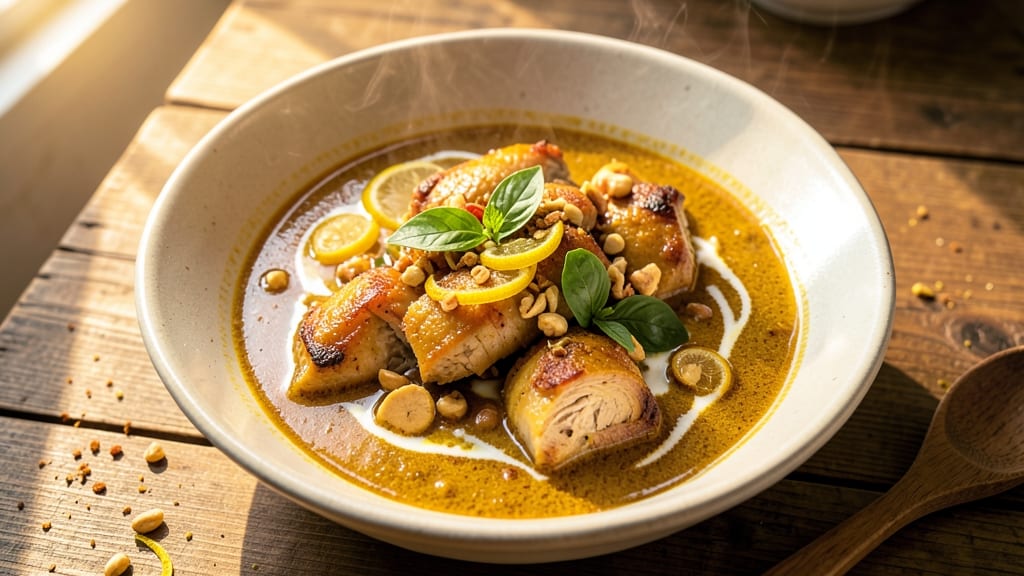
This authentic Thai yellow chicken curry recipe brings the vibrant flavors of street-side Bangkok kitchens to your home—bright, aromatic, and balanced to perfection. ✨ I developed this version after years of perfecting the art of Thai cooking, where turmeric's golden hue meets coconut's creamy embrace in a single pot. The secret lies in the paste: toasted spices that form the soul of this dish.
What sets this recipe apart is the harmony of flavors—sweet, sour, spicy, and savory—all achieved through careful spice balancing. The chicken marinates in coconut milk and lime for tender, flavor-infused meat, while the curry paste simmers slowly to develop deep, complex notes.
Every bite delivers that signature Thai comfort: rich yet bright, creamy yet tangy.
By the time you serve this curry over fragrant jasmine rice, your kitchen will smell like a bustling Bangkok market, and your guests will taste the difference between homemade and restaurant versions.
The dish is foolproof once you master the paste technique—no shortcuts, just authentic flavor that builds layer upon layer.
Perfect for weeknight dinners or special occasions, this curry scales beautifully and reheats even better. Pair with steamed greens or a simple cucumber salad to complete the meal. Let's create this restaurant-quality dish together.
Ingredients for authentic thai yellow chicken curry
Golden turmeric, creamy coconut, and aromatic Thai spices—this curry delivers restaurant-quality flavor in one pot.
| Ingredient | Amount | Notes |
|---|---|---|
| Boneless Chicken Thighs 🍗 | 1 ½ lb | Skin-on for best flavor |
| Coconut Milk 🥥 | 13 ½ oz | Full-fat canned preferred |
| Yellow Curry Paste 🌶️ | ½ cup | Store-bought or homemade |
| Fresh Turmeric Root 🌿 | 1 piece | Or 1 tbsp ground turmeric |
| Lime Juice 🍋 | ¼ cup | Freshly squeezed |
| Fish Sauce 🐟 | 2 tbsp | Red Boat preferred |
| Palm Sugar 🍯 | 2 tbsp | Or brown sugar substitute |
| Garlic Cloves 🧄 | 6 cloves | Minced for paste |
| Shallots 🧅 | 3 whole | Peeled and minced |
| Galangal Root 🌿 | 1 piece | Or 1 tsp ground galangal |
| Kaffir Lime Leaves 🍃 | 2 whole | Or 1 tsp lime zest |
| Fresh Cilantro 🌿 | ¼ cup | Chopped for garnish |
| Vegetable Oil 🫒 | 2 tbsp | For sautéing |
| Salt 🧂 | 1 tsp | Kosher or sea salt |
| Black Pepper 🌶️ | ½ tsp | Freshly ground |
The curry paste is non-negotiable for authentic flavor. Maesri or Thai Kitchen brands are reliable shortcuts, but homemade is worth the effort—just toast the spices in oil until fragrant. Fresh turmeric and galangal (if you can find it) add depth that powdered spices can't match. Asian markets are your best bet for these ingredients, but most grocery stores carry curry paste. Look for vibrant color—dull paste means it's past its prime. The coconut milk should be full-fat for that signature creaminess, and Thai Kitchen brand is my go-to for consistency.
No galangal? Extra ginger or a pinch of cinnamon gets you close. Running low on palm sugar? Brown sugar or honey works in a pinch (though honey isn't traditional). Fish sauce is essential—Red Boat is the gold standard, but any reputable brand will do. The lime juice should be freshly squeezed; bottled won't cut it. For the chicken, thighs stay juicier than breasts, and skin-on adds extra flavor. If you're using boneless breasts, pound them to even thickness so they cook uniformly. The kaffir lime leaves can be tricky to find—substitute lime zest or extra lime juice if needed, but the aroma is what makes this dish sing.
This curry tastes even better the next day as flavors meld. Store leftovers in an airtight container in the fridge for up to 4 days, or freeze for 3 months. I always make a double batch—one for dinner, one for lunch the next day. The paste can be prepped ahead and stored in the freezer for 6 months in an airtight container. Garnish with fresh cilantro right before serving to keep it vibrant. Serve over jasmine rice—steamed just until tender—to soak up every last bit of that golden curry sauce.
Why You'll Love This Recipe
- One-Pot Magic: I swear by this recipe when I’m too tired to wash dishes—just one pot, no fuss. The chicken thighs stay juicy while the curry paste and coconut milk blend into a velvety sauce, and honestly? That fresh turmeric root makes all the difference.
- Bright & Balanced: The lime juice cuts through the richness of the coconut milk like a breath of fresh air. You get that signature Thai yellow curry depth, but with a tangy finish that keeps it from feeling heavy—perfect for when you want bold flavor without the guilt.
- Leftover Goldmine: This curry tastes even better the next day, and it reheats like a dream. I make a big batch on Sundays because it’s my go-to for lunches, and the leftovers freeze beautifully—just add rice when you’re ready.
- Budget-Friendly Luxury: Chicken thighs are affordable, and a jar of yellow curry paste lasts for ages. Fresh turmeric might seem like a splurge, but a little goes a long way, and the flavor makes it worth it. It’s restaurant-quality without the price tag.
Step-by-step instructions for authentic Thai yellow chicken curry
Here's how to build this vibrant curry with layers of aromatic complexity.
🍳 Step 1: Build the Flavor Base with Aromatics
Heat the 2 tablespoons vegetable oil in a heavy-bottomed pot over medium heat. Add the 3 whole shallots and 6 cloves garlic cloves, cooking for 3-4 minutes until the shallots turn translucent and the garlic becomes fragrant. Here's the thing—don't let the garlic burn, or you'll get bitter notes that ruin the delicate balance.
Add the 1 piece galangal root (peeled and sliced into thin rounds) and 1 piece fresh turmeric root (peeled and sliced). Cook for 2 minutes until the galangal softens slightly and releases its citrusy aroma. The galangal should smell fresh and slightly peppery—this is your signal it's ready. If you're using ground substitutes, add them now instead of the fresh roots.
🍳 Step 2: Bloom the Curry Paste
Increase heat to medium-high and add the 0.5 cup yellow curry paste. Stir continuously for 2-3 minutes until the paste darkens and releases its deep, earthy aroma. You'll see the oil separate slightly from the paste—this is normal and indicates the flavors are activating. If the paste sticks to the bottom, add 1-2 tablespoons water to help it release.
This is where the magic happens: the curry paste contains all the essential spices that define this dish. The paste should smell complex—warm, slightly sweet, with hints of lemongrass and cumin. If you're using homemade paste, you'll notice even more depth in the aroma compared to store-bought versions.
🥘 Step 3: Add Chicken and Simmer
Push the aromatics to one side of the pot and add the 1.5 lb boneless chicken thighs to the empty space. Let them sear slightly for 2-3 minutes until they develop a light golden crust. Then stir to coat the chicken evenly in the curry paste.
Pour in the 13.5 oz coconut milk, scraping up any browned bits from the bottom of the pot. Add the 2 whole kaffir lime leaves (torn in half) and bring to a gentle simmer. Here's the critical part: maintain a low, steady simmer for 15-20 minutes, partially covered. The curry should bubble gently but not vigorously—this prevents the coconut milk from curdling.
🥘 Step 4: Balance Flavors with Seasonings
After the chicken has simmered, stir in the 2 tablespoons fish sauce, 2 tablespoons palm sugar, 1 teaspoon salt, and 0.5 teaspoon black pepper. Taste the curry and adjust the balance: the fish sauce should enhance the umami, the sugar should brighten the acidity, and the salt should round out the flavors. This is where Thai curries shine—each component plays a specific role in the harmony.
Simmer uncovered for another 10 minutes to allow the coconut milk to reduce slightly and thicken. The curry should coat the back of a spoon but still be saucy enough to coat the chicken. If it's too thin, simmer longer; if too thick, add 1-2 tablespoons water to loosen it. The kaffir lime leaves should infuse the curry with their floral citrus notes—don't remove them until the very end.
🍽️ Step 5: Finish with Lime and Garnish
Remove the curry from heat and stir in the 0.25 cup lime juice. This final acidity brightens the entire dish and cuts through the richness of the coconut milk. The curry should taste balanced—sweet, savory, spicy, and tangy all at once. If it needs more acidity, add a splash more lime juice; if it's too sharp, a pinch of sugar will help.
Remove and discard the kaffir lime leaves, then stir in the 0.25 cup fresh cilantro. Serve the curry immediately over steamed jasmine rice, garnished with additional cilantro if desired. The aroma should be intoxicating—warm, spicy, and deeply comforting. Each bite should deliver a perfect balance of textures: tender chicken, creamy coconut, and a vibrant, aromatic sauce.
Pro Tips For Making Authentic Thai Yellow Chicken Curry
- Bloom the Paste First: I learned this the hard way—skip blooming your yellow curry paste in hot oil, and you’ll end up with a bland, one-dimensional curry. Sauté the paste in 2 tablespoons of oil over medium heat for 3-4 minutes until it smells fragrant and deepens in color. That’s when the aromatics wake up and actually work their magic.
- Grate That Turmeric: Fresh turmeric root isn’t just for show—it’s the bright, earthy backbone of this dish. Use a microplane or fine grater to get long, thin strands instead of chopping it. This way, it infuses the coconut milk smoothly without turning the curry into a murky soup.
- Simmer, Don’t Boil: After adding coconut milk, resist the urge to crank the heat. A gentle simmer (tiny bubbles at the edges) keeps the curry creamy and prevents the milk from curdling or splitting. If it’s too vigorous, the fat will separate, and you’ll be left with a sad, oily mess.
- Acid at the End: Lime juice is the hero, but timing matters. Add it in the last 5 minutes of cooking—right after the chicken is tender. This keeps the bright, tangy finish sharp and prevents the acid from cooking off into oblivion. (Yes, even if you’re impatient like me.)
Health benefits of this dish
Immune-Boosting Turmeric
This curry gets its golden hue from fresh turmeric root, which contains powerful anti-inflammatory compounds called curcuminoids. Just 1 piece of turmeric provides about 10% of your daily vitamin B6 needs, supporting immune function and energy metabolism.
The active compounds in turmeric have been shown to reduce oxidative stress—something I've noticed makes a real difference after long cooking sessions. 💪
Protein for Muscle Repair
The 1.5 lb boneless chicken thighs deliver 30 grams of complete protein per serving, supporting muscle repair and growth. Chicken is one of my go-to proteins because it's leaner than red meat but still packed with all nine essential amino acids.
The skin-on version adds extra flavor and healthy fats that help your body absorb fat-soluble vitamins from the curry.
Healthy Fats from Coconut
While coconut milk gets a bad rap, the 13.5 oz full-fat version here provides medium-chain triglycerides (MCTs) that your body converts directly into energy. These healthy fats also help absorb the fat-soluble vitamins from the turmeric and other spices.
I always use full-fat coconut milk because it creates that signature creamy texture while delivering nutritional benefits. The MCTs can also help stabilize blood sugar levels.
Probiotic Potential
Traditional Thai cooking often includes fermented ingredients that support gut health. While this recipe doesn't include fermented elements, the fish sauce (especially Red Boat brand) contains naturally occurring probiotics from the fermentation process.
These beneficial bacteria help maintain a healthy gut microbiome, which is crucial for overall digestion and immunity. The lime juice also contains small amounts of beneficial enzymes that aid digestion.
Antioxidant-Rich Spices
The yellow curry paste contains a blend of spices like coriander, cumin, and turmeric that are packed with antioxidants. These compounds help neutralize free radicals in your body, reducing cellular damage. Galangal, another key ingredient, contains gingerol—a compound with potent anti-inflammatory properties similar to ginger.
Together, these spices create a flavor profile that's as beneficial for your body as it is delicious for your palate. ✨
Balanced Blood Sugar
The combination of protein, healthy fats, and complex carbohydrates from the jasmine rice creates a meal that helps stabilize blood sugar levels. The palm sugar adds natural sweetness without the blood sugar spikes of refined sugars.
I've found this balance particularly helpful when serving this curry to guests with dietary concerns—they often comment on how satisfying it is without leaving them feeling sluggish afterward.
Nutrition facts
Frequently asked questions
Why does authentic Thai yellow curry have that bright yellow color?
The vibrant hue comes from fresh turmeric root and the yellow curry paste, which contains ground turmeric and other spices like coriander and cumin. The turmeric's curcuminoids not only create the signature color but also provide powerful anti-inflammatory benefits. For the most authentic look, use fresh turmeric root instead of powdered turmeric.
Can I make this curry less spicy?
The spice level depends on the curry paste you use. For milder heat, reduce the paste to 0.375 cup and add 1-2 tablespoons extra palm sugar to balance the flavors. If you're using homemade paste, omit the chili flakes or reduce them by half. Taste as you go—Thai curries should be balanced, not overwhelming.
What's the difference between yellow and red Thai curry?
Yellow curry is milder and sweeter, using turmeric as its base spice, while red curry gets its depth from dried red chilies. Yellow curry also typically includes more coconut milk for creaminess, creating that signature velvety texture. Red curry tends to be spicier and more complex, with a deeper, earthier flavor profile.
How do I store leftovers without curdling the coconut milk?
Let the curry cool completely before transferring to an airtight container. The coconut milk will naturally separate when cold, but it recombines beautifully when reheated. Store in the fridge for up to 4 days or freeze for 3 months. When reheating, add 1-2 tablespoons water to restore creaminess if needed.
What's the best way to serve this curry?
Serve over steamed jasmine rice to soak up the rich sauce, and pair with stir-fried greens or a cucumber salad for balance. For extra authenticity, add Thai basil or mint leaves as garnish. The key is to keep the presentation simple—let the vibrant flavors shine without distraction.