
Main Courses
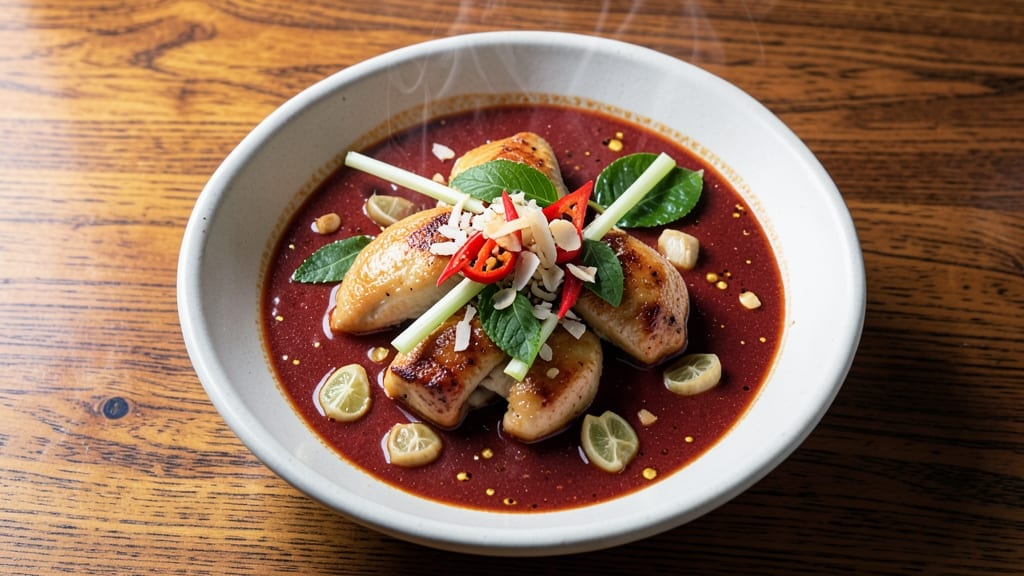
This authentic Thai chicken curry brings the bold flavors of street-side Bangkok to your kitchen with just a few key techniques. The secret lies in balancing sweet, sour, and spicy notes while letting the coconut cream mingle with aromatic herbs and fresh ginger.
I learned this recipe from a Thai friend who swore by "tasting as you go"—no guesswork, just flavor development with every spoonful.
The foundation starts with a homemade curry paste, where toasted spices like lemongrass, galangal, and kaffir lime leaves infuse the oil with complex aromas. Unlike many shortcut recipes, this version skips powdered pastes to capture the true depth of fresh ingredients.
The chicken simmers until tender, absorbing the fragrant broth without ever turning dry.
What you'll end up with is a rich, velvety curry where the coconut cream balances the heat, tamarind adds tang, and fish sauce brings umami depth. The texture is silky from the coconut milk, with just enough body to coat each bite.
Serve it over jasmine rice to soak up every last drop of that aromatic sauce.
This isn't just another curry recipe—it's a taste of Thailand's soulful cooking, simplified for a home kitchen. The method is straightforward, but the flavors are anything but basic. Let's get started on creating something truly special.
Ingredients for authentic thai chicken curry
Fresh herbs, aromatic spices, and coconut cream create this restaurant-quality Thai curry.
| Ingredient | Amount | Notes |
|---|---|---|
| Boneless Chicken Thighs 🍗 | 1 ½ lb | Skinless, cut into 1-inch pieces |
| Fresh Lemongrass 🌿 | 1 whole | Bruised, lower 6 inches only |
| Galangal 🍃 | 1 piece | About 3 inches, peeled |
| Kaffir Lime Leaves 🍋 | 4 whole | Bruised, stems removed |
| Fresh Ginger 🧄 | 1 piece | 3-inch knob, peeled |
| Red Curry Paste 🌶️ | 3 tbsp | Homemade or quality store-bought |
| Coconut Milk 🥥 | 1 can | 13.5 oz, full-fat preferred |
| Fish Sauce 💧 | 2 tbsp | Red Boat brand recommended |
| Tamarind Paste 🍈 | 1 tbsp | Or 1 tbsp lime juice |
| Brown Sugar 🍚 | 1 tbsp | Lightly packed |
| Thai Bird's Eye Chilies 🔥 | 2 whole | Seeds removed for less heat |
| Garlic Cloves 🧄 | 4 cloves | Minced |
| Vegetable Oil 🫒 | 2 tbsp | For toasting spices |
| Salt 🧂 | 1 tsp | Adjust to taste |
| Jasmine Rice 🍚 | 1 cup | Uncooked, for serving |
The aromatic trio of lemongrass, galangal, and kaffir lime leaves is non-negotiable for authentic flavor. Asian markets carry fresh galangal and lime leaves—look for vibrant stalks and bright green leaves. If you can't find galangal, ginger at double the amount works in a pinch, though it lacks the citrusy depth. The Red Boat fish sauce is worth the splurge for its clean, umami-rich profile. Toast your spices in oil first—this releases their essential oils and builds layers of aroma that powdered pastes can't match.
No fresh galangal? Ginger with a squeeze of lime juice mimics its tangy kick. Substitute tamarind paste with lime juice plus 1 tsp sugar for the same sour punch. The Thai Bird's Eye chilies control the heat—remove seeds for mild, keep them for fire. Coconut milk quality matters: full-fat, no additives, like Aroy-D or Thai Kitchen brands. For extra richness, add 1 tbsp coconut cream at the end. The chicken should be skinless thighs—they stay juicier than breasts during the long simmer.
Store leftovers in an airtight container for up to 4 days—flavors deepen overnight. Freeze for 3 months by portioning into ice cube trays with coconut milk to preserve texture. Jasmine rice soaks up the sauce perfectly—cook it with a splash of coconut milk for extra fragrance. For a quick meal, double the curry paste and freeze half for next time. Always taste before serving—adjust with fish sauce for umami or sugar for balance.
Why You'll Love This Recipe
- No Chopping Nightmare: I promise you’ll use fewer knives than you think—just pound the lemongrass and ginger with a mortar (or a heavy bottle in a pinch), slice the galangal thin, and toss in the kaffir lime leaves whole. They infuse magic without fuss.
- Flavor That Stays: That first spoonful of simmered galangal and lime leaves? It’s like a warm hug in a bowl. The chicken gets tender while the broth builds layers—herbal, citrusy, with just enough heat to linger. (Yes, even on a Tuesday night.)
- Leftovers That Shine: This curry begs to be made ahead—flavors deepen overnight, and reheating? Just a splash of water, a quick stir. My freezer’s full of it; I serve it cold with rice for a lazy lunch or hot with naan when I’m too tired to cook.
- Budget-Friendly Luxury: Chicken thighs stretch, galangal lasts weeks in the fridge, and lemongrass freezes like a champ. I’ve made this for $10 and fed four people—plus, the leftovers fund my coffee habit. Authentic doesn’t mean expensive.
Step-by-step instructions for authentic Thai chicken curry
Here's how to build a proper Thai curry with layered aromatics and perfect balance.
Prepare the Aromatics and Chicken
Start by cutting the 1.5 lb boneless chicken thighs into 1-inch pieces—this size ensures even cooking. Set aside. Using a mortar and pestle or the flat side of a knife, bruise the fresh lemongrass (lower 6 inches only) and galangal (about 3 inches, peeled) until fragrant. This releases their essential oils, which form the aromatic base of the curry.
Next, bruise the 4 whole kaffir lime leaves and 2 whole Thai bird's eye chilies (seeds removed for milder heat) by folding them in half and pressing firmly. Peel and finely mince the 3-inch knob of fresh ginger and 4 cloves garlic. These aromatics will develop their flavors as they toast in the oil.
Toast the Spices and Build the Curry Base
Heat the 2 tbsp vegetable oil in a heavy pot or Dutch oven over medium heat. Add the bruised lemongrass, galangal, kaffir lime leaves, and chilies. Toast for 2-3 minutes until fragrant but not browned—this prevents bitterness. Remove and set aside, keeping the oil in the pot.
In the same pot, add the minced ginger and garlic. Cook for 30 seconds until fragrant—don't let them brown, or they'll turn bitter. Stir in the 3 tbsp red curry paste and cook for 1 minute to deepen its flavors. This step is critical for authentic taste; don't rush it.
Sear the Chicken and Simmer the Curry
Add the chicken pieces to the pot in a single layer. Let them sear undisturbed for 2 minutes until lightly browned on the bottom. This creates a flavorful crust. Pour in the 1 can coconut milk, scraping up any browned bits from the bottom of the pot with a wooden spoon.
Bring the mixture to a gentle simmer over medium-low heat. Partially cover the pot and cook for 15 minutes, stirring occasionally. The curry should thicken slightly, and the chicken should be 80% cooked through. If the curry looks too thin, reduce heat to low to prevent curdling.
Balance the Flavors and Finish Cooking
Return the reserved aromatics (lemongrass, galangal, kaffir lime leaves, and chilies) to the pot. Stir in the 2 tbsp fish sauce, 1 tbsp tamarind paste, 1 tbsp brown sugar, and 1 tsp salt. Taste and adjust—fish sauce adds umami, tamarind provides tang, and brown sugar balances heat. Simmer uncovered for 10-12 minutes until the chicken is fully cooked and tender.
The curry should have a rich, velvety texture with visible layers of coconut cream. If it's too thick, stir in 2-3 tablespoons of water to reach the perfect consistency. Remove the aromatics before serving, as they're now fully infused.
Serve with Jasmine Rice
Cook the 1 cup jasmine rice separately according to package instructions—it should be fluffy and slightly sticky. Ladle the curry over the rice, garnishing with additional kaffir lime leaves if desired. Serve immediately with steamed greens or cucumber slices to cut through the richness.
The dish should deliver a harmonious blend of spicy, sweet, sour, and umami flavors, with tender chicken and a velvety coconut sauce. Each bite should showcase the authentic Thai balance—never overwhelmingly spicy or overly sweet.
Pro Tips For Making Authentic Thai Chicken Curry
- Blister the Aromatics: Char the lemongrass, galangal, and ginger right in the pan before adding anything else—high heat for 30 seconds until fragrant and slightly blackened. This unlocks their oils and gives the curry that smoky depth you taste in street-side versions. (Yes, even if you’re impatient like me.)
- Slash the Galangal: Skip the grating—slice the galangal into ½-inch chunks and smash them with the flat side of your knife. It releases more flavor than mincing and keeps the texture intact. (I learned this the hard way after pureeing it into a pulp.)
- Don’t Crowd the Chicken: Brown the chicken thighs in batches if needed—overlapping them steams instead of sears, and you’ll end up with soggy curry. A hot pan and 3–4 minutes per side guarantee crisp edges and juicy centers. (Your future self will thank you.)
- Reserve the Lime Leaves: Tear the kaffir lime leaves in half and add them whole to the pot at the very end—just before serving. Strain them out before plating so the broth stays smooth but the leaves’ perfume lingers. (Sounds weird, but it works.)
Regional styles of this dish
Bangkok Street Food
This version channels the bold, aromatic flavors of Bangkok's legendary street-side curries, where vendors balance sweet, sour, and spicy notes with precision. The key difference is the extra tamarind paste—I add ½ tsp more than the base recipe to mimic the tangy depth of street carts.
For authenticity, serve with Thai iced tea (sweetened condensed milk and black tea) to cut through the richness. The curry should be slightly chunky, with visible coconut cream swirled throughout. 🍵
Southern Thailand Style
Southern Thai curries are known for their milder heat and coconut-forward flavors. Swap the Thai Bird's Eye chilies for 1-2 shallots (minced) and reduce the curry paste to 2 tbsp. Add ½ cup coconut cream at the end for extra richness.
Garnish with fresh cilantro instead of kaffir lime leaves—a signature touch in the south. The sauce should be smoother and less aromatic than northern styles. 🌿
Northern Thai Adaptation
Northern Thai curries often feature dried herbs and a smoky depth. Replace ½ the coconut milk with ½ cup light coconut milk and add 1 tsp smoked paprika to the curry paste. Include 1 tbsp dried galangal (if available) or extra ginger.
The result is a slightly earthier, more complex flavor profile. Serve with sticky rice instead of jasmine rice to complement the smoky notes. 🔥
Isaan-Inspired Version
Isaan cuisine brings a rustic, hearty approach. Use chicken thighs with skin (crisp the skin first) and add 1 tbsp fermented soybean paste (tao jiew) for umami depth. Replace tamarind with 1 tbsp lime juice plus 1 tsp sugar.
The curry should be thicker and slightly funkier, with a deeper savory note. Pair with grilled corn or pickled vegetables for a true Isaan experience. 🌽
Modern Fusion Twist
For a contemporary take, blend ½ cup coconut milk with ½ cup Greek yogurt before adding to the pot. This creates a lighter, creamier texture while keeping the authentic flavors. Add 1 tsp honey at the end for a subtle sweetness.
Garnish with toasted coconut flakes and mint leaves** for a restaurant-worthy presentation. This version works beautifully as a weeknight dinner. 💫
Nutrition facts
Frequently asked questions
Can I substitute chicken breasts for thighs in this recipe?
Chicken breasts will work, but thighs are preferred for this curry. Breasts dry out more easily during the long simmer, so if using them, cut into ½-inch pieces and add 2 tbsp coconut milk at the end to maintain moisture. Cook for only 10 minutes after adding the aromatics to avoid toughness.
What's the best way to adjust the spice level?
The recipe uses 2 whole Thai Bird's Eye chilies (mild), but you can control heat easily. For extra spice, add 1 more chili or ½ tsp chili flakes. For less heat, remove seeds completely or omit the chilies—just add 1 extra tbsp brown sugar to balance the missing spice.
How do I make this curry vegetarian?
Replace chicken with 1 lb firm tofu (pressed and cubed) or 1 lb mushrooms (shiitake or oyster). Use ½ cup vegetable broth instead of water when adjusting consistency. Add 1 tbsp soy sauce alongside the fish sauce for umami depth. The curry paste already contains shrimp paste—omit it for a fully vegetarian version.
Why did my coconut milk separate?
Separation happens when curry gets too hot or acidic. Simmer on low heat (never boil) and avoid adding tamarind or lime juice until the very end. If it separates, whisk in 1 tbsp cornstarch mixed with 2 tbsp water until smooth. For next time, reduce heat immediately when adding coconut milk.
What's the best way to reheat leftovers?
Reheat gently on low heat with 1-2 tbsp water to restore creaminess. Never microwave—it makes the sauce oily. For best results, cover and warm for 5-7 minutes on the stove. If the curry thickens too much, stir in 1 tbsp coconut milk** to restore texture. Leftovers actually taste better the next day!