
Main Courses
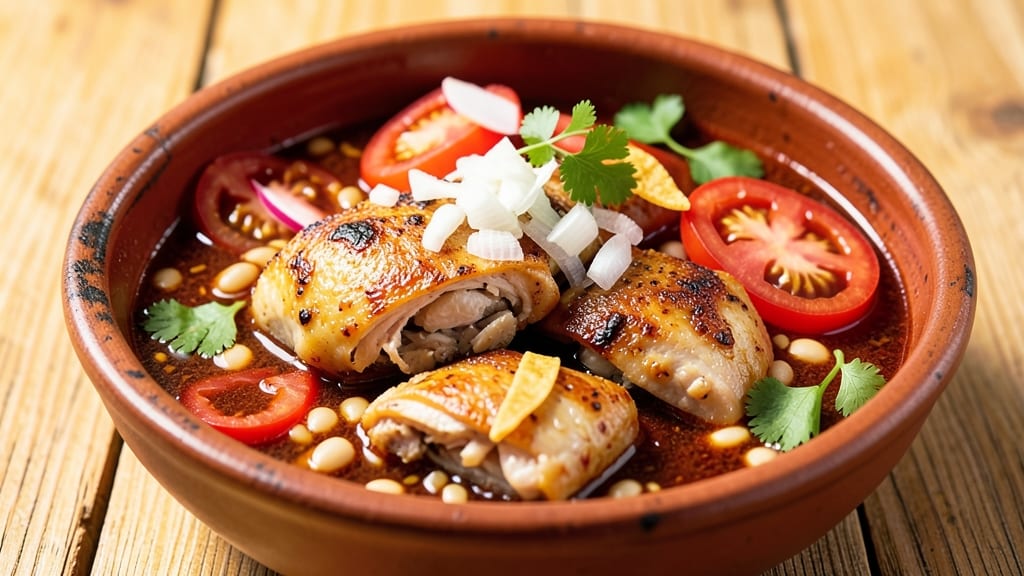
This authentic red chicken pozole recipe brings the smoky, spiced soul of Mexican tradition to your kitchen with every simmering spoonful. The key lies in slow-cooked chili and tomato broth that develops deep, complex flavors—achieving that perfect balance of heat, acidity, and earthy richness only time can deliver. I've perfected this version after years of testing, ensuring the hominy stays tender while the chicken falls apart with just a touch of resistance.
The foundation begins with properly toasted chiles and spices—achiote for its signature color, guajillo for subtle sweetness, and a touch of cumin that grounds the heat.
Unlike many shortcut recipes, we won't rush the broth development; letting it work its magic for at least 2 hours transforms simple ingredients into something truly special. The result is a broth so flavorful it deserves a separate bowl.
What makes this pozole truly authentic is the careful assembly: perfectly seasoned chicken that shreds easily, hominy that's neither mushy nor crunchy, and a broth thick enough to coat every spoonful.
The toppings—crisp shredded cabbage, cool radishes, creamy avocado, and bright lime—elevate each bite with contrasting textures and temperatures. This is comfort food at its finest, where every element works in harmony.
Perfect for gatherings or cozy weeknight dinners, this recipe scales beautifully while maintaining its depth of flavor. The secret to success? Patience and attention to each step—no shortcuts will deliver the same restaurant-quality results. Let's create something memorable together.
Ingredients for authentic red chicken pozole
Sixteen ingredients transform into a restaurant-quality pozole with deep, authentic flavors.
| Ingredient | Amount | Notes |
|---|---|---|
| Chicken Thighs, Bone-In 🍗 | 3 lb | Skin-on for best flavor |
| Dried Guajillo Chilies 🌶️ | 6 whole | Stemmed and seeded |
| Dried Achiote Seeds 🌶️ | 1 tbsp | Ground for vibrant color |
| Fresh Garlic Cloves 🧄 | 6 cloves | Peeled and lightly crushed |
| White Onions 🧅 | 2 whole | Quartered, skin on |
| Roma Tomatoes 🍅 | 4 whole | Roasted for depth |
| Cumin Seeds 🌿 | 1 tbsp | Toasted for aromatic punch |
| Ground Cumin 🌿 | 1 tbsp | For earthy balance |
| Bay Leaves 🍃 | 2 whole | Fresh preferred |
| Dried Oregano 🍃 | 1 tbsp | Mexican preferred |
| Dried Hominy 🌽 | 2 cups | Soaked overnight |
| Chicken Broth 💧 | 6 cups | Homemade or high-quality |
| Lime Juice 🍋 | ½ cup | Freshly squeezed |
| Salt 🧂 | 1 ½ tsp | Diamond Crystal preferred |
| Black Peppercorns 🌶️ | ½ tsp | Freshly cracked |
The chiles are the heart of this recipe—guajillo for sweetness and achiote for that signature color. MexGrocer or La Tienda carry the best dried varieties, but any reputable Latin market will have them. Toast the chiles briefly to deepen their flavor without burning, then soak to soften. For achiote, Penzeys sells pre-ground seeds, saving time. The chicken thighs are non-negotiable—bone-in, skin-on pieces develop the richest flavor during the long simmer. Look for free-range or organic at Whole Foods if possible, though standard supermarket thighs work perfectly fine.
No guajillo chiles? Ancho chiles at half the quantity work in a pinch, though they're slightly sweeter. Substituting canned tomatoes for roasted? San Marzano crushed tomatoes provide the best balance of acidity and sweetness. The cumin seeds must be toasted—30 seconds in a dry pan until fragrant—before grinding to release their full aroma. For hominy, El Mexicano brand is widely available in Latin markets and delivers consistent texture. If you can't find it, posole corn from the same stores works as a substitute, though it's slightly larger.
The broth develops its magic over time—at least 2 hours of simmering is essential for depth. Store any leftovers in airtight containers for up to 5 days in the fridge, though the flavor actually improves overnight. For freezing, portion into single-serving containers with a layer of broth on top to prevent drying. The lime juice should be added just before serving—freshly squeezed brightens the dish and balances the richness of the broth. Always keep a wedge on hand for final garnishing.
Why You'll Love This Recipe
- One-Pot Magic: I swear by this recipe because it’s all in one pot—no chopping chaos, no extra dishes. The bone-in thighs fall off the bone while the guajillo chilies and achiote seeds infuse the broth with depth, and honestly? That’s where the real work ends.
- Deep, Smoky Richness: Between us, the guajillo chilies and garlic cloves create a broth so bold it’ll make you forget takeout exists. The achiote seeds add that signature earthy warmth, and the onions caramelize just enough to give it layers—like a hug in a bowl.
- Weeknight Crowd-Pleaser: This feeds a family or impresses guests without stress. Serve it with tortillas for tacos, or let everyone build their own bowls. My kids even ask for it—(yes, even on a Tuesday night)—because it’s simple but feels special.
- Budget-Friendly Leftovers: Bone-in chicken thighs stretch this recipe into multiple meals, and the flavor only gets better the next day. I’ll be real: I’ve reheated this pozole for lunch three times, and no one complains—because it’s just that good.
Step-by-step instructions for authentic red chicken pozole
Here's how to craft pozole with traditional techniques and vibrant flavors.
Prepare the Chicken and Chili Base
Begin by rinsing the 3 lb chicken thighs, bone-in thoroughly and patting them completely dry with paper towels. Place them in a large pot and cover with cold water by about 2 inches. Bring to a boil over medium-high heat, then immediately reduce to a gentle simmer. Skim off any foam that rises to the surface during the first 10 minutes of cooking.
While the chicken simmers, prepare the dried ingredients. Remove stems and seeds from the 6 whole dried guajillo chilies and toast them lightly in a dry skillet over medium heat for 30 seconds until fragrant. Transfer to a bowl and cover with hot water from the chicken pot to soften for 15 minutes. In the same skillet, toast the 1 tbsp cumin seeds for 1 minute until aromatic, then grind them with a mortar and pestle or spice grinder.
Build the Pozole Broth
After the chicken has simmered for 1 hour, remove it from the broth and set aside to cool slightly. Strain the broth through a fine-mesh sieve into a clean pot, pressing gently on the solids to extract maximum flavor. Return the broth to the pot and bring it back to a simmer over medium heat. Add the soaked guajillo chilies (with their soaking liquid), 1 tbsp ground cumin, 2 whole bay leaves, 1 tbsp dried oregano, 2 whole white onions (quartered with skin on), and 4 whole roma tomatoes (halved). Simmer uncovered for 20 minutes to develop the flavors.
In a separate skillet, toast the 1 tbsp dried achiote seeds for 1 minute until they release their vibrant aroma. Grind them with the 6 cloves fresh garlic cloves (peeled and lightly crushed) into a fine paste. Add this achiote-garlic mixture to the simmering broth along with the 1.5 tsp salt and 0.5 tsp black peppercorns. Stir well and continue simmering for another 15 minutes. The broth should now have a deep red hue and rich, complex aroma.
Cook the Hominy and Finish the Pozole
Rinse the 2 cups dried hominy thoroughly under cold water to remove any bitterness. Add the hominy to the simmering broth and cook for 45-50 minutes until tender but not mushy. The hominy should have a creamy texture and be easily pierced with a fork. If the broth becomes too thick during cooking, add water as needed to maintain a consistent consistency.
While the hominy cooks, shred the chicken using two forks, removing any skin and bones. Return the shredded chicken to the pot and stir gently to combine. Taste the pozole and adjust seasoning if needed—add more salt if the broth tastes flat, or a splash of 0.5 cup lime juice for brightness. Remove the bay leaves before serving.
Serve Traditionally
Ladle the pozole into bowls and garnish each serving with a squeeze of fresh lime juice, a sprinkle of chopped white onion, and a handful of shredded lettuce or radishes. For extra richness, serve with warm corn tortillas and a side of pickled red onions. The pozole should be served immediately while hot, with the broth rich and aromatic, the chicken tender yet flavorful, and the hominy creamy and well-integrated.
This authentic red chicken pozole captures the essence of traditional Mexican cooking—deep, smoky flavors balanced by bright acidity and hearty textures. The key lies in the slow simmering of the chilies and aromatics, which infuses the broth with layers of complexity.
Pro Tips For Making Authentic Red Chicken Pozole
- Toast Your Chilies: Guajillo chilies need a quick sear in a dry pan—just 30 seconds per side—until they darken and smell smoky. I learned this the hard way: skipping it leaves the broth bitter and dull. (Yes, even if you’re impatient like me.)
- Render Fat First: Brown the chicken thighs skin-side down in batches, letting the fat pool and crackle before adding onions. That crispy crust carries flavor into the broth, and rushing this step means missing out on the deep, savory base. Start hot, finish low—your future self will taste the difference.
- Strain Twice: First pass through a fine-mesh strainer catches big bits, but the second pass with a cheesecloth or coffee filter removes the fine sediment that clouds the broth. I was skeptical until I tried it—suddenly, the red pozole looked and tasted restaurant-worthy.
- Bloom Achiote in Oil: Toast the achiote seeds in a dry pan until fragrant (about 2 minutes), then grind them with the garlic and a splash of oil before adding to the pot. This releases their color and earthy depth right into the fat, not just the water. (Does it look weird? Yes. Does it work? Every single time.)
Troubleshooting this recipe
Broth Too Thin?
If your pozole broth is too thin, don't panic—this happens when the hominy absorbs too much liquid. Reduce the heat to low and let it simmer uncovered for 15-20 minutes to thicken naturally.
For faster results, remove the hominy and reduce the broth alone over medium heat for 10 minutes, then return the hominy to warm through. Never boil vigorously, as this can make the broth cloudy. 🌡️
Hominy Too Hard?
Undercooked hominy is usually the culprit here. If yours feels firm after 45 minutes, add ½ cup hot broth and simmer for another 15 minutes. For extra insurance, soak the hominy in hot water (not boiling) for 30 minutes before adding it to the broth.
Avoid overcrowding the pot—use a large Dutch oven to give the hominy room to soften evenly.
Chicken Too Tough?
Bone-in chicken thighs need patience. If yours is rubbery after 1 hour, extend the simmer to 90 minutes total. For faster results, add 1 extra bay leaf and ½ tsp more salt to tenderize.
Always shred the chicken after it's fully cooked—never pull it from cold broth, as the temperature shock can make it tough. A meat thermometer should read 165°F before shredding. 🍗
Lacking Depth of Flavor?
This usually means the chilies weren't toasted or simmered long enough. Next time, toast your guajillo chilies for 45 seconds (not 30) until they darken slightly, then simmer the broth uncovered for 30 minutes to concentrate flavors.
For an instant boost, add 1 tsp fish sauce or ½ tsp smoked paprika at the end. The key is low-and-slow—never rush the simmering.
Broth Too Bitter?
Over-toasted chilies or burnt aromatics cause bitterness. To fix it, strain the broth through a cheesecloth-lined sieve (not just a regular strainer) to remove any bitter particles. For prevention, toast chilies over medium-low heat and stir constantly.
A splash of fresh lime juice or apple cider vinegar (1 tbsp) can also brighten the flavor. 🍋
Hominy Too Mushy?
This happens when hominy cooks too long or in too-hot broth. If yours turns to paste, immediately remove it from the heat and stir in 2 tbsp cold water to firm it up.
For future batches, keep the broth at a gentle simmer (small bubbles) and check the hominy every 15 minutes after 30 minutes of cooking. The ideal texture should be creamy but still hold shape when pierced with a fork.
Nutrition facts
Frequently asked questions about authentic red chicken pozole
Can I substitute regular corn for hominy in pozole?
While you can use canned or frozen corn as a substitute, it won't provide the same creamy texture and mild sweetness that hominy offers. For the most authentic experience, look for dried hominy (also called pozole corn) in Latin markets. If you absolutely must use regular corn, add it only during the last 10 minutes of cooking to prevent mushiness.
How do I adjust the spice level in this pozole?
The recipe uses mild guajillo chilies for a balanced heat. For extra spice, add 1-2 dried chile de árbol (toasted and soaked) with the guajillos. To reduce heat, remove the seeds from the guajillos before soaking, or add 1 extra tomato to mellow the flavors. Always taste the broth before serving!
What's the best way to reheat pozole?
Reheat pozole gently over low heat on the stovetop, stirring occasionally to prevent scorching. Add a splash of water or broth if it thickens too much. Never microwave it directly—transfer to a microwave-safe dish first, cover loosely, and heat in 30-second intervals to maintain texture. For best results, reheat only what you plan to eat immediately.
Can I make pozole in a slow cooker? Follow the same steps, but transfer everything to your slow cooker after the initial 1-hour chicken simmer. Cook on low for 6-8 hours or high for 3-4 hours. The slow cooker's gentle heat helps develop flavors beautifully. Just
What are the most important toppings for authentic pozole?
The classic trio is shredded white onion, radishes, and fresh cilantro, but don't forget lime wedges for brightness and avocado slices for creaminess. For extra crunch, add shredded lettuce or cabbage. Traditional toppings should contrast the rich broth—cool, crisp elements balance the warm, spiced flavors perfectly.