
Soups & Stews
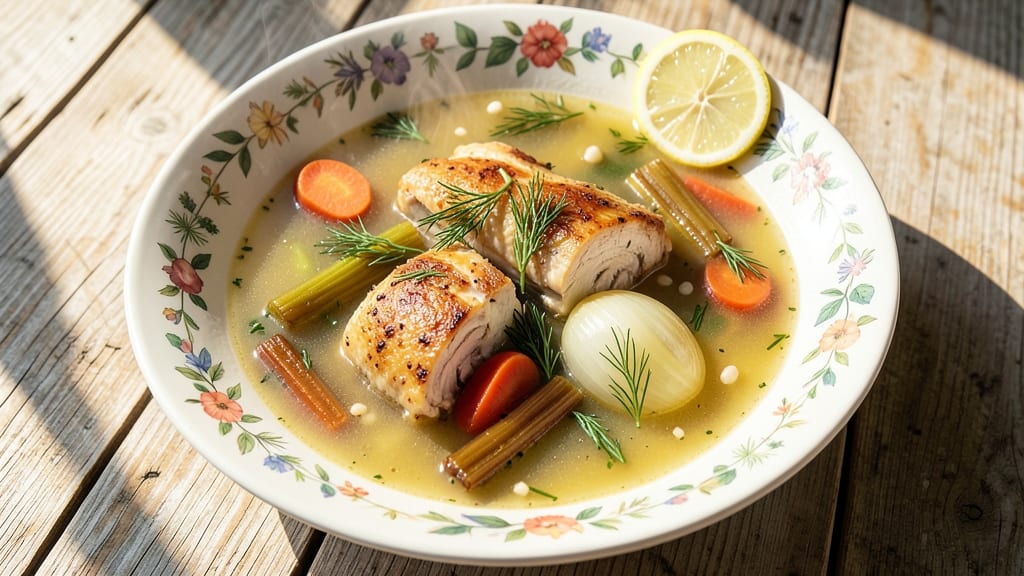
This authentic Greek lemon chicken soup recipe brings the bright citrus and aromatic herbs of Greece straight to your kitchen, blending traditional avgolemono technique with comforting simplicity. 💛 The secret lies in simmering chicken with fresh herbs and lemon zest to create a fragrant broth, then thickening it with a velvety egg-lemon sauce that's both elegant and deeply satisfying.
The magic happens in the slow simmering process, where chicken and vegetables infuse the broth with rich, savory depth while remaining tender. Traditional Greek techniques like straining the broth and tempering eggs with hot liquid ensure a smooth, luxurious texture without breaking the delicate egg mixture.
What you'll end up with is a restaurant-quality soup that's creamy yet light, tangy from the lemon, and packed with herbaceous flavor. The bright citrus notes cut through the richness of the chicken, creating a perfect balance that's both comforting and refreshing.
Perfect for chilly evenings or as a hearty starter, this soup serves as a true taste of Greece—authentic, comforting, and impossible to resist. The optional garnishes of fresh dill or crumbled feta add freshness and texture, making each bowl feel special.
Ingredients for authentic greek lemon chicken soup
Simmering chicken with aromatic herbs and bright citrus creates this restaurant-quality Greek soup.
| Ingredient | Amount | Notes |
|---|---|---|
| Chicken Thighs, Bone-In 🍗 | 1 ½ lb | Skin-on for richer flavor |
| Yellow Onion 🧅 | 1 whole | Medium size, chopped |
| Carrots 🥕 | 4 medium | Peeled, cut into chunks |
| Celery Stalks 🌿 | 3 whole | Trimmed, cut into pieces |
| Garlic Cloves 🧄 | 4 cloves | Fresh, minced |
| Fresh Dill 🌿 | ¼ cup | Chopped, stems removed |
| Fresh Parsley 🌿 | ¼ cup | Chopped, for garnish |
| Lemon 🍋 | 1 whole | Juiced, zest reserved |
| Large Eggs 🥚 | 2 whole | Fresh, room temperature |
| Chicken Broth 💧 | 4 cups | Low-sodium preferred |
| Extra-Virgin Olive Oil 🫒 | ¼ cup | For sautéing vegetables |
| Diamond Crystal Kosher Salt 🧂 | 1 ½ tsp | For seasoning broth |
| Freshly Ground Black Pepper 🌶️ | ½ tsp | For seasoning |
| Fresh Feta Cheese 🧀 | ½ cup | Crumbled, for garnish (optional) |
The chicken thighs are non-negotiable here—the skin-on, bone-in version delivers the deepest flavor and stays tender during the long simmer. Whole Foods or your local butcher often carry bone-in cuts at a better price than pre-cut packages. For the broth, low-sodium chicken broth is essential—you'll be adding salt later, and you don't want to overdo it. The carrots and celery should be roughly chopped, not finely diced; they'll break down during cooking but need to hold their shape enough to strain later. Fresh herbs are a must—they make all the difference in that herbaceous Greek flavor. Whole dill sprigs can be tied together and removed before straining for a cleaner broth.
No fresh dill? Dried dill at one-third the amount works in a pinch, though it lacks the bright, citrusy notes. Running short on parsley? Fresh basil or cilantro can substitute, though the flavor profile shifts slightly. For the avgolemono sauce, room-temperature eggs are critical—they blend more smoothly and prevent curdling. If you're concerned about breaking the eggs in hot liquid, temper them first by whisking in a tablespoon of hot broth before adding to the egg mixture. The lemon zest adds a bright pop of flavor; if you don't have a zester, a fine grater works perfectly. For extra depth, a splash of dry white wine can be added when sautéing the vegetables.
This soup tastes even better the next day as the flavors meld together. Store leftovers in an airtight container in the fridge for up to 4 days. To reheat, warm gently on the stove over medium-low heat, stirring occasionally. For a restaurant-style presentation, serve in deep bowls with a dollop of crumbled feta cheese and a sprinkle of fresh herbs. The broth can be frozen for up to 3 months—just thaw and reheat, adding a splash of water or broth if it's too thick. For meal prep, assemble the soup without the avgolemono sauce, store the components separately, and combine when ready to serve.
Why You'll Love This Recipe
- Here’s what sold me: that bright lemon juice cutting through the savory garlic and carrot sweetness. The Greek touch—dried oregano and a pinch of cinnamon—adds warmth without overpowering, and the lemon? It’s the secret weapon that makes every spoonful feel fresh.
- One-Pot Magic: I swear by this recipe because it’s actually a one-pot wonder—the chicken thighs simmer right in the broth with the onions, carrots, and celery, so no extra pans or cleanup. The bone-in thighs? They melt into rich, flavorful shreds while releasing collagen that thickens the broth naturally.
- Citrus-Kissed Depth: Here’s what sold me: that bright lemon juice cutting through the savory garlic and carrot sweetness. The Greek touch—dried oregano and a pinch of cinnamon—adds warmth without overpowering, and the lemon? It’s the secret weapon that makes every spoonful feel fresh.
- Weeknight to Potluck: Between us, this is my go-to when I need something hearty but not heavy. Double the batch on Sunday, and you’ve got lunch for Tuesday and a crowd-pleaser for a dinner party. The flavors only get better the next day, honestly.
Step-by-step instructions for authentic Greek lemon chicken soup
Master this traditional Greek recipe with bright citrus and aromatic herbs that define Mediterranean comfort.
🔥 Step 1: Sear the Chicken Thighs for Deep Flavor
Pat the 1.5 lb chicken thighs, bone-in dry with paper towels—this ensures maximum crispiness. Heat 0.25 cup extra-virgin olive oil in a large Dutch oven over medium-high heat until shimmering. Working in batches if needed, add the chicken thighs skin-side down and cook undisturbed for 6-8 minutes until the skin turns deep golden brown and crispy.
Flip the thighs and cook for another 4-5 minutes until the internal temperature reaches 165°F. Remove the chicken and set aside on a plate. The rendered fat in the pot will become the flavor base for your soup—don't wipe it out. This searing step creates the rich, caramelized foundation that defines authentic Greek soups.
🍳 Step 2: Build the Vegetable Base with Aromatics
In the same Dutch oven, reduce heat to medium and add the chopped 1 whole yellow onion, 4 medium carrots, and 3 whole celery stalks. Cook for 8-10 minutes, stirring occasionally, until the vegetables soften and the onion becomes translucent. Add the 4 cloves minced garlic and cook for 30 seconds until fragrant—this prevents the garlic from burning.
Deglaze the pot by pouring in 4 cups chicken broth and scraping up all the browned bits from the bottom with a wooden spoon. Bring to a gentle simmer, then add 1.5 tsp diamond crystal kosher salt and 0.5 tsp freshly ground black pepper. The broth should now have a rich, savory depth from the chicken fat and caramelized vegetables.
🥘 Step 3: Simmer the Chicken and Vegetables
Return the seared chicken thighs to the pot, skin-side up. Add the juice and zest from the 1 whole lemon (about 2 tablespoons juice and 1 teaspoon zest). Bring to a gentle boil, then reduce heat to low and cover partially. Simmer for 30-35 minutes until the chicken is fork-tender and the vegetables are completely soft.
Here's the thing—don't rush this step. The chicken needs time to absorb all those bright lemon notes and aromatic herbs. After 30 minutes, check for doneness by inserting a fork into the thickest part of a thigh. If it slides in easily with no resistance, the chicken is ready. If not, cover and simmer for another 5 minutes.
🍳 Step 4: Prepare the Lemon-Egg Mixture
While the soup simmers, whisk together the 2 whole large eggs, 0.25 cup chopped fresh dill, and 0.25 cup chopped fresh parsley in a medium bowl. This herb-infused egg mixture will create silky ribbons when added to the hot broth. I like to press the herbs through a fine-mesh strainer to remove any tough stems that might make the soup gritty.
In a small bowl, mix 1 tablespoon lemon juice with 1 teaspoon lemon zest to create a bright citrus emulsion. This extra lemon punch will elevate the soup's signature tangy flavor profile. Keep both mixtures at room temperature until ready to use.
🥘 Step 5: Finish the Soup with Lemon and Egg Ribbons
Remove the chicken thighs from the pot and let them rest on a cutting board for 5 minutes. Using two forks, shred the meat into bite-sized pieces and return it to the broth. Bring the soup to a gentle simmer over medium-low heat.
Here's the moment that matters: slowly ladle 1 cup of the hot broth into the egg mixture while whisking constantly. This tempering process prevents the eggs from scrambling and creates those signature silky ribbons. Once fully combined, pour the egg mixture back into the pot, stirring gently as it thickens the broth. Simmer for 2-3 minutes until the soup reaches your desired consistency.
🍽️ Step 6: Serve with Fresh Herbs and Feta
Taste and adjust seasoning with additional kosher salt or lemon juice if needed. Ladle the soup into bowls and garnish with the remaining 0.25 cup chopped fresh parsley and 0.5 cup crumbled fresh feta cheese. The feta should be added just before serving so it maintains its creamy texture rather than dissolving into the hot broth.
Each spoonful should deliver a perfect balance of tender chicken, sweet carrots, earthy celery, bright lemon, and aromatic herbs. The silky egg ribbons should coat your spoon, adding a luxurious texture that makes this simple soup feel like a special occasion dish. Serve with crusty Greek bread to soak up every last drop of that citrus-infused broth.
Pro Tips For Making Authentic Greek Lemon Chicken Soup
- Brown the Chicken First: Skip the direct simmer—sear the bone-in thighs skin-side down in a hot pot until golden (about 8-10 minutes). That crispy skin melts into the broth later, adding depth. I used to rush this, and the soup never tasted as rich.
- Julienne the Veggies: Dice the onion, carrots, and celery into thin, even strips (about 1/8-inch thick). Smaller pieces cook faster and blend into the broth smoothly. My grandmother called it "the Greek way"—no big chunks hiding in the soup.
- Simmer Low and Long: After adding broth, keep the heat at a gentle simmer (tiny bubbles, not rolling). Thirty minutes is the minimum—let it work its magic. I learned this the hard way when my impatient version turned out watery.
- Add Lemon Last: Stir in the lemon juice and zest only after the chicken is cooked and removed. The acid cuts through the richness if added too early, and the zest loses its brightness. Trust me, your future self will notice the difference.
Essential equipment for this recipe
Dutch Oven Essentials
A 5-6 quart Dutch oven is non-negotiable for this recipe—it's the workhorse of Greek cooking. I swear by the Le Creuset Stoneware Dutch Oven (5.5 quarts) for its even heat distribution and durable construction.
For budget-friendly options, the Lodge Pre-Seasoned Dutch Oven (5.5 quarts) delivers the same professional results without the premium price. The deep sides prevent spills when stirring the egg-lemon mixture, and its tight-fitting lid helps trap steam during simmering. 🥘
Precision Thermometer
An instant-read meat thermometer is your secret weapon for perfect chicken every time. I use the Thermoworks ThermoPop—it's affordable, accurate, and fits easily in my kitchen drawer. Check the chicken's internal temperature at 165°F to ensure it's fully cooked without overcooking.
For the broth, a kitchen thermometer with a probe (like the Meater) helps maintain that gentle simmer between 195°F and 205°F, where flavors meld beautifully.
Fine-Mesh Strainer
A stainless steel fine-mesh strainer (like the OXO Good Grips) is crucial for achieving that crystal-clear broth that defines authentic Greek soups. After simmering, strain out the vegetables and chicken bones to create a silky, velvety base.
For extra clarity, I double-strain through a cheesecloth-lined colander—it catches even the finest particles. This step makes all the difference in that restaurant-quality texture.
Whisk and Tempering Bowl
For the avgolemono sauce, a balloon whisk (like the Cuisinart Stainless Steel Whisk) is essential for blending eggs smoothly. Pair it with a heatproof tempering bowl (I use a glass mixing bowl) to gradually incorporate hot broth into the egg mixture.
This prevents curdling and creates those signature silky ribbons. Pro tip: Keep a small ladle nearby to control the flow of hot broth into the eggs—adding it too quickly ruins the texture.
Wooden Spoon and Slotted Spoon
A wooden spoon (like the OXO Good Grips) is perfect for stirring the soup without scratching your Dutch oven. For removing chicken or vegetables, a slotted spoon (I prefer the Mercer Culinary) keeps the broth intact.
These tools are simple but make the process smoother—no metal scraping or broth splatters. Trust me, you’ll appreciate them when you’re ladling that egg-lemon mixture into the pot.
Citrus Zester and Microplane
Fresh lemon zest is the soul of this soup, so a zester or Microplane is a must-have. I use the Microplane because it’s versatile—great for zesting lemons and grating garlic or ginger. A Y-peeler also works in a pinch, but it’s slower and less precise.
The zest adds bright, aromatic notes that balance the richness of the chicken and eggs. Don’t skip this step—it’s what makes this soup taste authentically Greek. 🍋
Nutrition facts
Frequently asked questions
Why does authentic Greek lemon chicken soup use eggs?
The eggs create the signature avgolemono sauce, which thickens the broth into silky ribbons while adding protein and richness. This technique dates back to Byzantine cuisine and was traditionally used to stretch ingredients during fasting periods. The eggs also balance the bright lemon acidity, creating a harmonious flavor profile that's both comforting and elegant.
Can I make this soup without chicken?
For a vegetarian version, use chickpeas or mushrooms instead of chicken. Simmer the vegetables in the same way, then add the egg-lemon mixture at the end. The broth will still develop deep flavor from the herbs and lemon. For extra protein, add white beans or tofu cubes that've been sautéed with the vegetables.
How do I prevent the eggs from curdling?
Temper the eggs properly by slowly whisking in 1 cup of hot broth while constantly stirring. Keep the mixture over a double boiler or warm water bath while adding the remaining broth. Never pour hot liquid directly into cold eggs—this causes instant curdling. Maintain a gentle simmer after adding the egg mixture to keep the texture smooth.
What's the best way to store leftovers?
Store in an airtight container in the fridge for up to 4 days. For best results, assemble the soup without the avgolemono sauce, store the components separately, and combine when reheating. To reheat, warm gently on the stove over medium-low heat, stirring occasionally. The broth can also be frozen for 3 months—just thaw and reheat, adding a splash of water if needed.
Can I make this soup in a slow cooker?
Yes, but with adjustments. Sear the chicken first, then add all ingredients except the egg mixture to the slow cooker. Cook on low for 6-7 hours or high for 3-4 hours. Strain the broth, then prepare the egg-lemon sauce separately and stir it into the hot soup just before serving. The slow cooker may make the broth slightly thinner, so you might need to reduce it on the stove first.