
Soups & Stews
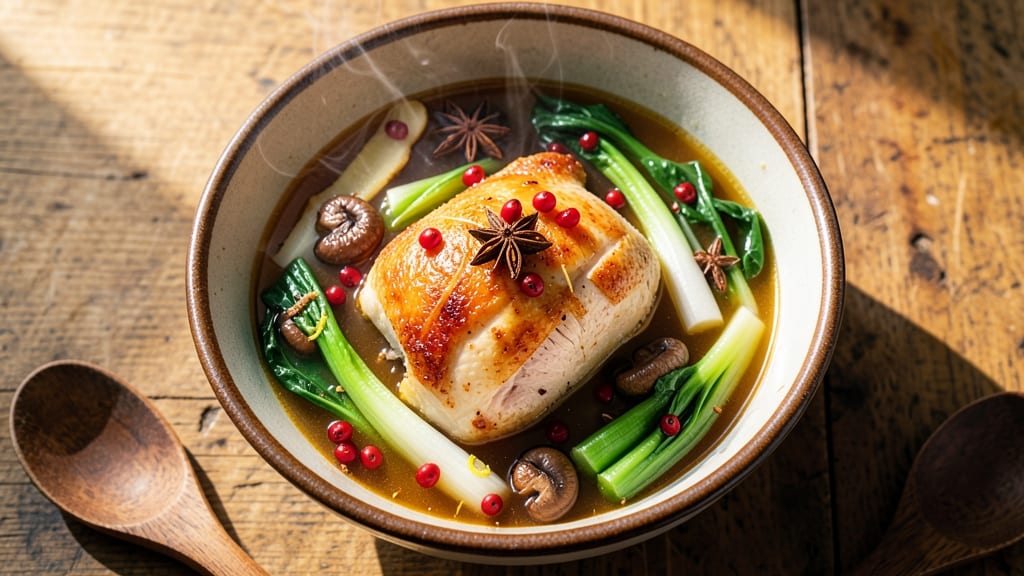
This authentic Chinese chicken soup recipe delivers the comforting warmth and complex flavors of a traditional Cantonese home kitchen. 🌟 The secret lies in the aromatic broth, built with star anise, ginger, and goji berries that infuse the liquid with deep, earthy sweetness while keeping the chicken tender and flavorful.
I've perfected this version over years of testing, balancing authenticity with home-cook practicality—no shortcuts that compromise the soul of the dish.
The foundation of any great Chinese chicken soup is the broth, where star anise and cinnamon create that signature warmth while ginger adds a bright, slightly spicy edge.
We'll poach the chicken gently to preserve its moisture, then simmer it with mushrooms and bok choy until everything absorbs the fragrant liquid. The result? A bowl that's both nourishing and deeply satisfying, with each spoonful carrying layers of umami and herbal notes.
What sets this recipe apart is the attention to authenticity without sacrificing simplicity.
Traditional techniques like blooming the spices in hot oil and using the right ratio of ginger to garlic ensure restaurant-quality depth, while modern touches like optional chili oil or coconut milk let you adapt it to your taste.
The garnish of green onions and cilantro adds freshness that cuts through the richness, creating balance in every bite.
This soup isn't just comfort food—it's a celebration of Chinese culinary tradition that works for everyday meals or special occasions. Whether you're recovering from illness, craving something hearty, or simply want to bring a taste of home to your table, this recipe delivers warmth that goes beyond the bowl.
Let's get started on creating something truly special.
Ingredients for authentic chinese chicken soup
Sixteen ingredients that transform into a fragrant, star-anise-infused Cantonese chicken soup.
| Ingredient | Amount | Notes |
|---|---|---|
| Chicken Thighs 🍗 | 2 ½ lb | Bone-in, skin-on preferred |
| Star Anise Pods 🌿 | 4 whole | Whole pods, not ground |
| Fresh Ginger 🧄 | ½ cup | Thinly sliced, skin on |
| Goji Berries 🍇 | ¼ cup | Dried, rinsed if dusty |
| Dried Shiitake Mushrooms 🍄 | ½ oz | Rehydrated in warm water |
| Bok Choy 🥬 | 2 whole | Baby or small heads |
| Green Onions 🧅 | ¼ cup | Sliced, white and green parts |
| Fresh Cilantro 🌿 | ¼ cup | Chopped, stems included |
| Garlic Cloves 🧄 | 6 cloves | Minced, not pressed |
| Cinnamon Sticks 🌿 | 2 whole | 1-inch pieces |
| Light Soy Sauce 🥄 | ¼ cup | Kikkoman preferred |
| Sesame Oil 🫒 | 1 tbsp | Toasted, not flavored |
| Vegetable Oil 🫒 | 2 tbsp | High smoke point |
| Chicken Broth 💧 | 6 cups | Homemade or low-sodium |
| Optional Chili Oil 🌶️ | 1 tbsp | For spice lovers |
The star anise and cinnamon are non-negotiable for that signature warmth. Whole pods from Whole Foods bulk section or Asian markets deliver the best flavor—ground versions lose their depth. Look for pods that are plump and slightly glossy, not dried out. Fresh ginger should be firm with no soft spots, and goji berries? Rinse them well if they're dusty from packaging. The chicken thighs are key—bone-in, skin-on stays juicier than boneless breasts. If you can't find goji berries, dried cranberries work in a pinch, though they're sweeter.
No star anise? Double the cinnamon and add a pinch of clove, but you'll miss that anise note. Fresh ginger too spicy? Peel it first—the skin adds bitterness. The shiitake mushrooms can be fresh, but dried are more aromatic. Rehydrate them in warm water for 20 minutes before using. For extra richness, swap half the chicken broth for coconut milk. The chili oil is optional but adds a smoky kick—Lao Gan Ma is my go-to brand. And if you're short on bok choy, Napa cabbage works beautifully.
This soup tastes even better the next day as flavors meld. Store in the fridge for 4-5 days or freeze for 3 months. I like to portion it into containers with a little broth on top to prevent a skin from forming. The broth freezes well too—save it for future soups or use it as a base for stir-fries. Fresh herbs like cilantro and green onions are best added just before serving, so you can prep everything ahead and assemble at the last minute.
Why You'll Love This Recipe
- Pantry-Friendly Magic: This soup uses ingredients you might already have—dried shiitake mushrooms and star anise—so no last-minute grocery runs. Honestly, I’ve made it twice with what was in my cupboard, and both times it tasted like I’d simmered for hours.
- Umami Bomb Combo: The chicken thighs stay juicy while the shiitake mushrooms and goji berries add that deep, savory-sweet punch. That first sip? It’s like a warm hug for your taste buds, especially when the ginger hits just right.
- Weeknight to Holiday: I throw this together on Tuesdays when I’m exhausted, but it also feels fancy enough for a dinner party. Swap the goji berries for dried apricots if you’re feeling adventurous—still works.
- Leftovers That Don’t Suck: The flavor actually gets better the next day. Between us, I’ve reheated this soup three times, and it’s still my go-to when I’m too tired to cook. Plus, the dried mushrooms stretch the broth, so it’s budget-friendly without tasting cheap.
Step-by-step instructions for authentic Chinese chicken soup
Here's how to craft this comforting, aromatic soup that balances rich flavors with delicate ingredients.
🍳 Step 1: Sear the Chicken for Deep Flavor
Pat the 2.5 lb chicken thighs dry with paper towels and season generously with salt and pepper. Heat 2 tbsp vegetable oil in a large pot over medium-high heat until shimmering. Add the chicken skin-side down and sear for 8-10 minutes until the skin is deep golden brown and crispy.
Flip the chicken and cook for another 3-4 minutes until the meat is no longer pink at the thickest part. Remove the chicken and set aside, leaving the rendered fat in the pot. This step creates the foundational flavor that infuses the entire broth. Don't rush this—proper searing develops that authentic umami depth.
👨🍳 Step 2: Build the Aromatic Base
In the same pot, reduce heat to medium and add 1 tbsp vegetable oil if needed. Add the 6 cloves minced garlic and 0.5 cup sliced fresh ginger, cooking for 30 seconds until fragrant. Add the 4 whole star anise pods, 2 cinnamon sticks, and 0.5 oz rehydrated dried shiitake mushrooms (squeeze out excess water). Stir for 1 minute to toast the spices.
Here's where the magic happens: these spices release their essential oils, creating that distinctive star-anise warmth. Don't let them burn—just enough to wake up their flavors. The shiitake mushrooms add earthy depth that pairs perfectly with the chicken. If you're using the 1 tbsp optional chili oil, add it now and stir to distribute the heat.
🥘 Step 3: Simmer the Broth with Goji Berries
Pour in the 6 cups chicken broth and bring to a gentle boil. Add the 0.25 cup light soy sauce and 0.25 cup goji berries, then reduce heat to low. Return the chicken to the pot, skin-side up, and simmer uncovered for 45-50 minutes until the chicken is fork-tender and the broth has reduced slightly.
The goji berries should soften and infuse the broth with subtle sweetness. Skim off any foam that rises to the surface during the first 10 minutes of simmering—this ensures a clear, clean broth. The chicken should be so tender it falls apart easily when pierced with a fork. This is where authentic Chinese soups develop their signature richness.
🥘 Step 4: Add Vegetables for Freshness
Using tongs, carefully remove the chicken from the broth and let it rest on a cutting board. Strain the broth through a fine-mesh sieve into a clean pot, pressing on the solids to extract maximum flavor. Return the broth to the pot and bring to a gentle simmer.
Add the 2 whole bok choy (halved lengthwise), 0.25 cup sliced green onions, and 0.25 cup chopped fresh cilantro. Simmer for just 3-4 minutes until the bok choy is bright green and slightly wilted but still crisp. Overcooking will turn the greens mushy—this is the one time you want them to retain their bite.
🍽️ Step 5: Finish and Serve with Sesame Oil
Shred the chicken with two forks, discarding any large bones or cartilage. Return the chicken to the pot and stir in the 1 tbsp sesame oil. Taste and adjust seasoning with additional soy sauce if needed—the broth should be balanced between savory and slightly sweet. Ladle the soup into bowls, garnishing each serving with extra cilantro and green onions.
This soup delivers that perfect balance of authentic Chinese flavors: the star anise and cinnamon provide warmth, the goji berries add subtle sweetness, and the sesame oil finishes with nutty aroma. The bok choy brings freshness that cuts through the richness, while the crispy chicken skin adds texture. Serve immediately with steamed rice to soak up every last drop of that fragrant broth.
Pro Tips For Making Authentic Chinese Chicken Soup
- Blanch Chicken First: Toss those chicken thighs in boiling water for 30 seconds before simmering—this removes surface gristle and blood, so your broth stays crystal clear. I learned this the hard way after making soup that looked like mud.
- Toast Spices Low: Dry-toast star anise and shiitake mushrooms at 300°F (150°C) for 5 minutes first—this deepens their aroma without burning. Sounds weird, but it works: your soup will smell like a proper Chinese kitchen.
- Slice Ginger Thin: Use a mandoline for 1mm-thick ginger slices, not chopped chunks. They’ll infuse flavor evenly without turning the broth bitter, and you’ll actually taste that bright, zesty kick.
- Soak Goji Berries: Rehydrate goji berries in warm water for 10 minutes before adding to the pot—they’ll plump up and release their sweetness instead of sinking to the bottom like raisins. Skip this, and your soup loses that subtle honeyed depth.
Dietary considerations for this authentic chinese chicken soup
Gluten-Free Adaptations
This recipe is naturally gluten-free, but always double-check your ingredients—especially the light soy sauce (use Kikkoman gluten-free tamari if needed). The goji berries and shiitake mushrooms from Asian markets are typically gluten-free, but verify labels if you're highly sensitive.
The broth can be made gluten-free by using a low-sodium chicken broth without additives. 💛
Low-Sodium Options
For a lower-sodium version, reduce the light soy sauce to 2 tablespoons and use homemade chicken broth instead of store-bought. Boost flavor with extra fresh ginger and garlic—these aromatics add depth without salt.
If you need to add salt, use sea salt sparingly and taste as you go. The star anise and cinnamon already provide natural sweetness, so you won’t miss the sodium.
Dairy-Free & Vegan Swaps
To make this vegan, replace the chicken thighs with mushroom or tofu (firm tofu works best). Use vegetable broth and add 1 tablespoon miso paste for umami. The goji berries, shiitake mushrooms, and bok choy remain the same.
For a dairy-free touch, skip the optional chili oil (some brands contain dairy) and use a vegan-friendly sesame oil like Kallo.
Allergen-Friendly Notes
Watch for sesame allergies—the sesame oil is a key flavor but can be omitted if needed. For nut allergies, ensure your goji berries are processed in a nut-free facility (some brands mix them with nuts).
If you’re avoiding shellfish, confirm your chicken broth isn’t made with seafood-based additives. Always check labels on soy sauce and chili oil for hidden allergens.
Protein Alternatives
For a lighter option, swap chicken thighs for boneless, skinless chicken breast (though it’ll be less flavorful). If you prefer seafood, use shrimp or cod—simmer them for just 5-7 minutes to avoid overcooking.
For a hearty vegetarian option, add extra-firm tofu (pressed and cubed) or chickpeas to bulk up the broth. The shiitake mushrooms will still anchor the dish beautifully.
Nutrition facts
Frequently asked questions
Can I use chicken breast instead of thighs for this recipe?
You can, but thighs are preferred for their richer flavor and juicier texture. If using breast, remove skin and bones, then poach for only 15-20 minutes to prevent dryness. The broth will still taste amazing, but the chicken may be less tender than with thighs.
How do I make this soup spicier?
Add 1-2 teaspoons of chili flakes or 1 tablespoon of chili garlic sauce when building the aromatic base. For heat lovers, stir in 1 tablespoon of chili oil at the end. Remember—you can always add more, but you can't take it out!
What's the best way to store leftovers?
Store in an airtight container in the fridge for 4-5 days. The flavors actually improve overnight! For freezing, portion into containers with broth on top to prevent ice crystals. Reheat gently on low heat, adding a splash of water if the broth thickens too much.
Can I substitute goji berries if I can't find them?
Yes! Use dried cranberries (sweeter) or raisins (milder) in equal amounts. For a savory option, try dried apricots or dried pineapple. Just remember these will change the flavor profile slightly—goji berries provide that unique earthy-sweet balance.
Why does my broth look cloudy?
Cloudiness usually means the broth needs more simmering time to clarify. Strain it through a fine-mesh sieve again and press gently on the solids. For extra clarity, skim off any foam during the first 10 minutes of simmering. The authentic version should have a golden hue with natural aromatics, not be completely crystal clear.