
Main Courses
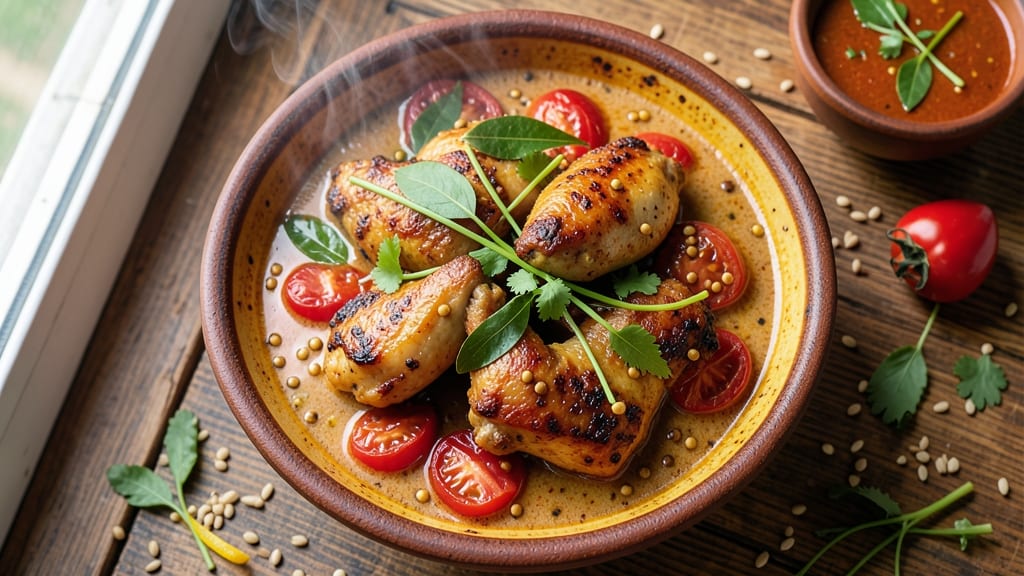
This authentic Chicken Madras curry recipe delivers the bold, fiery flavors of South India that make every bite unforgettable. The secret lies in tamarind’s tang, curry leaves’ aroma, and fenugreek’s earthy depth—elements that transform simple chicken into a restaurant-worthy dish.
I’ve perfected this recipe through years of testing, ensuring the balance of heat, sourness, and coconut richness that defines Madras cuisine.
The process begins with a dry marinade of mustard seeds, curry leaves, and spices that infuse the chicken deeply, followed by a tempering stage where whole spices bloom in hot oil for maximum flavor extraction.
Simmering in coconut milk creates that signature velvety texture while preserving the dish’s authentic complexity. What sets this apart is the tamarind paste, which adds the signature sour punch that Madras curry is known for.
By the time you serve it—steaming over basmati rice with a dollop of cooling raita—you’ll taste the difference between home cooking and true authenticity. The spices sing while the coconut milk mellows the heat, creating a harmony that’s both comforting and exciting.
This is the kind of curry that makes people ask for seconds, and the kind that turns weeknight dinners into special occasions.
While the recipe requires patience (especially the marinating and simmering), the result is worth every minute. The key is layering flavors intentionally—starting with the dry spice rub, building through the tempering, and finishing with the coconut milk reduction.
The final dish should be bold yet balanced, with a sauce that clings to the chicken and rice alike. For those new to Madras cuisine, this recipe is your gateway to understanding why it’s beloved across South India.
Ingredients for authentic chicken madras curry
Authentic Madras flavors start with these carefully chosen South Indian ingredients.
| Ingredient | Amount | Notes |
|---|---|---|
| Boneless Chicken Thighs 🍗 | 1 ½ lb | Cut into 1.5-inch pieces |
| Coconut Milk 🥥 | 1 can | Full-fat, 13.5 oz can |
| Tamarind Paste 🍯 | 2 tbsp | Adjust for sourness preference |
| Mustard Seeds 🌿 | 1 tbsp | Whole, light brown preferred |
| Curry Leaves 🌿 | 10 whole | Fresh, dried as substitute |
| Fenugreek Seeds 🌶️ | 1 tsp | Toasted for enhanced aroma |
| Coriander Seeds 🌿 | 1 tbsp | Lightly toasted |
| Cumin Seeds 🌶️ | 1 tsp | Whole seeds, toasted |
| Turmeric Powder 🌿 | 1 tsp | Freshly ground preferred |
| Red Chili Powder 🌶️ | 1 ½ tbsp | Adjust for heat preference |
| Ginger 🧄 | 2 tbsp | Fresh, grated |
| Garlic Cloves 🧄 | 6 cloves | Peeled, minced |
| Onion 🧅 | 1 medium | Finely chopped |
| Tomato Paste 🍅 | 1 tbsp | Squeeze tube preferred |
| Salt 🧂 | 1 ½ tsp | Adjust to taste |
| Vegetable Oil 🫒 | ½ cup | High smoke point |
The foundation of Madras curry lies in its spices, particularly curry leaves and fenugreek seeds, which are essential for authentic flavor. For curry leaves, Indian grocery stores or specialty markets carry the fresh variety—look for vibrant green leaves, not dried. Whole spices like mustard seeds and coriander should be toasted lightly before use to release their full aroma. Fenugreek seeds, often overlooked, add a unique bitterness that balances the dish perfectly. Penzeys Spices or bulk bins at Whole Foods are reliable sources for high-quality whole spices. Tamarind paste can be found in the international aisle of most supermarkets, or substitute with 1 tbsp lemon juice + 1 tsp sugar if needed.
No curry leaves? Dried curry leaves at half the amount work, though fresh is ideal. Short on tamarind? Lime juice can mimic the tang, though it won't replicate tamarind's depth. The red chili powder can be adjusted—gochugaru for a fruity heat or cayenne for a sharper kick. For coconut milk, full-fat is non-negotiable—it creates that signature velvety texture. The tomato paste can be skipped entirely if you prefer a less tomato-forward curry, but it adds a subtle sweetness that rounds out the flavors. Always toast your whole spices in a dry pan until fragrant before grinding—this step is critical for authentic flavor and takes just 30 seconds.
Store whole spices in airtight containers away from light to preserve their potency for up to 6 months. Fresh curry leaves last only 3-4 days in the fridge—wrap them in damp paper towels to maintain freshness. The tamarind paste keeps indefinitely in the pantry, while coconut milk should be refrigerated after opening and used within 5 days. This curry tastes even better the next day as the flavors meld—double the batch if you're hosting, as leftovers reheat beautifully. For a restaurant-quality finish, garnish with fresh cilantro and serve with steamed basmati rice and raita for balance.
Why You'll Love This Recipe
- Here’s what sold me: that perfect balance of tamarind’s sharp bite cutting through the richness of coconut milk, with curry leaves adding a bright, herbal punch. The chicken thighs stay juicy while soaking up all that flavor—no dry bites, just ridiculously good texture.
- One-Pot Magic: I swear by this recipe—just one pot, minimal cleanup, and that first sizzle of mustard seeds in hot oil is chef’s kiss. The tamarind and coconut milk meld together while you chop, so by the time the chicken’s done, you’re left with a fragrant, sticky mess that’s almost too easy to resist.
- Tangy Creamy Crunch: Here’s what sold me: that perfect balance of tamarind’s sharp bite cutting through the richness of coconut milk, with curry leaves adding a bright, herbal punch. The chicken thighs stay juicy while soaking up all that flavor—no dry bites, just ridiculously good texture.
- Weeknight or Weekend Star: Between us, this curry works for everything. Toss it with rice for a lazy Tuesday, serve it over naan for date night, or pack it in jars for lunches—it reheats like a dream. (Yes, even on a Tuesday night.)
Step-by-step instructions for authentic chicken Madras curry
Master the layered spice technique and coconut balance that define this bold South Indian classic.
Toast Whole Spices and Bloom the Aromatics
Heat the 0.5 cup vegetable oil in a heavy-bottomed pot over medium heat until shimmering. Add the 1 tbsp mustard seeds and let them pop and sizzle for 15-20 seconds—this releases their nutty aroma. Immediately add the 10 whole curry leaves, 1 tsp fenugreek seeds, 1 tbsp coriander seeds, and 1 tsp cumin seeds. Stir constantly for 1 minute until the spices turn fragrant and lightly toasted.
The reason we toast whole spices first is to deepen their flavors through heat activation. Watch carefully—they'll darken quickly. Once they're golden and aromatic, remove the pot from heat momentarily to prevent burning. This step forms the flavor foundation of the curry.
Build the Spice Base with Onions and Ginger-Garlic
Return the pot to medium heat and add the 1 medium onion (finely chopped). Cook for 5-6 minutes until the onions soften and turn golden brown, stirring occasionally. Add the 2 tbsp grated ginger and 6 cloves minced garlic, cooking for another 2 minutes until the raw aroma disappears and they turn fragrant.
Here's where the flavor truly develops. The onions should caramelize slightly at the edges—this adds sweet depth. If they brown too quickly, reduce heat to medium-low. The ginger and garlic should melt into the spices rather than remain distinct, creating a cohesive aromatic base.
Incorporate Chili, Turmeric, and Tamarind
Add the 1.5 tbsp red chili powder and 1 tsp turmeric powder, stirring vigorously for 30 seconds to prevent scorching. Pour in the 2 tbsp tamarind paste mixed with 1 cup water (from the coconut milk can) and the 1 tbsp tomato paste. Simmer for 5 minutes until the mixture thickens slightly and the raw tamarind tang mellows.
This is the moment that matters: the tamarind and tomato paste work together to create the signature Madras balance of sour and sweet. The spices should now coat the back of a spoon with a vibrant red hue. If the mixture looks too dry, add 2-3 tablespoons water to maintain proper consistency.
Cook the Chicken Until Tender
Add the 1.5 lb boneless chicken thighs (cut into 1.5-inch pieces) and 1.5 tsp salt, stirring to coat evenly. Pour in the 1 can coconut milk, bring to a gentle simmer, then reduce heat to low. Cover and cook for 25-30 minutes, stirring occasionally, until the chicken is fork-tender and the sauce thickens to a glossy consistency.
Don't walk away during this stage. The chicken should be nearly falling apart when pierced with a fork, but still retain some structure. The coconut milk will create a velvety sauce that clings beautifully to the chicken. If the sauce reduces too quickly, add 2-3 tablespoons water to maintain balance.
Simmer and Adjust for Perfect Balance
Uncover the pot and simmer for an additional 10 minutes on medium-low heat to allow excess moisture to evaporate. Taste and adjust seasoning: add more salt if needed, or a pinch of sugar to balance the acidity if the tamarind is too sharp. The final curry should have layers of heat from the chili, sourness from the tamarind, and richness from the coconut.
Serve immediately with steamed basmati rice or crusty naan. The curry should be vibrant red, with tender chicken pieces swimming in a sauce that's creamy yet tangy. For best results, let it rest for 5 minutes before serving to allow flavors to meld completely.
Pro Tips For Making Authentic Chicken Madras Curry
- Bloom the Spices Slow: After burning three batches of mustard seeds, I finally learned to toast them low and steady over medium heat—just until they sizzle, not pop. This prevents bitter smoke and lets their aroma infuse the oil properly, which is the thing that matters most for that authentic Madras kick.
- Soak Tamarind Paste: Skip the dry, clumpy mess: dissolve your tamarind paste in ¼ cup warm water first. I used to just toss it in raw, and the curry always tasted uneven. This guarantees a smooth, tangy base that blends seamlessly with the coconut milk.
- Simmer, Don’t Boil: Once the coconut milk hits the pot, drop the heat to a gentle simmer—not a rolling boil. I learned this the hard way when my curry split like a cheap sauce. A steady, low simmer keeps the texture creamy and the flavors cohesive.
- Parboil Chicken First: For juicier thighs, blanch them in boiling water for 3 minutes before adding to the curry. This isn’t the prettiest method, but it’s the tastiest: the chicken cooks faster in the final simmer, staying tender without drying out. (Yes, even if you’re impatient like me.)
Storing and reheating this dish
Refrigerator Storage
Let your Madras curry cool completely before transferring to airtight glass containers—I prefer Pyrex or Le Creuset for their durability. Store for up to 4 days in the fridge at 40°F or below, where the flavors actually deepen overnight. The coconut milk and spices meld beautifully, creating even richer layers of taste. Just
Freezer Storage
For longer storage, freeze portions in quart-sized freezer bags (squeeze out excess air) or glass containers with 1-inch headspace to account for expansion. Label with the date—this curry stays delicious for up to 3 months. When ready to reheat, transfer frozen portions to the fridge to thaw overnight for best texture. The sauce will thicken slightly after freezing, so add 1-2 tablespoons water when reheating. ❄️
Stovetop Reheating
My preferred method is stovetop reheating over medium-low heat in a heavy-bottomed pot. Add 2-3 tablespoons water to prevent sticking, then cover and heat for 8-10 minutes, stirring occasionally. The residual coconut fat helps maintain that velvety texture.
If the curry seems too thick after reheating, add a splash more water and simmer uncovered for 2-3 minutes to restore balance. Taste and adjust salt or tamarind as needed—reheated curry often needs a pinch more salt. 🔥
Microwave Reheating
For quick reheating, transfer curry to a microwave-safe bowl, cover loosely with a damp paper towel, and heat on 50% power in 2-minute intervals, stirring between each. This prevents hot spots and maintains the sauce's consistency.
Avoid full power—it can make the coconut milk separate. If the curry looks dry after reheating, add 1 tablespoon water and stir vigorously to re-emulsify. Garnish with fresh cilantro before serving to brighten the flavors. 💫
Garnish Refresh
After reheating, always finish with fresh cilantro and a squeeze of lime juice—this cuts through any reheating dullness and restores vibrancy. For extra authenticity, add a sprinkle of toasted cashews or fried shallots just before serving.
The contrast between the warm curry and cool garnishes elevates the dish to restaurant quality. This simple step makes all the difference when serving leftovers. ✨
Make-Ahead Pro Tip
Double the batch and freeze half immediately—this curry tastes even better after a few days as the spices infuse deeper. When ready to serve, thaw overnight in the fridge, then reheat using your preferred method.
The tamarind and coconut flavors become more pronounced with time, making it perfect for meal prep. Just be sure to store it in airtight containers to preserve those complex aromas. 💡
Nutrition facts
Frequently asked questions
What makes this Madras curry different from other South Indian curries?
The defining elements are the tamarind paste for signature sourness, curry leaves for aromatic depth, and fenugreek seeds for earthy complexity. Unlike Chettinad or Hyderabadi curries, Madras style balances heat with coconut milk's richness, creating a velvety yet tangy sauce. The mustard seeds and coriander tempering adds that signature South Indian crunch and aroma.
Can I substitute tamarind paste with something else?
Yes! For 1 tbsp tamarind paste, use either 1 tbsp lemon juice + ½ tsp sugar or 1 tbsp lime juice + ½ tsp sugar. The sugar helps mimic tamarind's subtle sweetness while maintaining the sour profile. However, tamarind provides a more complex flavor that's hard to fully replicate. For best results, try to find tamarind pulp in Indian grocery stores.
Why does my Madras curry taste too spicy or not spicy enough?
The heat comes from the red chili powder and whole spices during tempering. For milder heat, reduce chili powder to 1 tsp and skip the fenugreek seeds (they add subtle bitterness). For more heat, add ½ tsp cayenne pepper or increase chili powder to 2 tbsp. Remember, the coconut milk mellows the heat—don't rush the simmering time. Taste as you go!
How do I know when the chicken is fully cooked?
The chicken should reach an internal temperature of 165°F and be fork-tender with no pink remaining. For best texture, cut the thighs into 1.5-inch pieces before cooking. The sauce should coat the chicken and reduce slightly to a glossy consistency. If using a meat thermometer, insert it into the thickest piece without touching the pot.
What's the best way to serve this curry?
Pair with steamed basmati rice or jeera rice for the perfect balance. Add a side of cooling raita (yogurt with cucumber and mint) to complement the heat. For extra authenticity, serve with appam (fermented rice pancakes) or papadums**. Garnish with fresh cilantro and a squeeze of lime right before serving to brighten the flavors.