
Soups & Stews
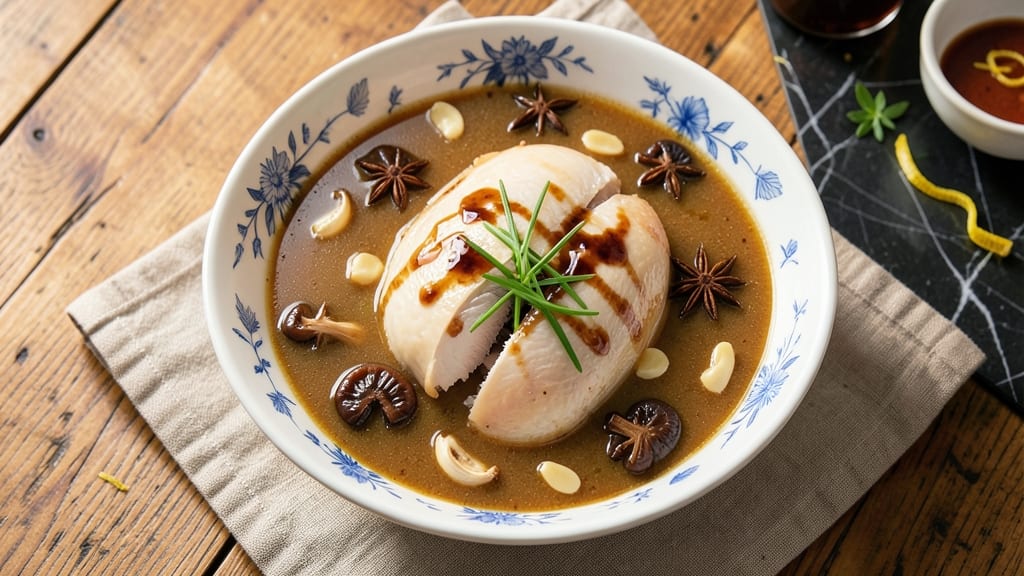
This Asian chicken stock soup delivers restaurant-quality depth with a silky broth that's rich yet light, built on slow-simmered aromatics and tender chicken. The secret lies in layering flavors—charred ginger, toasted star anise, and a splash of soy—while letting the broth develop over 45 minutes of gentle simmering.
Every spoonful carries that perfect balance of savory, slightly sweet, and herbal notes that define authentic Asian soups.
What sets this recipe apart is the technique: we start with a parboiled chicken to ensure tender meat that practically melts in your mouth, then finish the broth with just the right amount of cornstarch for that signature silky texture.
The noodles cook directly in the broth, absorbing its flavors while maintaining their delicate bite. This isn't just soup—it's a complete meal in one bowl, packed with protein, vegetables, and umami that lingers long after the last bite.
The result is a bowl of soup that's comforting yet refined, with each component playing its part: tender chicken, slippery noodles, crisp vegetables, and a broth so flavorful it deserves to be sipped slowly.
The aroma alone—warm, aromatic, and slightly smoky—will have your kitchen feeling like a bustling Asian eatery. Perfect for chilly evenings or as a healing meal when you need something nourishing yet satisfying.
We'll cover everything from building the aromatic base to balancing the seasoning, plus tips for adjusting consistency and adding your favorite garnishes. This is the kind of soup that gets passed around the table and disappears faster than you can say "second bowl." Let's make it.
Ingredients for asian chicken stock soup
Silky broth, tender chicken, and aromatic layers—this soup builds flavor through technique, not shortcuts.
| Ingredient | Amount | Notes |
|---|---|---|
| Whole Chicken Breast 🍗 | 1 ½ lb | Boneless, skinless, parboiled |
| Fresh Ginger Root 🧄 | 2 tbsp | Thinly sliced, charred |
| Star Anise Pods 🌿 | 2 whole | Lightly toasted |
| Garlic Cloves 🧄 | 6 cloves | Smashed, skin-on |
| Dried Shiitake Mushrooms 🍄 | 4 whole | Rehydrated, stems removed |
| Light Soy Sauce 🥄 | 2 tbsp | Kikkoman preferred |
| Sesame Oil 🫒 | 1 tbsp | Toasted for aroma |
| Cornstarch 🌾 | 1 tbsp | Mixed with 2 tbsp water |
| Fresh Bok Choy 🥬 | 2 whole | Baby size, halved |
| Green Onions 🧅 | 3 whole | Thinly sliced, white/green |
| Fresh Cilantro 🌿 | ¼ cup | Chopped, for garnish |
| Dried Egg Noodles 🍜 | 8 oz | Thin, silky variety |
| Water 💧 | 6 cups | Filtered preferred |
| Salt 🧂 | 1 tsp | Diamond Crystal preferred |
| Black Peppercorns 🌶️ | ½ tsp | Freshly cracked |
The chicken is your foundation—bone-in, skin-on pieces (like thighs) add more flavor, but breasts work if you parboil them first. For the aromatics, Asian markets have the best ginger and star anise, but any grocery store carries them. Toast the star anise in a dry pan until fragrant—this releases the essential oils that make the broth sing. The shiitake mushrooms? Dried are non-negotiable—they add earthy depth that fresh can't match. If you can't find dried, rehydrate fresh ones, but save the soaking liquid for extra umami.
No star anise? Anise seeds or a bay leaf will work, but the flavor won't be identical. Short on time? Instant miso paste (1 tsp) adds umami in a pinch. The cornstarch slurry is key for that signature silky texture—don't skip it, but whisk it very well to avoid lumps. For the noodles, rice noodles or udon can swap in, but egg noodles hold up better to the broth. The bok choy should stay crisp—add it just before serving, or it'll turn mushy. And that sesame oil? Toast it first—a dry pan over medium heat for 30 seconds—amplifies its nutty aroma.
This broth tastes even better the next day—double the batch and freeze half. Store leftovers in airtight containers for 4-5 days in the fridge, or 3 months frozen. For reheating, warm gently on the stove—never microwave, or the noodles get rubbery. Garnish with cilantro and green onions right before serving; they wilt fast, so wait until the last minute. The soup's aroma lingers for hours, so make it when you're ready to eat—everyone will gather around.
Why You'll Love This Recipe
- One-Pot Magic: I swear by this recipe when I’m too tired to dirty extra bowls—the chicken breast, ginger, and shiitakes all simmer together until the broth is rich and the mushrooms plump. Just toss everything in one pot, walk away, and come back to actual flavor without the fuss.
- Umami Bomb: Between the star anise’s warm spice, the garlic’s punch, and those dried shiitakes soaking up the broth, this soup packs a flavor wallop that’s actually restaurant-quality. My husband licks his bowl—no joke.
- Leftover Goldmine: Make a double batch on Sunday, and you’ve got lunch sorted for the week. The stock thickens beautifully when reheated, and I always sneak a cup into my coffee for extra depth. (Yes, even on a Tuesday night.)
- Budget-Friendly Luxury: A whole chicken breast costs less than takeout, and the ginger/star anise add depth without breaking the bank. Honestly, this is the kind of soup that makes me feel fancy without the grocery bill to prove it.
Step-by-step instructions for Asian chicken stock soup
Here's how to build a deeply flavorful broth that transforms simple ingredients into restaurant-quality comfort.
Prepare the Aromatics and Chicken Base
In a large stockpot, combine the 1.5 lb whole chicken breast, 6 cups water, 2 tbsp light soy sauce, 2 whole star anise pods, 6 cloves garlic (skin-on), and 2 tbsp fresh ginger root. Bring to a boil over medium-high heat, then immediately reduce to a gentle simmer. The water should bubble softly—this prevents the chicken from toughening.
Simmer uncovered for 30 minutes, skimming off any foam that rises to the surface. This removes impurities and ensures a crystal-clear broth. Meanwhile, rehydrate the 4 whole dried shiitake mushrooms by soaking them in warm water for 15 minutes, then remove the stems and slice the caps. You'll add these later for depth.
Build Umami Layers Through Slow Cooking
After the initial simmer, add the 4 rehydrated shiitake mushrooms (caps only) to the pot. Continue simmering uncovered for another 45 minutes. The mushrooms will infuse the broth with their earthy, savory essence while the chicken breaks down into tender pieces. Taste the broth now—it should have a clean, aromatic base with no bitterness.
Strain the broth through a fine-mesh sieve into a clean pot, pressing gently on the solids to extract every last drop of flavor. Discard the chicken (or shred it for another use) and the aromatics. You now have a rich, golden stock—the foundation of your soup. Keep it warm over low heat while you prepare the remaining components.
Cook the Noodles and Vegetables
In a separate pot, bring 4 cups fresh water to a rolling boil and add 1 tsp salt. Cook the 8 oz dried egg noodles according to package instructions until al dente—they should be tender but still hold a slight bite. Drain and set aside, reserving ½ cup pasta water. This starchy water will help emulsify the sauce later.
While the noodles cook, blanch the 2 whole fresh bok choy (halved) in boiling water for 1 minute, then plunge into ice water to stop the cooking. This preserves their vibrant color and crisp texture. Thinly slice the 3 whole green onions and chop the 0.25 cup fresh cilantro for garnish.
Finish with Silky Texture and Balanced Flavors
Return the strained broth to medium heat and stir in the 1 tbsp sesame oil and 1 tbsp cornstarch mixed with 2 tbsp water. Simmer for 2-3 minutes until the broth thickens slightly—it should coat the back of a spoon but remain fluid. Add the cooked noodles and bok choy, stirring gently to combine.
Season with 0.5 tsp freshly cracked black peppercorns and adjust salt to taste. The soup should be savory, aromatic, and perfectly balanced—not overly salty or one-dimensional. Ladle into bowls, garnish with green onions and cilantro, and serve immediately while the noodles are silky and the broth is steaming.
Serve with Confidence and Customization
This soup delivers layered umami from the shiitake and star anise, bright acidity from the bok choy, and nutty depth from the egg noodles. For extra richness, drizzle with a touch of toasted sesame oil at the table. If you prefer a clearer broth, strain it one final time before serving.
Leftovers keep well in the refrigerator for 3 days—the flavors only deepen as the aromatics meld. Reheat gently over low heat, adding a splash of water if needed. The key to perfection lies in the slow extraction of flavors and the balance of textures—crisp bok choy, silky noodles, and a velvety broth.
Pro Tips For Making Asian Chicken Stock Soup
- CHAR THE GINGER FIRST: Toss the sliced ginger into the pot before the chicken and let it sizzle for 30 seconds—no oil needed. I used to add it later, and the soup always tasted like ginger was an afterthought. This quick sear unlocks its flavor without bitterness, and the aroma hits you the second you open the lid.
- SIMMER LOW AND SLOW: After the initial boil, drop the heat until the stock is just barely bubbling—tiny, lazy ripples, not a rolling boil. I learned this the hard way when my stock turned cloudy from too much agitation. For a whole chicken breast, plan for at least 2 hours of simmering (longer is better for depth).
- SOAK THE SHIITAKES: Toss the dried shiitakes into hot water for 10 minutes before adding them to the pot—this rehydrates them and softens their texture so they don’t turn to mush. I used to skip this, and the mushrooms either stayed rock-hard or dissolved into the broth. Pro move: Reserve the soaking liquid for extra umami.
- CRUSH THE STAR ANISE: Lightly crush the star anise pods with the flat side of a knife before tossing them in—this releases their oils without turning the broth bitter. I was skeptical until I tried it; now I can taste the subtle licorice note instead of just guessing it’s there. Remove them after 30 minutes of simmering so they don’t overpower.
Flavor customization for these flavors
Spicy Kick
Add 1 tsp gochujang (Korean chili paste) or ½ tsp red pepper flakes to the broth during the final 2-3 minutes of simmering. For extra heat, stir in 1 tbsp chili oil at the table. I love this with a sprinkle of toasted sesame seeds for texture contrast. 🌶️
Citrus Brightness
Finish with 1 tbsp fresh lime juice or ½ tsp grated lime zest just before serving. The acidity cuts through the richness while adding a refreshing pop. I also add thinly sliced daikon radish for crunch and a subtle sweetness that balances the broth's depth.
Creamy Depth
For a velvety texture, whisk 2 tbsp coconut milk or 1 tbsp neutral oil (like vegetable or avocado oil) into the broth during the final 5 minutes of cooking. This mimics the richness of traditional Asian soups without dairy. Add a pinch of white pepper to complement the creaminess.
Herbal Variations
Swap cilantro for thai basil or mint leaves for a Southeast Asian twist. I also love adding ½ cup fresh Thai basil during the last 5 minutes of simmering—its anise notes elevate the broth's complexity. Garnish with extra basil and a drizzle of fish sauce (½ tsp) for umami.
Sweet-Savory Balance
Add 1 tsp honey or ½ tsp brown sugar to the broth while simmering to enhance the natural sweetness of the chicken and mushrooms. I also like adding 1 tsp mirin during the final 10 minutes of cooking for a subtle sweetness that rounds out the flavors. 💛
Protein Swaps
Replace chicken with shredded rotisserie chicken for convenience, or use firm tofu or mushrooms for a vegetarian version. For extra richness, add 1 tsp miso paste** to the broth during the final 5 minutes of simmering. The umami depth is unmatched!
Nutrition facts
Frequently asked questions
Can I use bone-in chicken for more flavor?
Bone-in chicken (like thighs or drumsticks) adds incredible depth to the broth. For best results, roast the bones first at 400°F for 20 minutes to deepen the flavor, then simmer them with your aromatics. If using breasts, parboiling them first ensures tender results.
How do I make the broth clearer?
For a crystal-clear broth, strain it through multiple layers of cheesecloth after simmering. For extra clarity, chill the strained broth overnight—fat will solidify on top and can be skimmed off before reheating. If you prefer a cloudy texture, skip this step for a more traditional look.
What if I don't have star anise?
No problem! Use ½ tsp ground anise seeds or 1 bay leaf as substitutes. For a different but still aromatic profile, try ½ tsp fennel seeds or 1 cinnamon stick. Toast them lightly before adding to release their essential oils.
Can I prepare this soup ahead of time?
Yes! Make the broth up to 2 days ahead and store it in airtight containers. Reheat gently on the stove—never microwave—to preserve the silky texture. For best results, add fresh noodles and vegetables when serving to maintain crispness.
Why did my noodles turn mushy?
Overcooking is the most common cause. Cook noodles just until al dente (about 1 minute less than package instructions), then finish them in the hot broth. Also ensure you're using fresh, high-quality noodles—older dried noodles absorb more water and break down faster.