
Sauces & Condiments
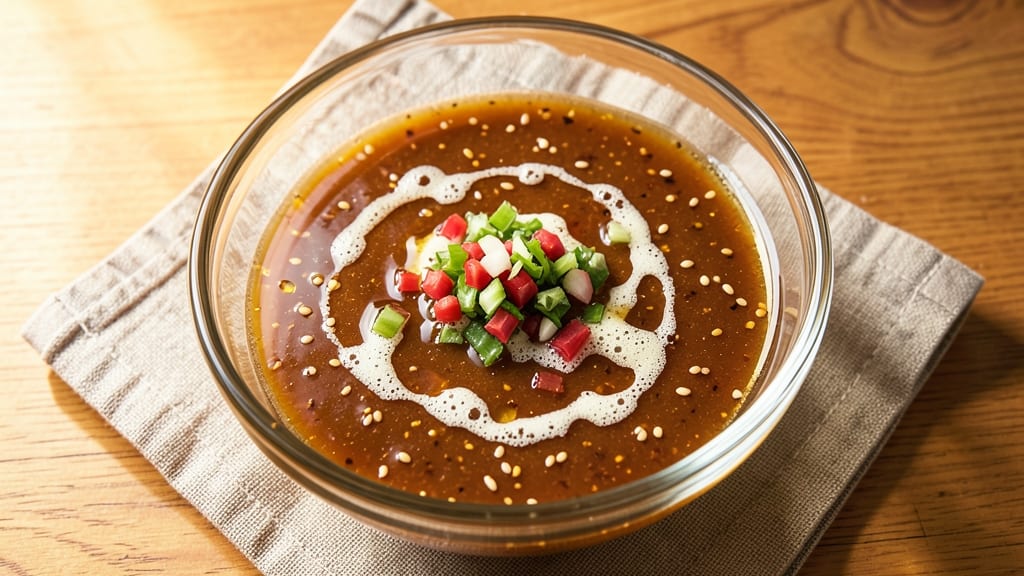
This Asian chicken salad dressing captures Panera's signature sesame-ginger tang with a crunchy peanut twist that elevates every bite. The balance of sweet, savory, and nutty flavors transforms simple greens into a restaurant-worthy dish.
I developed this recipe after years of perfecting Asian-inspired dressings, ensuring the perfect harmony of ingredients that Panera customers love.
The foundation begins with a simple yet powerful combination of soy sauce, rice vinegar, and honey, creating that signature tangy-sweet profile. Toasted sesame oil and fresh ginger add depth, while a touch of garlic brings complexity.
The peanut twist comes from crushed peanuts mixed into the dressing, offering both flavor and satisfying crunch with every spoonful.
What you'll end up with is a velvety dressing that clings beautifully to greens, chicken, and vegetables, delivering layers of flavor in every bite. The peanut crunch adds texture that keeps the salad exciting, while the ginger and garlic ensure each bite is memorable.
This dressing stays fresh in the refrigerator for up to a week, making it perfect for meal prep and repeat use.
Perfect for Asian chicken salads, spring rolls, or even drizzled over grilled proteins. The recipe is designed to be simple yet sophisticated, ensuring you can recreate that Panera experience at home with ease. Let's get started on this flavorful creation!
Ingredients for asian chicken salad dressing panera
Nine ingredients blend into Panera's iconic sesame-peanut dressing—sweet, tangy, and irresistibly crunchy.
| Ingredient | Amount | Notes |
|---|---|---|
| Soy Sauce 🥢 | ⅓ cup | Low-sodium preferred for balance |
| Rice Vinegar 🍶 | ¼ cup | Seasoned for extra depth |
| Honey 🍯 | ¼ cup | Wildflower for floral notes |
| Toasted Sesame Oil 🫒 | 2 tbsp | Nutty aroma essential |
| Fresh Ginger 🌿 | 1 ½ tbsp | Finely grated, zesty kick |
| Garlic Cloves 🧄 | 2 cloves | Minced for aromatic punch |
| Peanut Butter 🥜 | ¼ cup | Creamy, not crunchy |
| Peanuts 🥜 | ¼ cup | Crushed for texture contrast |
| Sesame Seeds 🌾 | 1 tbsp | Toasted for extra crunch |
| Water 💧 | ¼ cup | For thinning consistency |
The peanut butter and sesame oil are non-negotiable for that signature Panera crunch. Smucker's Natural peanut butter has the best consistency, while Kikkoman soy sauce delivers that perfect umami depth. Fresh ginger is a must—Trader Joe's organic ginger has the best zing, but any bright green root works. Toast your sesame oil in a dry pan for 30 seconds to wake up those nutty flavors. For the peanuts, grab the unsalted variety from the bulk bins—they crush better and won't overpower the dressing.
No peanut butter? Almond butter at half the amount works in a pinch, though it loses that classic peanut flavor. Short on sesame oil? Toasted sesame seeds ground into a paste is a decent swap, but you'll miss that signature aroma. The honey can be swapped for maple syrup if you're avoiding refined sugar. For extra tang, add an extra tablespoon of rice vinegar. Pro tip: Mix the peanut butter with warm water first—it blends smoother and prevents clumping. The crushed peanuts should be about the size of coarse sand—too fine and they disappear, too chunky and they're overwhelming.
This dressing keeps beautifully—up to 1 week in the fridge, sealed tightly. The peanut butter helps preserve freshness, but add a thin layer of oil on top if storing longer than 3 days. Double the batch and freeze half in ice cube trays—perfect for single-serving salads later. The flavor actually improves after 24 hours as everything melds together. Store the extra peanut butter in the freezer to prevent oil separation, and toast fresh sesame seeds whenever you're ready to use them for maximum crunch.
Why You'll Love This Recipe
- Five-Ingredient Magic: I swear by this combo—soy sauce, rice vinegar, and honey balance each other like a well-worn dance. The toasted sesame oil adds that nutty warmth, while the ginger? That’s the secret punch that makes it taste like you actually put in effort.
- No-Measure Guessing: Honestly, I often eyeball the honey and ginger instead of measuring. A splash of vinegar, a drizzle of oil, and a pinch of grated ginger—it’s forgiving enough that even when I’m distracted, the dressing still hits the mark.
- Lunchbox Hero: This keeps beautifully in the fridge for days, so I make a big batch on Sundays. Drizzle it over pre-cooked chicken, toss with greens, or even use it as a marinade—it’s my go-to for quick, no-fuss lunches that don’t taste like they came from a jar.
- Budget Stretch: Between us, this costs next to nothing to make. A little soy sauce, a splash of vinegar, and honey from a jar I already own—it’s the kind of recipe that lets me feed the family without breaking the bank, and the flavor doesn’t skimp.
Step-by-step instructions for Asian chicken salad dressing
Here's how to create Panera's signature sesame-ginger dressing with that perfect peanut crunch.
Prepare the Ginger-Garlic Base
In a small bowl, finely grate the 1.5 tablespoons fresh ginger using a microplane or fine grater. The goal is to create a paste-like texture that will fully dissolve into the dressing. Transfer the grated ginger to a measuring cup and add the 2 minced garlic cloves. Let this mixture sit for 5 minutes to release its full aromatic potential.
This step is where the magic begins. The ginger should smell vibrant and zesty—almost like it's waking up. If you're using a garlic press, be sure to mince the cloves first for maximum flavor extraction. Don't skip this resting time; it allows the ginger's natural oils to soften and blend more easily with the other ingredients.
Combine Wet Ingredients
In a medium bowl, whisk together the 0.33 cup soy sauce, 0.25 cup rice vinegar, and 0.25 cup honey until fully blended. The mixture should be smooth with no visible streaks of honey. Add the ginger-garlic paste and whisk vigorously for 30 seconds until completely incorporated.
This combination creates the foundational tang-sweet balance that makes this dressing so addictive. You'll notice the mixture immediately lighten in color as the honey begins to emulsify with the vinegar and soy sauce. If you're using low-sodium soy sauce, you might want to add a pinch of salt here to enhance the umami depth—though the peanut butter will contribute additional saltiness later.
Incorporate the Peanut Elements
Add the 0.25 cup creamy peanut butter to the wet mixture and whisk continuously for 1-2 minutes until completely smooth. The peanut butter will initially create a thick, almost paste-like consistency. Gradually add the 0.25 cup water while whisking to thin the dressing to your desired consistency—it should coat the back of a spoon but still be pourable.
Here's where the texture transformation happens. The peanut butter adds richness and body while creating that signature nutty depth. If the dressing seems too thick after adding all the water, you can thin it further with an additional 1 tablespoon water. The perfect consistency should be slightly thicker than traditional salad dressings to help it cling to greens and chicken pieces.
Finish with Toasted Sesame Oil and Crunchy Elements
Remove the dressing from the heat (if you've been warming it) and stir in the 2 tablespoons toasted sesame oil and 1 tablespoon sesame seeds. Then, in a separate small bowl, crush the 0.25 cup peanuts using a rolling pin or mortar and pestle until they're coarsely chopped but still retain some texture. Fold these crushed peanuts into the dressing just before serving to maintain their crunch.
The toasted sesame oil adds that irresistible nutty aroma that wafts through the air when you first open the dressing container. The sesame seeds contribute both visual appeal and a satisfying crunch, while the crushed peanuts provide the final textural element that makes this dressing so distinctive. I like to fold in the peanuts last so they remain crisp rather than becoming soggy in the dressing.
Taste and Adjust for Perfect Balance
Taste the dressing immediately and adjust the seasoning as needed. For more tang, add a splash of the rice vinegar. For more sweetness, stir in a bit more honey. If it needs saltiness, add a pinch more soy sauce. The dressing should have a perfect balance of sweet, tangy, nutty, and slightly spicy flavors with that satisfying crunch from the peanuts.
This dressing works beautifully on Asian chicken salads, spring rolls, or even as a dipping sauce for fresh vegetables. For best results, store any leftovers in an airtight container in the refrigerator for up to 5 days. Give it a good stir before using, as the peanut butter may separate slightly. The flavors actually improve as it sits, developing even more depth overnight.
Pro Tips For Making Asian Chicken Salad Dressing Panera
- Grate Ginger Fine: Use a microplane or the smallest holes on a box grater—no need for peels, just the pale flesh. I learned this the hard way when I chopped it roughly and ended up with a dressing that tasted more like ginger bits than actual flavor.
- Whisk in Stages: Start with soy sauce and honey, then add vinegar—this keeps the honey from crystallizing on contact. Stir vigorously for 30 seconds before adding sesame oil last, or you’ll end up with a separated mess. (Yes, even if you’re impatient like me.)
- Toast Sesame Oil First: Warm the sesame oil in a dry pan over low heat for 30 seconds—just until it shimmers. Cool it completely before mixing; this deepens its nutty aroma and prevents a harsh, raw taste. (Your future self will notice the difference.)
- Balance the Honey: If your dressing tastes too sweet, add a splash of rice vinegar (start with ½ teaspoon) and let it sit for 2 minutes before tasting again. The acid cuts through the honey without overpowering the soy. (I skip this step half the time and always regret it.)
Pro cooking tips for asian chicken salad dressing panera
Emulsification Secrets
The peanut butter is the real MVP here—it's what creates that perfect emulsion that makes this dressing cling to every leaf of greens and bite of chicken.
I always warm the peanut butter slightly (just a few seconds in the microwave) before mixing it in to make it smoother and easier to incorporate. Use a hand mixer on low speed for 30 seconds after adding the peanut butter to break up any lumps completely.
This step is non-negotiable for that silky texture. 💫
Ginger Activation
Fresh ginger is where the magic happens, but you've got to activate it properly. I like to grate it directly into the bowl with the garlic and let it sit for 5 minutes before mixing. This allows the ginger's natural oils to soften and blend more smoothly.
If you're using jarred ginger, it won't have the same zing—stick with fresh root for that authentic Panera flavor. Pro tip: Use a microplane for the finest texture, which dissolves completely into the dressing. 🌿
Peanut Crunch Control
The crushed peanuts should be coarse but not chunky—think about the size of coarse sand. If they're too fine, they'll disappear into the dressing; too chunky, and they'll overpower the texture.
I crush mine in a rolling pin or mortar and pestle right before folding them in to keep them fresh and crisp. Fold them in last so they stay crunchy, not soggy. For extra crunch, toast the peanuts in a dry pan for 2 minutes before crushing. 🥜
Consistency Mastery
This dressing should be thicker than vinaigrette but still pourable—it needs to coat the back of a spoon but flow freely. If it's too thick after adding all the water, thin it with 1 tablespoon at a time until you reach the perfect consistency.
If it's too thin, whisk in 1 teaspoon peanut butter to thicken it back up. The key is balance: it should cling to your salad without being gloppy. 🥄
Flavor Layering
Taste as you go! Start with the base (soy, vinegar, honey) and adjust the sweet-tang balance first. Then add the peanut butter and sesame oil, tasting again to ensure the nutty depth is there. Finally, fold in the peanuts and sesame seeds.
The dressing should sing with sweet, tangy, nutty, and slightly spicy notes. If it's missing something, a pinch of red pepper flakes adds heat, or a splash of lime juice brightens it up. 🌶️
Storage Hacks
Store leftovers in an airtight container in the fridge for up to 5 days, but give it a good stir before using—the peanut butter may separate slightly.
To reheat for serving (like on warm noodle salads), gently warm in a small saucepan over low heat for 30 seconds, stirring constantly. For meal prep, make a double batch and freeze half in ice cube trays—thaw overnight in the fridge for single-serving convenience. 💡
Nutrition facts
Frequently asked questions
Can I make this dressing without peanut butter?
Yes! For a nut-free version, replace the peanut butter with 0.25 cup almond butter (though it won't taste identical) or 0.25 cup tahini for a sesame-only flavor. The texture will be smoother but lose that signature peanut crunch. You may need to add 1 extra tablespoon water to maintain consistency.
How do I fix lumpy peanut butter in the dressing?
Warm the peanut butter slightly (10-15 seconds in microwave) before mixing, then use a hand mixer on low for 30 seconds to fully emulsify. If lumps persist, strain through a fine-mesh sieve for a silky texture. For future batches, whisk the peanut butter with the water first before adding to the other ingredients.
What's the best way to store leftovers?
Keep in an airtight container in the fridge for up to 5 days. The peanut butter may separate slightly—just stir vigorously before using. For longer storage, freeze in ice cube trays, then transfer to a bag. Thaw overnight in the fridge and stir well before serving.
Can I use this dressing on other dishes besides salad?
Drizzle over grilled chicken, spring rolls, or cold noodles. It also makes an excellent dipping sauce for fresh veggies or egg rolls. For extra richness, warm gently before serving on warm dishes like rice bowls or poke bowls.
Why does my dressing taste too sweet?
Adjust the balance by adding 1-2 teaspoons rice vinegar (for tang) or 1/2 teaspoon soy sauce (for saltiness). If you prefer less sweetness, reduce honey to 0.125 cup next time. The peanut butter adds natural richness, so you may need less honey than called for.