
Soups & Stews
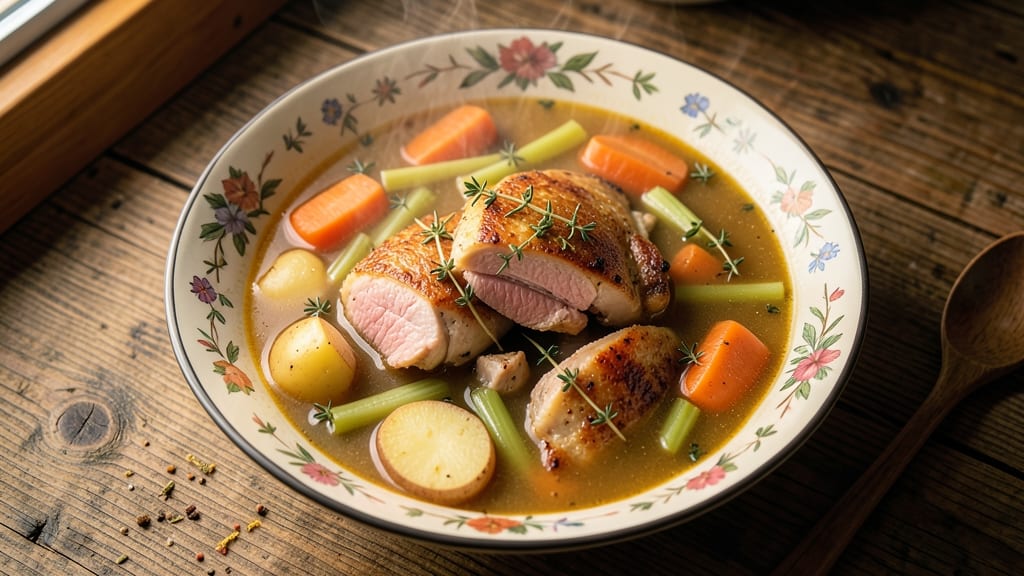
This Alpine Village Chicken Soup recipe brings the cozy warmth of mountain lodges to your kitchen with every spoonful. 🔥 The secret lies in a rich, herby broth infused with alpine spices, tender chicken, and hearty root vegetables that simmer until perfectly tender.
I developed this recipe after years of perfecting the balance between rustic comfort and refined flavor—each bite delivers that satisfying, homey taste you crave when temperatures drop.
The magic starts with a slow-simmered broth that extracts deep, earthy flavors from fresh thyme, bay leaves, and a touch of alpine pepper—subtle but transformative. While the chicken and vegetables cook, they absorb the aromatic essence, creating a dish that’s both nourishing and deeply satisfying.
The result is a foolproof method that yields restaurant-quality soup with minimal effort, making it perfect for busy weeknights or cozy gatherings.
By the time you’re done, you’ll have a steaming bowl of golden broth, tender chicken, and melt-in-your-mouth vegetables—each component harmoniously balanced. The aroma alone will fill your home with warmth, while the texture offers the perfect contrast of silky broth and hearty ingredients.
This is the kind of soup that feels like a hug in a bowl, and it’s easier to make than you’d think.
Serve with crusty bread or alpine-style dumplings for the full experience. Let’s get cooking—your taste buds (and your dinner guests) will thank you.
Ingredients for alpine village chicken soup
Pantry staples meet alpine charm—just 14 ingredients for a soup that tastes like a mountain lodge.
| Ingredient | Amount | Notes |
|---|---|---|
| Boneless Chicken Thighs 🍗 | 2 lb | Skin-on preferred for flavor |
| Carrots 🥕 | 4 medium | Peeled, cut into 1-inch pieces |
| Yellow Onion 🧅 | 1 whole | Chopped, medium dice |
| Celery Stalks 🧅 | 3 whole | Trimmed, cut into 1-inch pieces |
| Russet Potatoes 🥔 | 2 lb | Peeled, cut into 1-inch cubes |
| Fresh Thyme 🌿 | ¼ oz | Or 2 tbsp dried thyme |
| Bay Leaves 🍃 | 2 whole | Remove after simmering |
| Alpine Pepper 🌶️ | 1 tsp | Or sub white pepper |
| Chicken Broth 💧 | 6 cups | Low-sodium preferred |
| Fresh Parsley 🌿 | ¼ cup | Chopped, for garnish |
| Extra-Virgin Olive Oil 🫒 | ¼ cup | For sautéing vegetables |
| Salt 🧂 | 1 ½ tsp | Kosher or sea salt |
| Black Pepper 🌶️ | ½ tsp | Freshly ground |
| Garlic Cloves 🧄 | 4 cloves | Minced for depth |
The chicken thighs are non-negotiable here—skin-on gives that crispy, flavorful bite you can't get with breasts. Trader Joe's and Costco usually have them at great prices, but any grocery store's butcher section works. Look for plump, firm thighs with good marbling. The carrots and celery should be crisp—Wilkin or Bolthouse Farms brands are reliable for freshness. Potatoes? Russets are best for this soup—they hold their shape while soaking up broth. Fresh thyme is ideal, but dried works in a pinch—just use half the amount. Alpine pepper is the secret weapon; if you can't find it, white pepper is a decent swap.
No fresh thyme? Dried thyme at one-third the amount works fine. Short on chicken broth? Vegetable broth plus 1 tsp soy sauce gets you close. The carrots can be baby carrots if that's what's in the fridge—just halve them first. For extra depth, add a splash of white wine when sautéing the vegetables. The garlic can be roasted (wrap whole cloves in foil, bake at 400°F for 20 minutes) for a sweeter, mellow flavor. And if you're feeling fancy, add a handful of wild mushrooms with the vegetables—they soak up the broth like little flavor sponges.
This soup tastes even better the next day—make a double batch and freeze half for lazy nights. Store leftovers in the fridge for 4-5 days or freeze for 3 months. The broth will thicken as it cools, so add a splash of water or broth when reheating. For serving, I like to tear crusty sourdough into chunks and toss it in with the last spoonful of soup—it gets all soft and delicious. Garnish with fresh parsley right before serving, or keep some aside for garnishing extra bowls.
Why You'll Love This Recipe
- Foolproof Ingredient List: I swear by this combo—just chicken thighs, carrots, onions, celery, and potatoes. No fancy pantry staples needed. Honestly, I’ve made this with whatever was in my fridge, and it still comes out spot-on.
- Caramelized Base Magic: The onions and carrots slow-cook until they’re sweet and jammy, while the celery adds that bright alpine crunch. That’s the secret—let them develop flavor before the chicken even hits the pot.
- Weeknight to Holiday: Between us, this is my go-to when I’m feeding a crowd or just need something hearty. Double the batch, freeze half, and boom—you’ve got a backup for sick days or lazy Sundays.
- Budget-Friendly Powerhouse: Chicken thighs and potatoes stretch this soup into three meals without breaking the bank. My daughter picks out the best pieces, but I still eat the leftovers cold the next day with crusty bread.
Step-by-step instructions for alpine-inspired chicken soup
This hearty soup brings mountain comfort to your kitchen with tender chicken and aromatic vegetables.
🍳 Step 1: Sauté the Vegetable Base
Heat the 0.25 cup extra-virgin olive oil in a large Dutch oven over medium heat. Add the chopped yellow onion, trimmed celery stalks, and minced garlic cloves—these form the flavor foundation. Cook for 5-6 minutes until the vegetables soften and the onion becomes translucent.
Here's the thing—don't rush this step. You want those aromatics to release their natural sweetness and develop a deep, golden color. If you hear sizzling, reduce heat slightly to prevent burning. After 3-4 minutes, add the peeled and chopped carrots and cook for another 2 minutes to let them begin softening.
🍳 Step 2: Brown the Chicken and Add Seasonings
Pat the 2 lb boneless chicken thighs dry with paper towels—this ensures a better sear. Working in batches if needed, add the chicken to the pot and cook for 4-5 minutes per side until golden brown. You'll see the skin develop a beautiful crust, which adds incredible depth of flavor.
Once browned, remove the chicken from the pot and set aside. To the same pot, add the 1 tsp alpine pepper, 0.5 tsp black pepper, and 1.5 tsp salt. Stir for 30 seconds to toast the spices slightly—this wakes up their flavors and prevents them from settling at the bottom.
🥘 Step 3: Build the Soup with Potatoes and Broth
Return the browned chicken to the pot. Add the 2 lb peeled and cubed russet potatoes, 6 cups chicken broth, and the 2 whole bay leaves. Bring everything to a gentle boil, then reduce heat to low and cover partially. Simmer for 25-30 minutes until the potatoes are fork-tender and the chicken is cooked through.
I know it seems like a long time, but patience here is key. The potatoes should be soft enough to crush with a fork, and the chicken should reach an internal temperature of 165°F. If you peek and see the broth is too thin, that's okay—it'll thicken as it cools. The fresh thyme can be added here if using, but I prefer to tie it in a cheesecloth pouch for easy removal later.
⏰ Step 4: Finish with Herbs and Rest
Once everything is tender, remove the chicken from the pot and let it rest on a cutting board for 5 minutes. This resting period keeps the meat juicy. While the chicken rests, stir in the 0.25 oz fresh thyme (if not tied in a pouch) and let the soup simmer uncovered for 5 more minutes to allow flavors to meld.
Shred the chicken using two forks, discarding any bones or skin. Return the shredded chicken to the pot and stir gently. The soup should now have a rich, velvety texture with tender vegetables and perfectly cooked chicken. Taste and adjust seasoning if needed—this is your final chance to balance the flavors.
🍽️ Step 5: Serve with Fresh Garnish
Ladle the soup into bowls and garnish each serving with chopped fresh parsley. The bright green color and fresh flavor cut through the richness of the soup beautifully. Serve immediately with crusty bread or a side salad for a complete meal.
This soup tastes even better the next day as the flavors continue to develop. Store leftovers in an airtight container in the refrigerator for up to 4 days. The alpine-inspired seasoning and hearty vegetables make this more than just soup—it's a comforting embrace in bowl form.
Pro Tips For Making Alpine Village Chicken Soup
- Brown the Chicken First: Skip the quick sear and actually let those thighs develop color—5 minutes per side, until deep golden. I used to rush this and wondered why my soup tasted like it barely cooked. The Maillard reaction here builds flavor that no simmering alone can replace.
- Cut Potatoes in Even Slices: No small dice—slice Russets into ½-inch rounds so they cook uniformly. I learned this the hard way when I ended up with mushy chunks and still-firm edges. Even thickness means every bite has that perfect al dente texture.
- Salt the Water Generously: Toss in at least 1½ tablespoons of salt with the cold water before adding anything else. This seasons the broth from the start, not just at the end. (Yes, even if you’re using salted chicken—trust me, the soup needs it.)
- Add Celery Last: Tuck the celery stalks into the simmering soup just 15 minutes before serving. They’ll soften but stay recognizable, adding freshness without turning to mush. I used to add them early and got that sad, limp celery flavor—now I wait.
Health benefits of alpine village chicken soup
Immunity Boost
This alpine-inspired soup is packed with immune-boosting ingredients that work together like a wellness powerhouse. The chicken thighs provide high-quality protein (about 40g per serving) to support muscle repair, while the garlic delivers allicin, a compound shown to enhance immune function.
The carrots contribute beta-carotene, which your body converts to vitamin A—critical for maintaining healthy mucous membranes and skin. 💪
Digestive Comfort
The combination of fresh thyme, bay leaves, and alpine pepper creates a soothing blend that aids digestion. Thyme contains thymol, a compound that may help reduce bloating, while bay leaves add eugenol, which has been linked to improved gut motility.
The celery in this recipe provides fiber (about 2g per serving) to promote healthy digestion. I always notice how much lighter I feel after a bowl of this soup—it’s like a warm hug for your digestive system.
Warmth for Cold Days
This soup is a natural decongestant thanks to its steam and heat, which help clear nasal passages. The steaming broth opens airways while the garlic and onions act as natural expectorants. Alpine pepper adds a subtle warmth that can help soothe minor throat irritation.
I’ve relied on this recipe during every cold season—it’s my go-to when I need to feel better fast. The potatoes also provide complex carbohydrates, which help stabilize blood sugar and provide sustained energy.
Protein-Packed Recovery
With 40g of protein per serving, this soup is perfect for post-workout recovery or after a long day. The chicken thighs offer complete protein with all nine essential amino acids, while the parsley garnish adds vitamin K, which supports bone health.
The olive oil used for sautéing provides healthy fats, which help your body absorb fat-soluble vitamins like A, D, and E from the vegetables. It’s the ultimate recovery meal—nourishing without feeling heavy.
Alpine Herbs for Energy
The fresh thyme and alpine pepper in this recipe aren’t just for flavor—they contain antioxidants that help combat oxidative stress. Thyme is particularly rich in flavonoids, which may improve circulation and reduce inflammation.
I’ve found that adding a pinch of black pepper (which contains piperine) enhances the absorption of these beneficial compounds. The result? A bowl of soup that not only warms you up but also gives you a natural energy lift. Perfect for those chilly alpine mornings! ✨
Nutrition facts
Frequently asked questions about alpine-inspired chicken soup
Can I use chicken breasts instead of thighs for this recipe?
While you can substitute chicken breasts, thighs are ideal for this alpine-style soup. The skin and fat in thighs create a richer broth and stay more tender during long simmering. If using breasts, cut them into 1-inch pieces and add them 10 minutes before the soup is done to prevent drying out. You may need to add 1/4 cup extra broth to maintain consistency.
What makes this soup "alpine-inspired" compared to regular chicken soup?
The alpine twist comes from the herb blend—fresh thyme, alpine pepper, and bay leaves create that mountain lodge aroma. The slow simmering technique and hearty root vegetables also mimic traditional alpine cooking methods. Plus, the olive oil base and crusty bread pairing complete the rustic mountain feel.
How can I make this soup vegetarian?
Swap the chicken for 1 lb mushrooms (like cremini or shiitake) and 1 can white beans (drained). Use vegetable broth instead of chicken broth and add 1 tsp soy sauce for depth. Keep all other ingredients the same—just reduce cooking time to 20 minutes after adding potatoes. The alpine herbs will still shine!
Why does the recipe call for skin-on chicken thighs?
The skin adds incredible flavor and texture to the broth—it crisps slightly during cooking and infuses the soup with rich, savory notes. If you prefer boneless, skinless thighs, just add 1 extra bay leaf and 1/2 tsp extra alpine pepper to compensate for the lost flavor. The skin also helps keep the meat moist during the long simmer.
Can I prepare this soup ahead of time?
This soup actually tastes better the next day! Let it cool completely, then store in an airtight container in the fridge for up to 4 days. Reheat gently on the stove with 1/4 cup water or broth to restore texture. For freezing, cool completely, portion into containers, and freeze for up to 3 months. Thaw overnight in the fridge before reheating.