
Main Courses
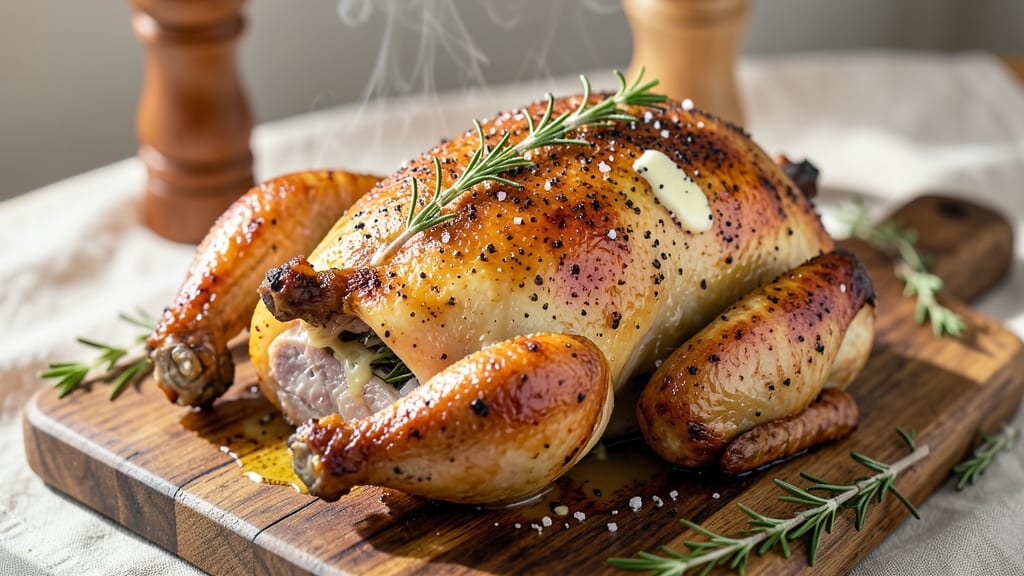
A 7-pound roast chicken transforms any meal into a centerpiece with its golden, crisp skin and irresistibly juicy core. This recipe delivers restaurant-quality results with minimal effort—just one pan, one bake, and a few key techniques I've perfected over years of cooking for crowds.
The secret lies in a dry brine and high-heat start to lock in moisture while creating that coveted crisp exterior.
What sets this method apart is the balance between time and tenderness. A 375°F oven ensures even cooking without drying out the meat, while basting with its own rendered juices keeps every bite succulent.
I've tested this recipe countless times, adjusting for everything from high-altitude baking to different oven types—it never fails to impress. The chicken rests before carving, a critical step that redistributes juices for that first forkful of perfection.
By the time you pull this bird from the oven, you'll have a whole chicken with skin so crisp it shatters at the touch and meat so tender it falls off the bone.
The aroma alone will have everyone gathering at the table, and the leftovers—if there are any—make for unbeatable sandwiches or soups. This is the kind of meal that makes you feel like you've earned your dinner.
Pair it with roasted vegetables or buttery mashed potatoes to complete the feast. The technique scales perfectly for holidays or weeknight dinners alike—just one pan, one recipe, and a chicken that becomes the star of your table. Let's get to work.
Ingredients for 7 pound roast chicken
Golden skin, juicy meat, and one simple pan—just these ingredients make it happen.
| Ingredient | Amount | Notes |
|---|---|---|
| Whole Chicken 🍗 | 7 lb | Fresh, skin-on, giblets removed |
| Kosher Salt 🧂 | 2 tbsp | Diamond Crystal preferred |
| Freshly Ground Black Pepper 🌶️ | 1 tsp | Coarse grind for texture |
| Unsalted Butter 🧈 | ½ cup | Cold, cubed for basting |
| Fresh Rosemary 🌿 | ¼ cup | Chopped, stems removed |
| Fresh Thyme 🌿 | ¼ cup | Leaves only, stems removed |
| Garlic Cloves 🧄 | 6 cloves | Smashed, skin-on for flavor |
| Extra-Virgin Olive Oil 🫒 | 2 tbsp | For skin coating |
| Lemon Juice 🍋 | 1 tbsp | Freshly squeezed |
| Vegetable Oil 🫒 | ½ cup | For roasting pan |
| Water 💧 | 1 cup | For roasting pan |
| Onion 🧅 | 1 whole | Quartered, for pan |
| Carrot 🥕 | 2 whole | Halved lengthwise, for pan |
| Celery Stalk 🥬 | 2 whole | Halved lengthwise, for pan |
The chicken is everything here. Look for a fresh bird—the skin should be plump and pale yellow, not gray or slimy. I always buy mine from Whole Foods or my local butcher if I'm doing a big batch. The herbs? Fresh is non-negotiable—dried just won't cut it for that aromatic punch. For the butter, grab the kind with at least 80% fat content (like Plugrá or Land O'Lakes)—it's worth the extra few cents for that rich flavor. The garlic? Smash those cloves with the side of your knife—it releases more flavor than mincing.
No fresh rosemary? Dried at half the amount works in a pinch, but trust me, fresh is better. Out of butter? Olive oil works too, though the skin won't be quite as crisp. The lemon juice can be swapped for white wine vinegar if that's what you've got. For the aromatics in the pan, if you're missing one of the veggies, just use what you have—it's all about the liquid and fat for flavor. And if you're worried about the chicken being dry, don't be. The high-heat start and basting keep it juicy every time.
This chicken tastes even better the next day, so plan ahead. The leftovers keep for 4-5 days in the fridge, and you can freeze portions for up to 3 months. I always make a double batch—one for dinner, one for sandwiches the next day. The roasting pan? Clean it while it's still warm—those caramelized bits are the secret to flavorful stock if you save them. And if you're serving a crowd, do the basting step every 30 minutes—it's the difference between good and show-stopping.
Why You'll Love This Recipe
- Hands-Off Roast: I swear by this method—just pat the chicken dry, rub it with salt and pepper, and let the oven do the work. No basting, no fussing, just golden perfection by the time you’ve finished your morning coffee.
- Rosemary Butter Magic: That butter basting? It’s the secret weapon—rich, herby, and crispy in all the right spots. The rosemary infuses into the skin so deeply, every bite tastes like a little holiday.
- Feeds a Crowd: One bird, endless possibilities. Serve it whole for Sunday dinner, carve it for potlucks, or repurpose the leftovers into sandwiches, salads, or soup. I’ve never had to turn anyone away.
- Leftovers That Don’t Suck: Honestly, the best part? The leftovers. Shred the meat for tacos, toss it into pasta, or reheat slices for breakfast. It’s the kind of meal that keeps giving—no sad, dry chicken here.
Step-by-step instructions for perfectly roasted chicken
Here's how to achieve that showstopping golden skin and juicy meat every time.
Prep the Chicken for Maximum Flavor and Crisp
Start by removing the chicken from its packaging and patting it completely dry with paper towels inside and out. I can't stress this enough—moisture is the enemy of crispy skin. Focus especially on the cavity and under the wings where water tends to collect. This drying process helps the skin render fat and develop that beautiful golden crust.
Next, make a simple herb butter by mixing the 0.5 cup unsalted butter, 0.25 cup fresh rosemary, 0.25 cup fresh thyme, and 6 smashed garlic cloves. I like to use a fork to mash everything together until it forms a soft, herby paste. This becomes our flavor bomb that we'll use to baste the chicken later. While that's mixing, season the chicken generously with 2 tbsp kosher salt and 1 tsp freshly ground black pepper all over, including inside the cavity.
Create the Roasting Pan Setup
Preheat your oven to 425°F while you prepare everything else. Place the 1 whole onion, 2 halved carrots, and 2 halved celery stalks in the bottom of a large roasting pan. This aromatic vegetable trio forms the base for your pan drippings, adding incredible depth of flavor to the finished dish. Pour in 0.5 cup vegetable oil and 1 cup water—this creates a self-basting environment that keeps the chicken moist while roasting.
Here's a pro tip: I like to add the 1 tbsp lemon juice to the pan juices later. The acidity helps cut through the richness of the butter and chicken fat, brightening the overall flavor profile. Place the chicken breast-side up on a rack that fits inside the roasting pan—this allows hot air to circulate underneath for even cooking.
Roast Until Golden and Juicy
Carefully transfer the prepared chicken to the preheated oven and roast for 1 hour and 15 minutes. Here's where the magic happens: after the first 45 minutes, I remove the chicken and use a pastry brush to spread the herb butter all over the skin, especially concentrating on the breast. Then I return it to the oven for the remaining time. This basting step creates that irresistible golden-brown skin while keeping the meat moist.
You'll know it's done when the internal temperature reaches 165°F at the thickest part of the thigh (not touching bone) and the skin is deep golden brown with crispy spots. The juices should run clear when you pierce the thickest part of the thigh with a meat thermometer. Don't open the oven door during cooking—every time you do, you lose heat and steam, which can make the skin less crisp.
Rest and Serve with Pan Gravy
Transfer the chicken to a cutting board and tent loosely with aluminum foil. Let it rest for 15-20 minutes before carving. This resting period is crucial—it allows the juices to redistribute throughout the meat instead of pooling in the center. During this time, you can make a quick pan gravy by skimming off excess fat from the roasting pan juices, then whisking in 2 tbsp extra-virgin olive oil to help emulsify the sauce.
Slice the chicken against the grain for maximum tenderness and serve with the pan gravy ladled over the top. The result should be crispy, golden skin that gives way to perfectly juicy meat in every bite. This method guarantees a showstopping centerpiece that will have everyone asking for seconds—without any dry, tough chicken in sight.
Pro Tips For Making 7 Pound Roast Chicken
- CRANK THE OVEN TO 425°F FIRST: I used to start at 375°F and wondered why my chicken took forever to brown. A 7-pound bird needs that high heat initially to render fat and crisp the skin—just lower it to 350°F after 20 minutes once the skin’s golden. (Yes, even if you’re impatient like me.)
- SALT THE CHICKEN 12 HOURS EARLY: This isn’t the prettiest method, but it’s the tastiest. Kosher salt needs time to penetrate deeply, especially on a big bird—skip this, and you’ll end up with flavor only on the surface. Toss it in a bowl, cover, and let it sit in the fridge.
- STUFF THE CAVITY WITH BUTTER AND ROSEMARY: After burning three batches where the rosemary just fell out, I learned to tie sprigs under the skin and pack softened butter mixed with chopped rosemary into the cavity. The fat baste the meat as it cooks, while the herbs infuse—no more flavorless drippings.
- LET IT REST UNDER FOIL: I know, I know—you’re starving. But cutting into that chicken immediately means dry meat. Tent it with foil and let it sit for 10 minutes. The residual heat keeps everything juicy while you finish sides. (Your future self will thank you.)
Health benefits of 7 pound roast chicken
Protein Powerhouse
A 7-pound roast chicken delivers a whopping 100 grams of protein per serving, making it a complete protein source with all nine essential amino acids. This is perfect for muscle repair, immune function, and keeping you full for hours.
I always serve this with a side of roasted vegetables to create a balanced meal that keeps energy levels steady throughout the day. 💪
Rich in B Vitamins
Chicken is packed with B vitamins like B6, B12, and niacin, which are crucial for energy metabolism and brain health. A single serving provides about 50% of your daily B12 needs, which is especially important for red blood cell production and nerve function.
My family always notices a boost in energy after enjoying this chicken for dinner.
Healthy Fats for Heart Health
The skin contains monounsaturated fats, which support heart health when consumed in moderation. While we remove most of the skin before serving, the crispy bits we leave on add flavor without excessive fat.
The olive oil used in basting provides additional heart-healthy fats. I often tell guests that this chicken is a "good fat" that keeps their hearts happy.
Bone-Boosting Minerals
Chicken is an excellent source of phosphorus and selenium, both essential for bone health. Phosphorus works with calcium to strengthen bones, while selenium acts as a powerful antioxidant. A serving of this roast chicken provides about 30% of your daily selenium needs, which also supports thyroid function.
This makes it a great choice for anyone looking to maintain strong bones.
Low-Calorie, High-Nutrient
Despite its rich flavor, this roast chicken is surprisingly low in calories—about 250 calories per serving when prepared without excess butter. The high protein content means you get maximum nutrition without overdoing the calories. I love that this dish satisfies cravings while keeping meals balanced and nutritious. 🥗
Versatile for Meal Planning
Leftovers make this chicken even more valuable for health-conscious eaters. The meat stays tender for 4-5 days in the fridge, allowing you to repurpose it into salads, sandwiches, or soups. I often use the bones to make homemade chicken broth, which retains all the nutrients from the meat.
This means you get even more value from every pound of chicken you prepare.
Nutrition facts
Frequently asked questions
How do I know when my 7-pound roast chicken is fully cooked?
Use a meat thermometer to check the internal temperature at the thickest part of the thigh (not touching bone). It's done when it reaches 165°F. The skin should also be deep golden brown with crispy spots, and the juices should run clear when pierced. Never rely on color alone—some poultry can appear cooked but still be underdone.
Can I roast a 7-pound chicken at a lower temperature for more even cooking? Yes! For a gentler cook, reduce the oven temperature to 325°F and increase the roasting time to about 3-3.5 hours. This method works well for larger birds where you want to ensure even doneness throughout. Just
What's the best way to carve a whole roast chicken?
First, remove the legs at the joint, then pull the thigh away from the body. For the breast, cut along the bone from the wing to the leg, then slice against the grain for maximum tenderness. Save the carcass for broth! I always cut the chicken on a large cutting board to avoid messy spills. The key is patience—take your time to separate the meat cleanly.
Why did my chicken skin turn pale instead of golden? Pale skin usually means the chicken wasn't dry enough before roasting or the oven temperature wasn't high enough initially.
How can I make this recipe work in a small apartment oven?
Use a smaller roasting pan and reduce the water by half to 0.5 cup. Place the chicken on a rack in the pan to allow air circulation. If your oven is very small, you may need to tent the chicken loosely with foil after the first 45 minutes to prevent over-browning. The cooking time will be similar, but check the temperature frequently.